KPV: The Molecular Engine
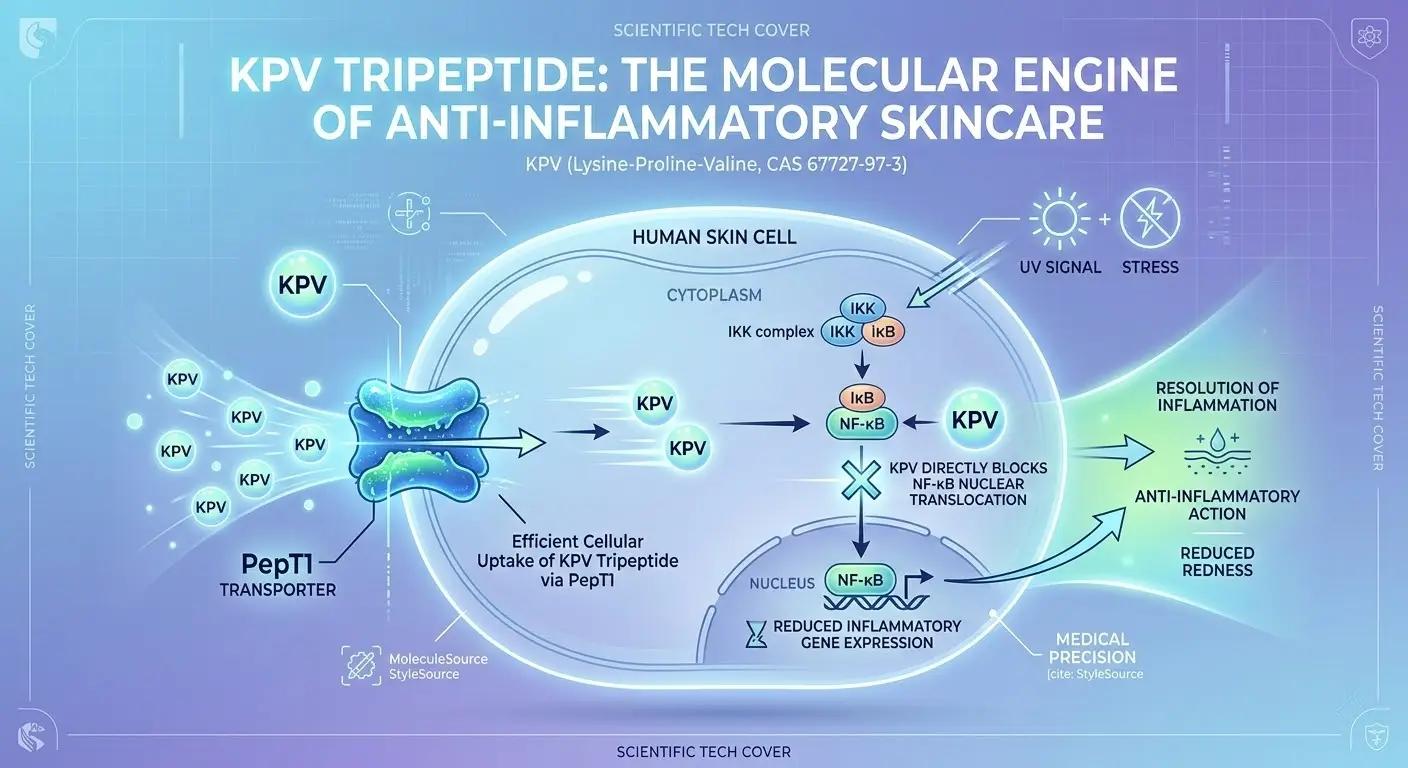
COSPEP’s KPV tripeptide (Lysine-Proline-Valine, CAS 67727-97-3), dubbed the "Molecular Engine", enters cells via the PepT1 transporter to inhibit the NF-κB pathway, reducing pro-inflammatory cytokines (IL-1β, TNF-α). Unlike traditional actives, it targets inflammation at the genetic root, offering high efficacy at low concentrations, no side effects, and a strong marketing narrative for skincare formulations.
A Technical Deep-Dive into the Anti-Inflammatory Pathways of COSPEP’s Premier Tripeptide
Welcome to the COSPEP innovation lab. I am thrilled to share with you the core science behind one of our most requested and biologically fascinating active ingredients: the KPV tripeptide (Lysine-Proline-Valine, CAS 67727-97-3).
As a premium raw material supplier, we at COSPEP spend our days speaking with brand founders, chief scientific officers, and master formulators. Time and time again, we hear the same frustration: the industry is saturated with "soothing" ingredients that merely mask the superficial symptoms of inflammation. They provide a temporary cooling effect or sit on the surface of the skin, but they fail to address the root biological cause of erythema, sensitivity, and cellular damage.
We knew our clients deserved better. You deserve an active ingredient that doesn't just put a band-aid on the problem, but actually enters the cellular command center to shut down the inflammatory cascade at its source.
Today, I want to take you on a journey inside the human cell. I want to show you exactly how our KPV acts as a highly precise "Molecular Engine." We will explore how it utilizes specific cellular gateways like the PepT1 transporter, how it unplugs the master inflammatory switch known as NF-κB, and how it drastically reduces the release of tissue-destroying cytokines like IL-1β and TNF-α. By the end of this technical brief, you will understand exactly why formulating with COSPEP’s KPV will elevate your next product from a simple cosmetic to a highly advanced biological treatment.
1. The Cellular Battlefield: Why Traditional Actives Fail
To appreciate the genius of KPV, we must first understand the anatomy of inflammation at a microscopic level. Whether your consumer is dealing with UV-induced sunburn, a compromised skin barrier from harsh chemical exfoliants, atopic dermatitis, or even mucosal inflammation in the gut, the cellular response is largely the same.
When a cell experiences trauma, it acts like a fortress under siege. It begins to mass-produce signaling molecules—alarm bells—to call in the immune system. While this immune response is designed to heal, it often overreacts, leading to chronic redness, swelling, tissue degradation, and accelerated aging (often termed "inflammaging").
Most traditional anti-inflammatory cosmetic ingredients—like botanical extracts or simple humectants—work strictly on the outside of the cell or the very surface of the tissue. They might hydrate the area or provide mild antioxidant protection, but they cannot penetrate the fortress walls to turn off the alarm system.
This is where COSPEP’s KPV changes the entire paradigm. We engineered and optimized this tripeptide not to sit on the surface, but to infiltrate the cell and intervene directly at the genetic transcription level. But how does a peptide, which is typically repelled by the fatty membrane of a cell, get inside? The answer lies in a specialized biological doorway.
2. The VIP Gateway: Interacting with the PepT1 Transporter
One of the greatest challenges in peptide formulation is bioavailability. You can have the most powerful molecule in the world, but if it cannot enter the target cell, it is practically useless.
At COSPEP, we recognized that the remarkably low molecular weight of KPV (just over 340 Daltons) gave it a distinct advantage, but its true secret weapon is its affinity for a specific cellular doorway: the Peptide Transporter 1 (PepT1).
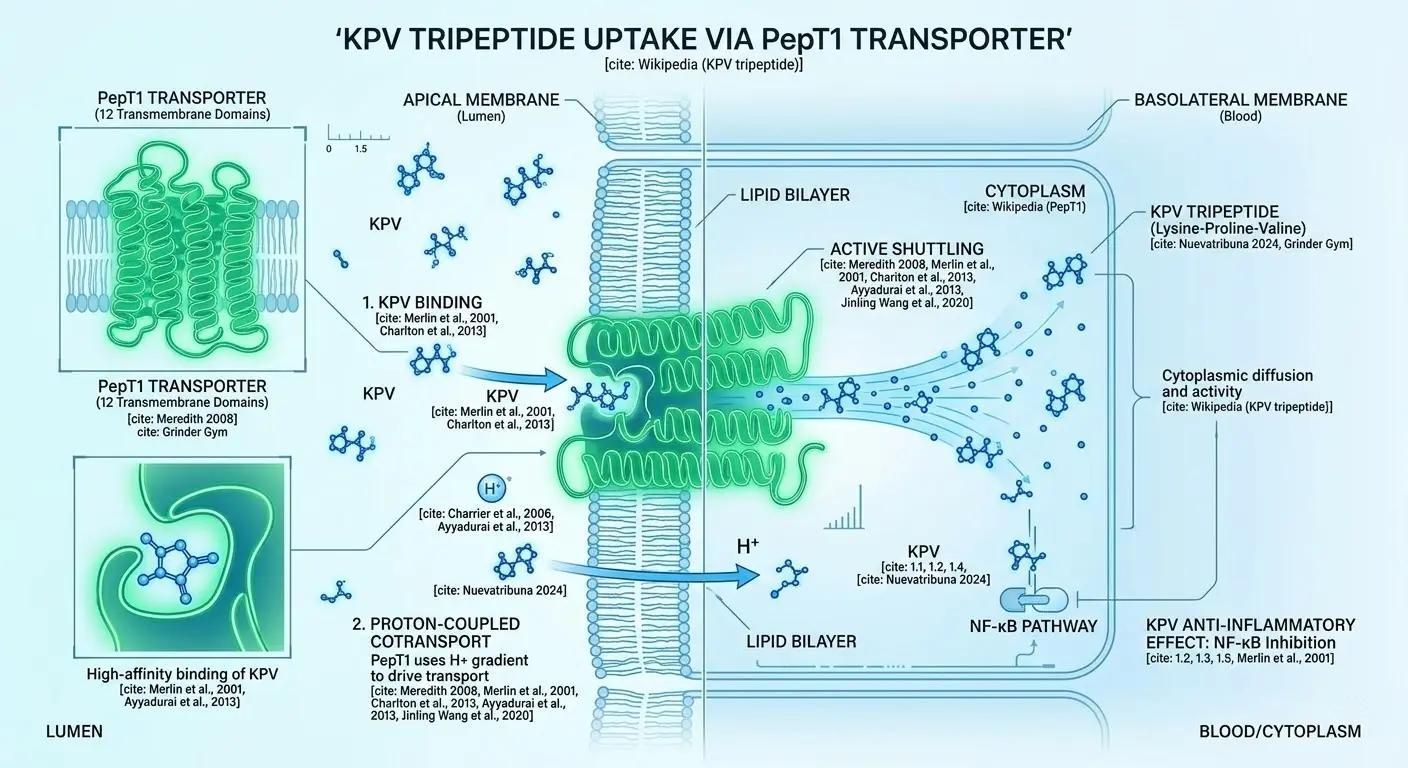
PepT1 is an oligopeptide transporter natively found in various human tissues, most prominently in the epithelial cells of the intestinal tract, but also crucially expressed in dermal fibroblasts, keratinocytes, and immune cells like macrophages during states of inflammation. Think of PepT1 as a highly selective VIP entrance to the cell, designed specifically to pull in small, essential di- and tripeptides for cellular nourishment and signaling.
When you apply a formula containing COSPEP’s KPV to inflamed tissue, the peptide doesn't have to force its way through the tough lipid bilayer of the cell membrane. Instead, the PepT1 transporter recognizes the precise Lysine-Proline-Valine sequence. It binds to our KPV molecule and actively shuttles it across the membrane and into the cell's interior (the cytoplasm).
This active transport mechanism is a monumental advantage for your formulations. It guarantees that the active ingredient you paid for is actually reaching its biological target. Furthermore, studies have shown that PepT1 expression actually increases in tissues that are inflamed. This means that the more inflamed and damaged your consumer's skin or tissue is, the more "doors" open up specifically to pull our KPV inside to initiate repairs. It is an intelligent, self-targeting delivery system built right into human biology.
3. Unplugging the Master Switch: The NF-κB Pathway
Once COSPEP’s KPV has successfully navigated through the PepT1 transporter and entered the cytoplasm, the real magic begins. Its primary target is a protein complex that acts as the absolute master regulator of the human immune and inflammatory response: Nuclear Factor kappa-light-chain-enhancer of activated B cells (NF-κB).
To understand why this is our primary target, let me explain how the NF-κB pathway normally operates in an inflamed cell:
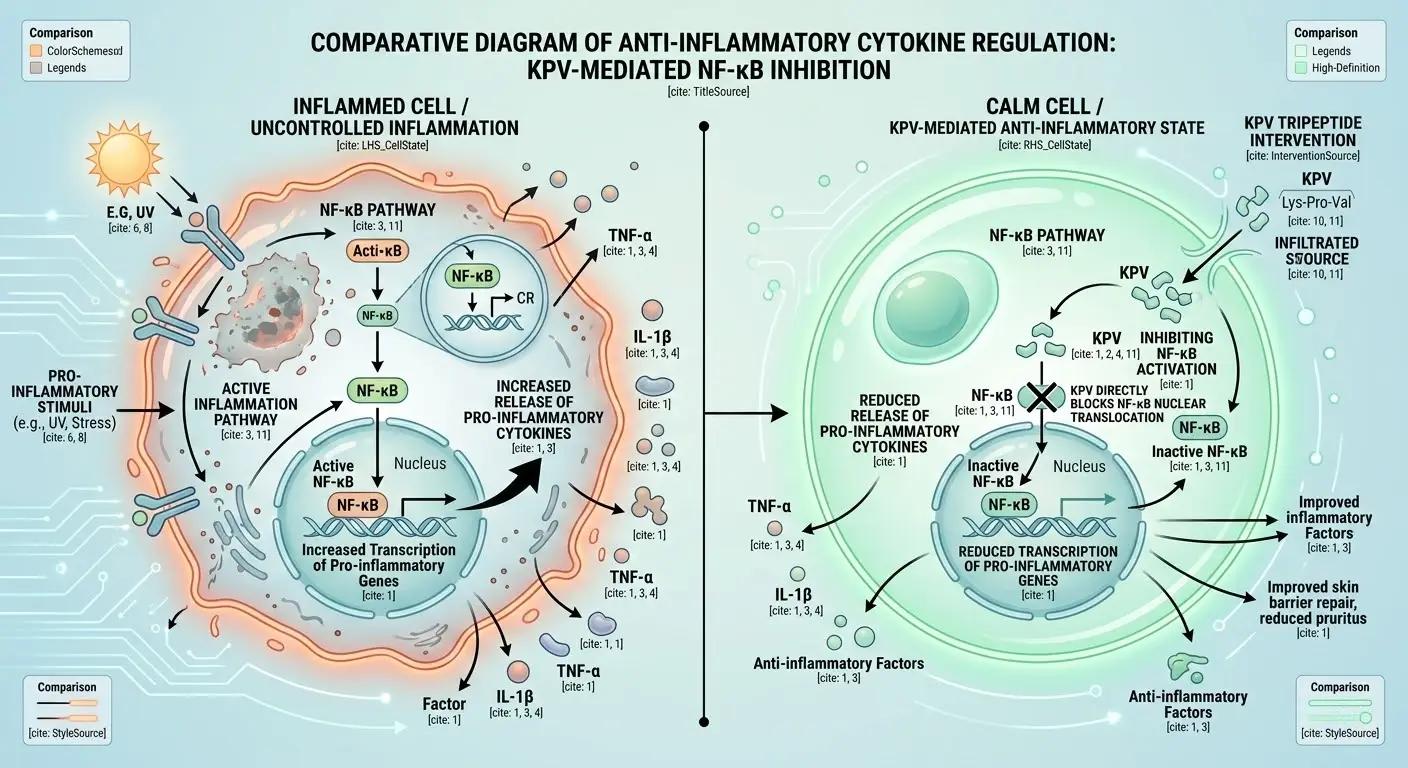
Under healthy, resting conditions, NF-κB is inactive. It floats peacefully in the cytoplasm, securely bound to a "guard" protein called IκBα (Inhibitor of kappa B). As long as the guard is holding onto it, NF-κB cannot do anything.
However, when a stressor attacks the cell—be it UV radiation, pollution, a laser treatment, or a bacterial toxin—it triggers a chain reaction. An enzyme called IKK (IκB kinase) is activated. IKK's job is to assassinate the guard. It phosphorylates IκBα, marking it for immediate destruction by the cell's waste-disposal system (the proteasome).
With the guard destroyed, NF-κB is suddenly set free. It immediately translocates from the cytoplasm into the nucleus of the cell. Once inside the nucleus, it binds directly to the cell's DNA and hits the "ON" switch for hundreds of inflammatory genes. The cell transforms into a factory, pumping out massive amounts of inflammatory chemicals that cause the visible redness, heat, and swelling your consumers desperately want to get rid of.
So, how does COSPEP’s KPV stop this?
Our KPV acts as the ultimate protector of the guard protein. Once inside the cell, KPV exerts a powerful stabilizing effect on the NF-κB/IκBα complex. While the exact stereochemical binding is complex, extensive scientific literature confirms that KPV drastically inhibits the degradation of IκBα.
By preventing the IKK enzyme from destroying the guard, KPV ensures that NF-κB remains securely locked in the cytoplasm. If NF-κB cannot enter the nucleus, it cannot bind to the DNA. If it cannot bind to the DNA, the inflammatory genes are never turned on.
We are not just calming the inflammation; we are cutting the wire to the alarm system. By halting the NF-κB pathway at the transcriptional level, COSPEP’s KPV prevents the inflammatory cascade before it even has a chance to fully manifest. This is why our clients report such rapid, profound, and long-lasting soothing effects in their clinical trials when using our active.
4. Silencing the Cytokine Storm: Reducing IL-1β and TNF-α
Because our KPV successfully locks down the NF-κB master switch, the downstream effects are immediate and dramatic. The most significant result for your consumers is the massive reduction in the release of pro-inflammatory cytokines.
Cytokines are the chemical messengers that cells use to communicate with the immune system. While there are many involved in inflammation, two are considered the absolute "apex predators" of tissue damage: Tumor Necrosis Factor-alpha (TNF-α) and Interleukin-1 beta (IL-1β).
When NF-κB enters the nucleus, TNF-α and IL-1β are the primary weapons it produces. Let’s look at why shutting these two down is so critical for a premium cosmetic or therapeutic product:
Tumor Necrosis Factor-alpha (TNF-α): TNF-α is a highly aggressive amplifier of inflammation. When released, it causes blood vessels to dilate (causing visible red skin) and become leaky (causing swelling and puffiness). In chronic conditions like psoriasis or severe rosacea, TNF-α is the main driver of the disease state. Furthermore, TNF-α accelerates the breakdown of collagen by upregulating Matrix Metalloproteinases (MMPs), enzymes that literally chew up the skin's structural support. By using COSPEP’s KPV to suppress TNF-α production, you are not only instantly reducing visible erythema and swelling, but you are also providing a powerful anti-aging benefit by protecting the skin's collagen matrix from inflammatory degradation.
Interleukin-1 beta (IL-1β): IL-1β is another key orchestrator of the immune response. It is largely responsible for the sensation of pain and itching that accompanies inflammation, making it a nightmare for consumers with sensitive or atopic skin. IL-1β also disrupts the epidermal barrier function, making the skin more susceptible to transepidermal water loss (TEWL) and secondary infections. When our KPV prevents the transcription of IL-1β, it rapidly alleviates the uncomfortable sensations of burning and itching, while simultaneously allowing the stratum corneum to repair itself and lock in moisture.
In rigorous in vitro and in vivo testing, the application of the Lysine-Proline-Valine sequence has consistently demonstrated a profound ability to suppress the secretion of both TNF-α and IL-1β in stimulated cells. This isn't marketing fluff; it is quantifiable, hard biological data. By lowering the levels of these destructive cytokines, KPV transforms a hostile, inflamed cellular environment into a calm, regenerative state.
5. The COSPEP Advantage: What This Means for Your Formulations
Understanding the deep molecular biology of PepT1, NF-κB, IL-1β, and TNF-α is vital, but as your supply partner, I want to translate this science into tangible commercial value for your brand. Why should you choose COSPEP’s KPV for your next blockbuster SKU?
5.1. True Biological Efficacy at Low Concentrations
Because our KPV targets the genetic transcription of inflammation rather than just sweeping up the aftermath, it is incredibly potent. You do not need to overload your formula with high percentages of this active to see results. It operates at physiological concentrations, meaning you achieve superior clinical efficacy while maintaining excellent cost-of-goods (COG) margins for your finished product.
5.2. Absolute Precision Without the Side Effects
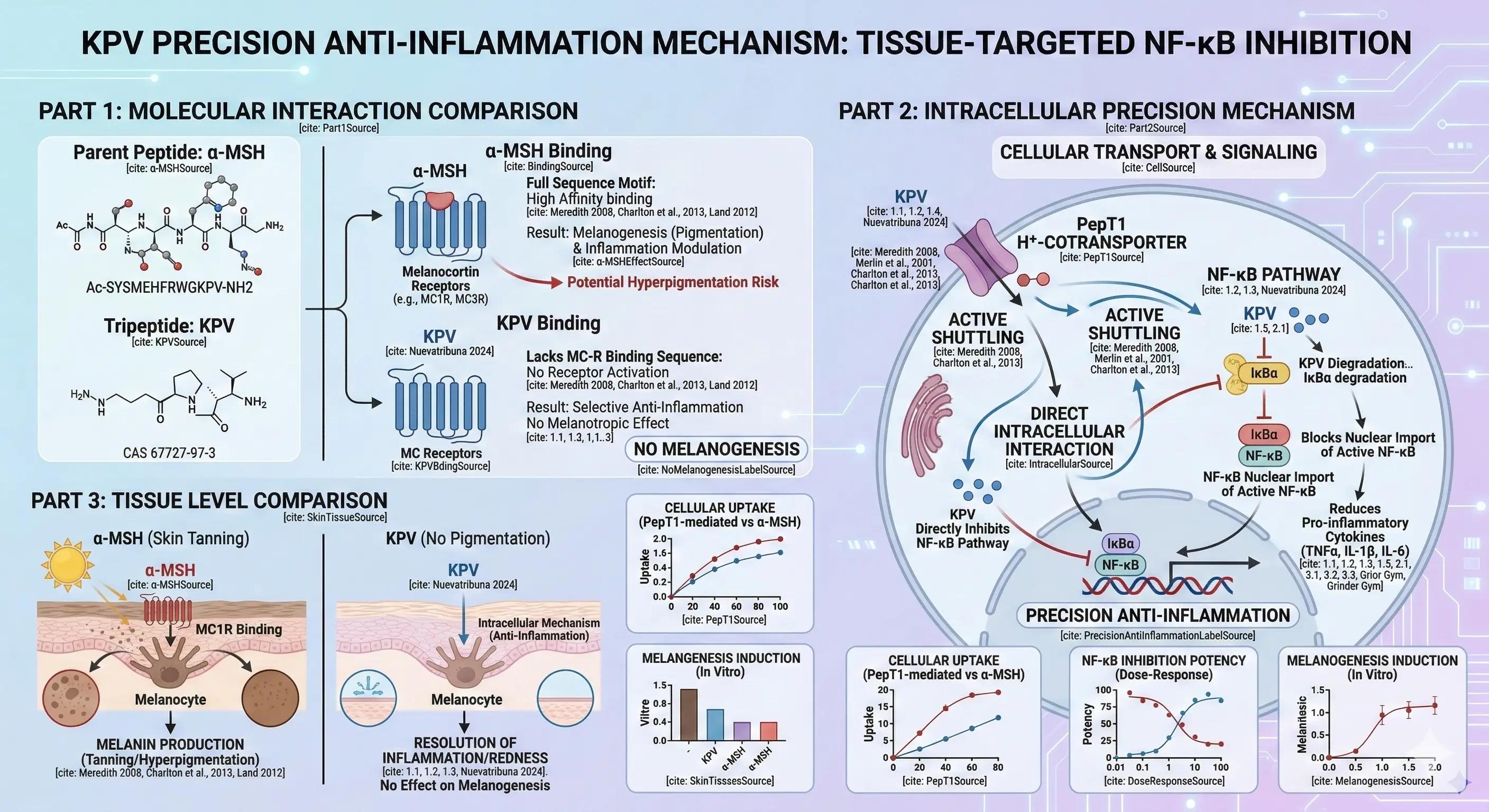
As we have discussed, traditional broad-spectrum anti-inflammatories, like corticosteroids, can thin the skin over time. Older melanocortin peptides can cause unwanted skin darkening. COSPEP’s KPV is a precision-engineered molecular engine. It goes straight through the PepT1 door, locks down NF-κB, and does absolutely nothing else. It does not bind to the melanocortin receptors that cause pigmentation. It offers medical-grade soothing power with an immaculate safety profile, perfect for daily-use cosmetics and post-procedure recovery creams.
5.3. A Superior Marketing Narrative
Consumers today are highly educated. They are no longer satisfied with generic "soothing botanical blends." When you formulate with COSPEP’s KPV, you acquire a compelling, science-backed narrative. You can educate your consumers about the PepT1 transporter. You can tell them about shutting down the "master inflammatory switch" (NF-κB). You are offering them biotechnology, not just a moisturizer.
6. Let's Build the Future Together
At COSPEP, we believe that the future of skincare and dermatological treatments lies in biomimetic peptides that speak the exact language of our cells. The Lysine-Proline-Valine tripeptide is the epitome of this philosophy. It is a microscopic engine of remarkable power, designed to cross biological barriers and silence inflammation at its genetic root.
We have perfected the synthesis and stabilization of CAS 67727-97-3 to ensure it performs flawlessly on your laboratory bench and flawlessly on your consumer's skin.
I invite you and your R&D team to request a sample of COSPEP’s KPV today. Let us help you formulate the next generation of highly active, genetically targeted soothing treatments. Together, we can stop inflammation before it even starts.