Fisetin
Functions / Benefits
Quality Specifications
| Specification Item | Standard |
|---|---|
| Grade | Pharmaceutical Grade |
| Recommended Usage | 100–500 mg/day (daily); 20 mg/kg/day for 2 consecutive days per month (senolytic protocol) |
| Property 1 | 98% |
Description
Is Fisetin the Best Senolytic Supplement for Anti-Aging and Brain Health? Benefits, Dosage & Side Effects Explained
Yes, fisetin is one of the most potent natural senolytic compounds identified to date, with preclinical studies showing it outperforms quercetin in clearing senescent cells. It also has a strong evidence base for neuroprotection, memory enhancement, and antioxidant defense, making it a leading ingredient in longevity and cognitive health formulations.
What Is Fisetin?
Fisetin (CAS 528-48-3) is a naturally occurring flavonoid polyphenol with the molecular formula C₁₅H₁₀O₆ and a molecular weight of 286.24 g/mol. It belongs to the flavonol subclass and is found in small amounts in strawberries, apples, persimmons, onions, and cucumbers — with strawberries being the richest dietary source at approximately 160 µg/g fresh weight.
Average dietary intake of fisetin is only 0.4–0.8 mg/day, far below the doses studied for therapeutic effects. This makes high-purity fisetin supplementation the only practical way to achieve clinically relevant plasma concentrations.
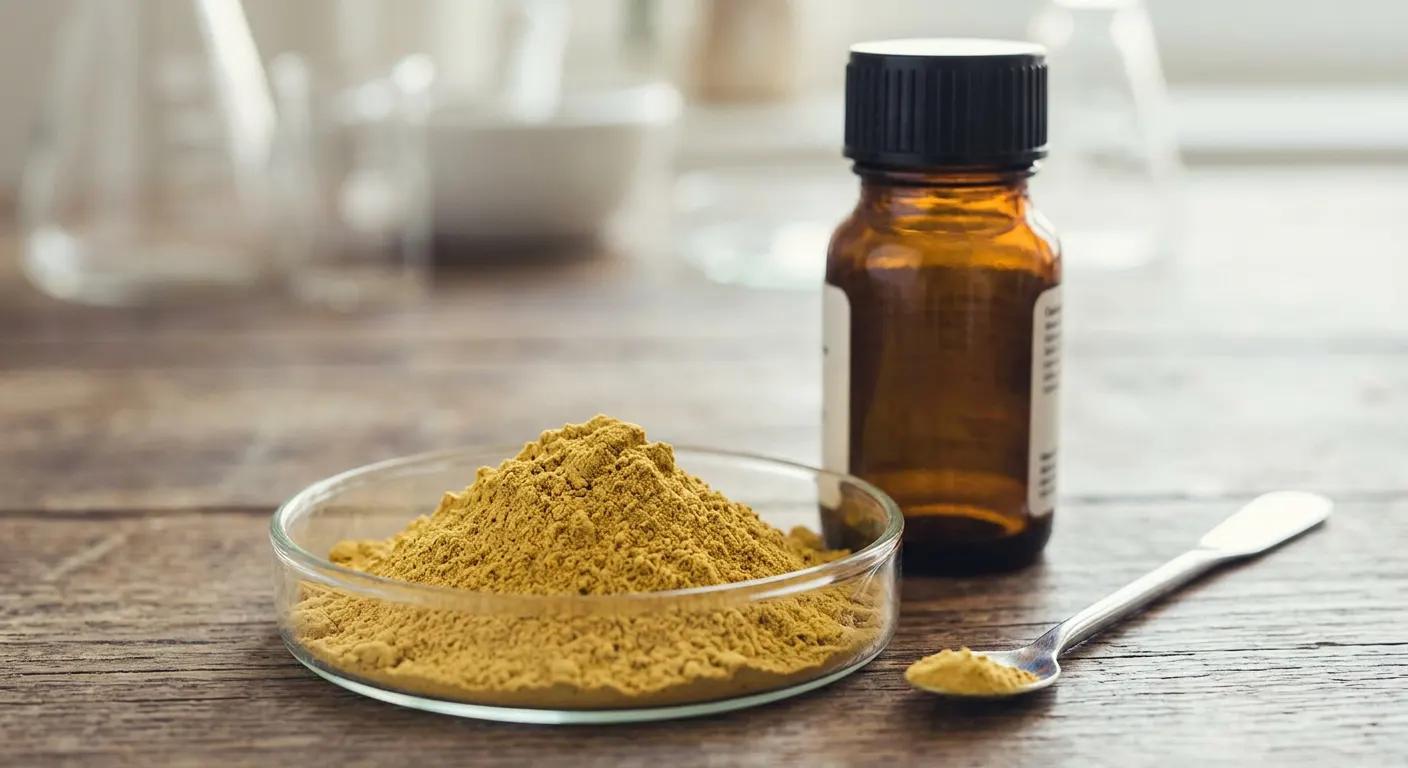
Commercially, fisetin is extracted primarily from the smoke tree (Cotinus coggygria) or Rhus succedanea, yielding a bright yellow powder with ≥98% purity by HPLC.
Key Benefits of Fisetin
Senolytic Activity: Clearing Senescent Cells. Fisetin is the most potent natural senolytic flavonoid identified in systematic screening studies. A landmark 2018 paper published in EBioMedicine found that fisetin reduced senescent cell burden in multiple tissues of aged mice by up to 50%, extending median and maximum lifespan. It works by selectively inducing apoptosis in senescent cells while sparing healthy cells, primarily through inhibition of the PI3K/AKT/mTOR and BCL-2 pro-survival pathways that senescent cells depend on.
Neuroprotection and Memory Enhancement. Fisetin is one of the few dietary compounds that can cross the blood-brain barrier effectively. It promotes nerve growth factor (NGF) synthesis, activates ERK and CREB signaling pathways critical for long-term memory formation, and protects neurons from oxidative stress and glutamate-induced excitotoxicity. Animal studies consistently show fisetin improves spatial memory, learning, and cognitive resilience against age-related decline.
Powerful Antioxidant Defense. Fisetin scavenges reactive oxygen species (ROS) and upregulates endogenous antioxidant enzymes including superoxide dismutase (SOD) and glutathione peroxidase. Its antioxidant capacity is among the highest of all dietary flavonoids.
Anti-inflammatory Action. Fisetin inhibits NF-κB signaling and reduces pro-inflammatory cytokines (TNF-α, IL-6, IL-1β), contributing to its broad protective effects in neurological, cardiovascular, and metabolic contexts.
mTOR Inhibition and Longevity Signaling. By inhibiting mTOR (mechanistic target of rapamycin) and activating AMPK and SIRT1 pathways, fisetin mimics key aspects of caloric restriction at the cellular level — a mechanism strongly associated with extended healthspan in multiple model organisms.
Cardiovascular Protection. Fisetin inhibits platelet aggregation, reduces LDL oxidation, and suppresses vascular inflammation, supporting overall cardiovascular health.
Fisetin vs. Quercetin: Which Senolytic Flavonoid Is Better?
Fisetin and quercetin are the two most studied natural senolytics, and they are frequently compared. Both are flavonols with antioxidant and senolytic properties, but they differ in potency, primary benefits, and ideal applications.
Fisetin (CAS 528-48-3) has the strongest senolytic activity of all flavonoids tested (outperforms quercetin in head-to-head cell studies), is the top choice for anti-aging and longevity protocols, offers superior neuroprotection and memory benefits, has very low dietary availability (0.4–0.8 mg/day from food), and is used at 100–500 mg/day for daily support or 20 mg/kg/day for 2 days/month as a senolytic pulse dose. It is best suited for longevity, cognitive health, and senescent cell clearance.
Quercetin (CAS 117-39-5) has moderate senolytic activity (often combined with dasatinib in clinical trials), is the top choice for cardiovascular and immune health, offers broader anti-allergy and anti-inflammatory benefits, is widely available in diet (10–30 mg/day from food), and is used at 500–1,000 mg/day. It is best suited for heart health, immune support, and general antioxidant defense.
Bottom line: for targeted senolytic activity and neuroprotection, fisetin is the superior choice. For cardiovascular and immune health, quercetin leads. Many longevity researchers recommend combining both for comprehensive senotherapeutic coverage, as their mechanisms are complementary.
Dosage and Usage Recommendations
Fisetin has low water solubility and benefits from lipid-based or enhanced-bioavailability formulations (e.g., fenugreek galactomannan complexes, liposomal delivery). Two main dosing protocols are used:
- Daily maintenance: 100–500 mg/day with a fat-containing meal to maximize absorption
- Senolytic pulse protocol: 20 mg/kg/day for two consecutive days per month (e.g., 1,400–2,000 mg/day for a 70–100 kg adult), as used in Mayo Clinic clinical trials
Fisetin combines synergistically with quercetin (for broader senolytic coverage), PQQ and CoQ10 (for mitochondrial support), and resveratrol or pterostilbene (for SIRT1 activation and longevity signaling).
Safety and Precautions
Fisetin is generally well tolerated at doses up to 500 mg/day in healthy adults. Higher pulse doses used in senolytic protocols have been studied in clinical trials without significant adverse effects reported. Fisetin may interact with anticoagulant medications due to its platelet-inhibiting properties. Always consult with a qualified healthcare provider before starting fisetin supplementation, especially if you are pregnant, nursing, taking blood thinners or immunosuppressants, or managing a chronic health condition. This product is intended for use by healthy adults and is not a substitute for medical treatment. These statements have not been evaluated by the Food and Drug Administration. This product is not intended to diagnose, treat, cure, or prevent any disease.
Featured Products
PQQ (Pyrroloquinoline Quinone)
N/A (microbial fermentation-derived)
Coenzyme Q10 (CoQ10)
Luteolin
Reseda luteola / Chamomilla recutita