Luteolin
Functions / Benefits
Quality Specifications
| Specification Item | Standard |
|---|---|
| Grade | Cosmetic Grade |
| Recommended Usage | 0.1–0.5% |
| Property 1 | 98% |
Description
Is Luteolin Good for Skin? Benefits, Uses & Anti-Inflammatory Properties Explained
Yes, luteolin is a highly effective natural flavonoid for skin and health. It delivers potent antioxidant, anti-inflammatory, and brightening benefits backed by extensive research.
Reference:
https://doi.org/10.3390/biomedicines9070761
https://pmc.ncbi.nlm.nih.gov/articles/PMC11826407/
What Is Luteolin?
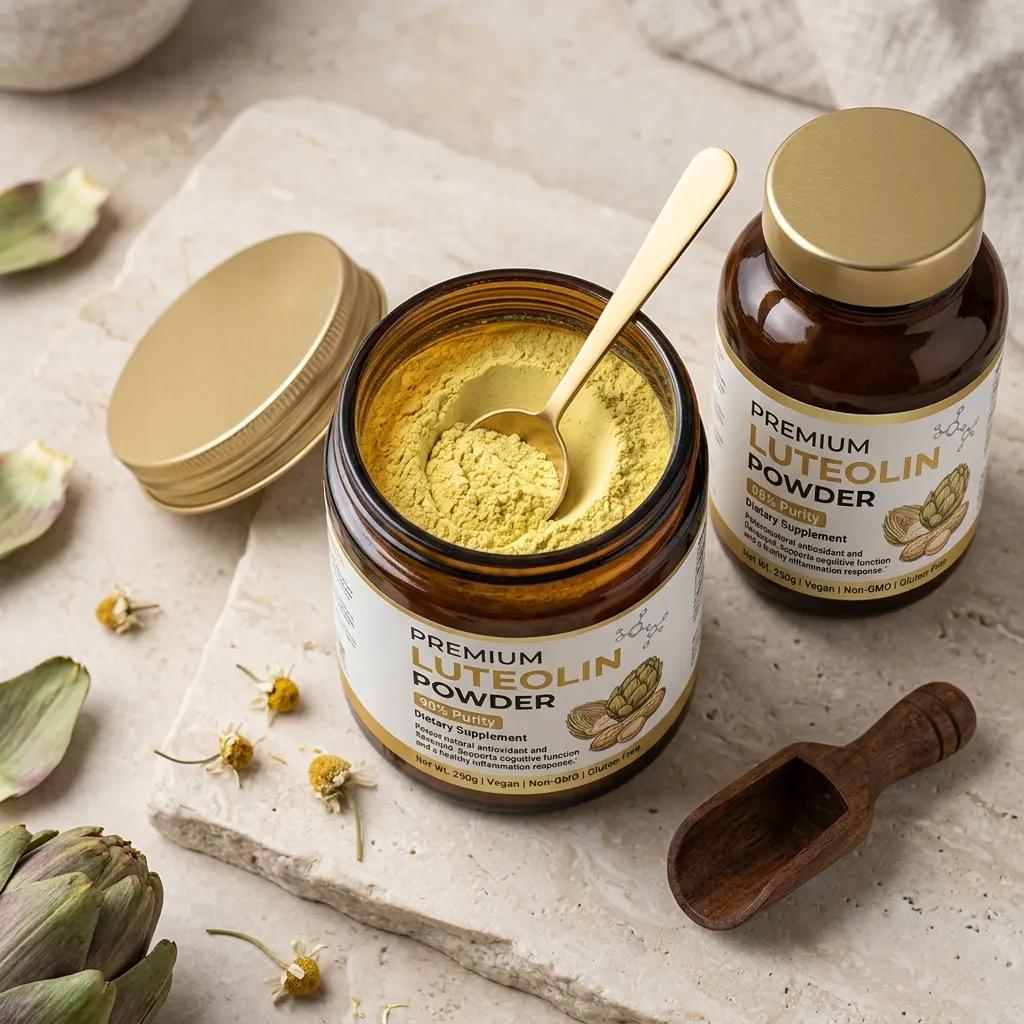
Luteolin (CAS 491-70-3) is a naturally occurring flavonoid (polyphenol) widely found in botanicals such as chamomile, celery, parsley, and rosemary. It presents as a light yellow powder with a molecular formula of C15H10O6 and a molecular weight of 286.24 g/mol. As one of the most studied plant-derived flavonoids, luteolin has attracted significant attention in cosmetic, nutraceutical, and pharmaceutical research for its broad-spectrum bioactive properties.
Key Benefits & Functions
- Antioxidant: Neutralizes free radicals and reduces oxidative stress, protecting skin cells from environmental damage.
- Anti-inflammatory: Inhibits pro-inflammatory cytokines (including IL-6, TNF-α, and NF-κB pathways), making it highly effective for sensitive and reactive skin.
- Skin Brightening: Inhibits melanin synthesis by suppressing tyrosinase activity, contributing to a more even and luminous complexion.
- Soothing: Reduces redness and allergic reactions, calming irritated or compromised skin barriers.
- Anti-aging: Protects collagen from degradation by inhibiting matrix metalloproteinases (MMPs), helping to maintain skin firmness and elasticity.
- Neuroprotective: Demonstrates neuroprotective activity in research models, supporting cognitive health applications in nutraceutical formulations.
- Antibacterial / Antiviral: Exhibits broad-spectrum antimicrobial activity, offering additional protective benefits in topical and systemic applications.
Luteolin vs Quercetin: Which Is Better?
Both luteolin and quercetin are well-researched plant flavonoids with overlapping yet distinct profiles. Understanding the differences helps formulators and researchers select the right ingredient for their application.
Luteolin demonstrates stronger anti-inflammatory activity, superior skin penetration due to its structural characteristics, and is a more potent lipoxygenase inhibitor (IC50 ≈ 0.6 µM). Its affinity for topical applications makes it particularly valuable in cosmetic and dermatological formulations.
Quercetin offers broader systemic bioavailability and has a more extensive body of clinical research supporting its role in cardiovascular health, immune modulation, and metabolic support.
Conclusion: For cosmetic and topical applications, luteolin has a clear edge due to its superior skin penetration and anti-inflammatory potency. For systemic health supplements targeting cardiovascular or metabolic outcomes, quercetin remains the more established choice. The two ingredients can also be used synergistically in comprehensive antioxidant formulations.
Applications
- Cosmetics & Skincare: Anti-inflammatory serums, sensitive skin formulations, brightening creams, soothing toners, and anti-aging moisturizers.
- Nutraceuticals: Antioxidant dietary supplements, anti-aging capsule formulas, and botanical extract blends.
- Pharmaceuticals: Ongoing research into anti-tumor activity, neuroprotective applications, and anti-inflammatory therapeutics.
- Food Additives: Used as a natural antioxidant preservative to extend shelf life and protect against oxidative degradation in functional foods.
Specifications
Usage Recommendation & Disclaimer
For cosmetic formulations, luteolin is recommended at a usage rate of 0.1–0.5%. It is compatible with a wide range of emulsion systems, serums, and topical preparations. For nutraceutical or supplement applications, dosing should be determined in consultation with a qualified formulation specialist, as optimal levels vary by application and target population.
Always consult with a qualified healthcare provider or formulation specialist before incorporating luteolin into therapeutic or nutraceutical applications. This information is intended for professional reference only and does not constitute medical advice.