

Compare Top Peptides for Research and Industrial Use
Explore the differences between research-grade and industrial peptides, from ultra-pure stapled peptides used in drug discovery to scalable cosmetic and nutraceutical peptide formulations powering commercial innovation.
Peptides are rapidly transforming the landscape of modern science, acting as foundational elements for everything from groundbreaking therapeutic drugs to commercial health supplements and advanced cosmetics. As the demand for these versatile molecules grows, understanding the distinction between peptides formulated for intensive research and those scaled for industrial manufacturing is crucial.
Based on industry trends and insights from leading manufacturers like COSPEP—a premier global supplier of premium bio-active peptides and plant extracts—this article compares the top categories of peptides used across research and industrial sectors.
1. Top Peptides for Research and Discovery
In the realm of research and development, peptides are highly valued for their high target specificity and low toxicity. Researchers demand ultra-pure, meticulously tested compounds to ensure reproducible and accurate results during clinical trials and drug discovery.
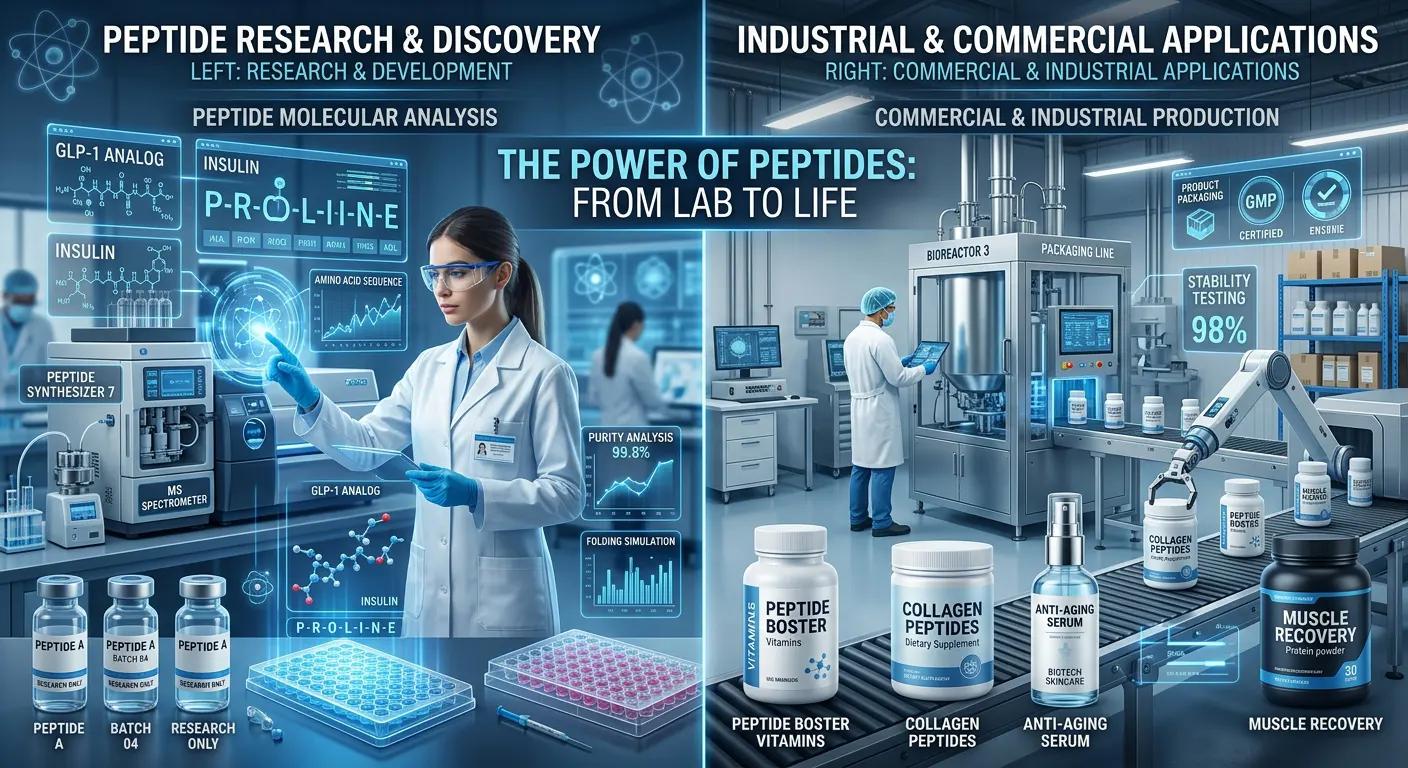
Research peptides emphasize precision and ultra-high purity, while industrial peptides focus on scalability and consumer applications.
Bio-Active Peptides
Bio-active peptides are highly specific amino acid sequences that exert a positive physiological effect on the body. In research, these are heavily utilized to study targeted health outcomes, such as immune system modulation, metabolic regulation, and cardiovascular health. Manufacturers provide these in ultra-pure, lab-grade formats, allowing scientists to map exact cellular interactions.
Stapled Peptides

Stapled peptides enhance molecular stability and cell penetration, making them a breakthrough technology in modern therapeutics.
Often hailed as the "Future of Therapeutics," stapled peptides are a massive area of focus in modern R&D. Traditional peptides can sometimes degrade quickly in the body; however, stapled peptides feature a synthetic hydrocarbon "staple" that locks them into a specific shape. This makes them exceptionally resistant to degradation and highly effective at penetrating cells, making them a top choice for oncology and advanced disease research.
Pharmaceutical Intermediates
While not strictly standalone peptides, peptide-based pharmaceutical intermediates are critical building blocks in the research sector. High-purity intermediates are essential for synthesizing complex therapeutic drugs, requiring stringent third-party testing and cGMP-certified manufacturing environments to meet the strict demands of global regulatory bodies like the FDA.
2. Top Peptides for Industrial and Commercial Use
When peptides move from the laboratory to the production line, the focus shifts. While purity remains vital, industrial applications prioritize scalability, formulation stability, and consumer-facing benefits.
Multi-Peptide Blends for Dietary Supplements
The nutraceutical industry relies heavily on custom health supplements. Bio-active multi-peptides are scaled up for use in protein powders, joint-support formulas, and gut-health supplements. Industrial suppliers like COSPEP offer turnkey manufacturing solutions—from validated formula design to packaging—allowing brands to bring these health-boosting peptide supplements to the retail market efficiently.
Cosmetic Raw Material Peptides

Cosmetic peptides are widely used in premium skincare products to support collagen production and skin rejuvenation.
The beauty and skincare industry is one of the largest consumers of commercial peptides. Collagen-stimulating peptides, copper peptides, and neuropeptides (which mimic Botox-like effects) are highly sought after. For industrial use, these peptides must be stabilized for long shelf lives and formulated to integrate seamlessly into creams, serums, and lotions.
Food Additive Peptides
Naturally derived peptides are increasingly used as functional food additives. They act as natural preservatives, flavor enhancers, or nutritional fortifiers. The industrial priority here is ethical sourcing, consistent large-scale batches, and regulatory compliance to ensure public safety.
A Comparative Overview: Research vs. Industrial
When comparing these top peptides, the distinction lies not just in the amino acid sequence, but in how they are manufactured and utilized:
| Feature | Research Peptides | Industrial Peptides |
|---|---|---|
| Primary Goal | Discovery, therapeutic mapping, clinical trials | Consumer health, skincare, commercial scalability |
| Purity Requirements | Ultra-high purity (often >99%), exact sequence fidelity | High purity (typically >95%), but balanced with cost-efficiency |
| Volume & Scale | Micrograms to grams (custom, small-batch synthesis) | Kilograms to tons (large-scale ready stock) |
| Key Categories | Stapled Peptides, custom synthesized sequences | Collagen peptides, multi-peptide blends, cosmetic raw materials |
| Manufacturing Focus | Strict cGMP, specific chemical modifications | End-to-end manufacturing, packaging, and regulatory compliance |
Research vs. Industrial
Partnering with the Right Manufacturer
Whether you are conducting cutting-edge clinical research on stapled therapeutics or launching a new line of anti-aging cosmetic serums, the source of your peptides determines your success.

Commercial peptide production prioritizes scalability, formulation consistency, and regulatory compliance for global distribution.
Leading suppliers provide a comprehensive ecosystem to support both sides of the spectrum. For instance, top-tier partners maintain 100% pure, clinically tested, and naturally derived standards. They offer advanced custom solutions for R&D while possessing the infrastructure—such as precision ingredient sourcing, packaging design, and global shipping logistics—to support massive commercial rollouts.
Conclusion
The top peptides for research and industrial use serve distinctly different, yet equally important, purposes. Research demands precision and innovation—focusing on highly stable structures like stapled peptides. Industrial use demands reliability and scale—focusing on broad-spectrum multi-peptides and cosmetic formulations. By understanding these differences and sourcing from certified, fully-integrated manufacturers, organizations can unlock the true, potent power of bioactive peptides.