
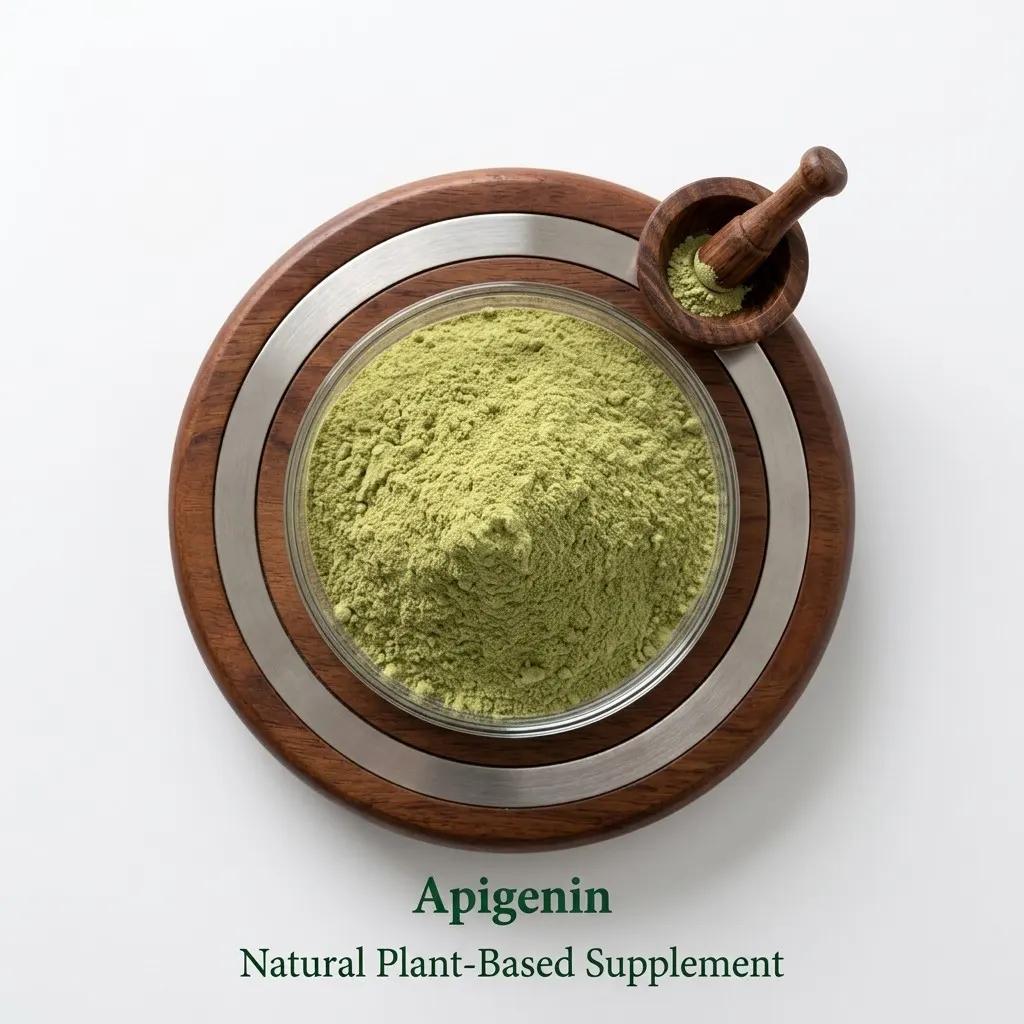
Apigenin
Functions / Benefits
Quality Specifications
| Specification Item | Standard |
|---|---|
| Grade | Cosmetic Grade |
| Property 1 | 98% |
Description
What is Apigenin?
Apigenin (4’,5,7-trihydroxyflavone) is a naturally occurring flavonoid found abundantly in chamomile (Matricaria chamomilla), parsley, celery, and a wide variety of other plants. With a CAS number of 520-36-5, it is classified as a plant-derived polyphenol belonging to the flavone subclass of flavonoids.
Apigenin has a long and well-documented history of use in botanical extracts and traditional herbal preparations. Its widespread presence in edible and medicinal plants has made it one of the most studied naturally derived bioactive compounds in both cosmetic and nutraceutical research.
Benefits & Efficacy
Looking for a natural ingredient that calms inflammation and soothes sensitive or reactive skin? Apigenin may be exactly what your formulation is missing.
Could Apigenin be the antioxidant powerhouse your next product needs? With its polyphenolic structure, could it help neutralize free radicals and reduce oxidative stress in skin cells?
Searching for an anti-aging compound that helps protect against oxidative damage and supports a more youthful-looking complexion? Could Apigenin’s ability to interact with cellular pathways make it a compelling choice for age-defense formulas?
Need a gentle, skin-soothing active that supports UV protection and helps calm post-sun exposure irritation in your cosmetic formula? Could Apigenin’s natural origin and mild profile make it ideal for sensitive-skin and calming product lines?
Interested in a flavonoid that may support healthy cellular function when used in dietary supplements or functional foods? Could Apigenin’s bioavailability and metabolic interactions make it a valuable addition to nutraceutical applications?
Applications
In cosmetics, Apigenin is used across a broad range of product formats including serums, face creams, toners, and targeted sensitive-skin formulations. It is particularly well-suited to anti-aging products, calming and redness-relief formulas, and post-sun care preparations. Typical usage rates in topical cosmetic applications range from approximately 0.1% to 1.0%, depending on the formulation type and desired effect.
In nutraceuticals, Apigenin is incorporated into dietary supplements — often in capsule or tablet form — as well as functional foods and botanical extract blends. Its natural origin and polyphenolic profile make it a popular choice for wellness products targeting antioxidant support and general health maintenance.
Stability & Solubility
Apigenin is sparingly soluble in water, which can present formulation challenges in aqueous systems. It demonstrates significantly better solubility in organic solvents such as ethanol, DMSO (dimethyl sulfoxide), and propylene glycol, making these preferred vehicles for incorporation into cosmetic and supplement formulations.
From a stability standpoint, Apigenin is light-sensitive and can degrade upon prolonged exposure to UV light. Opaque or UV-protective packaging is strongly recommended to preserve potency and shelf life. Within typical cosmetic pH ranges (approximately pH 4.5–7.0), Apigenin remains stable, making it compatible with a wide variety of formulation bases when appropriate solubilization and packaging measures are in place.