Flavone
Functions / Benefits
Quality Specifications
| Specification Item | Standard |
|---|---|
| Grade | Research Grade |
| Recommended Usage | 0.01%–0.5% (research and cosmetic formulations) |
| Property 1 | 5% |
Description
What Is Flavone and What Are Its Benefits? Antioxidant, Anti-aging & Research Applications Explained
Yes, Flavone is a potent bioactive polyphenol and the parent scaffold of the entire flavone subclass of flavonoids — a structurally simple yet biologically versatile compound with antioxidant, anti-inflammatory, neuroprotective, and anti-cancer research applications, widely used as a reference standard and active ingredient in cosmetic and pharmaceutical research.
What Is Flavone?
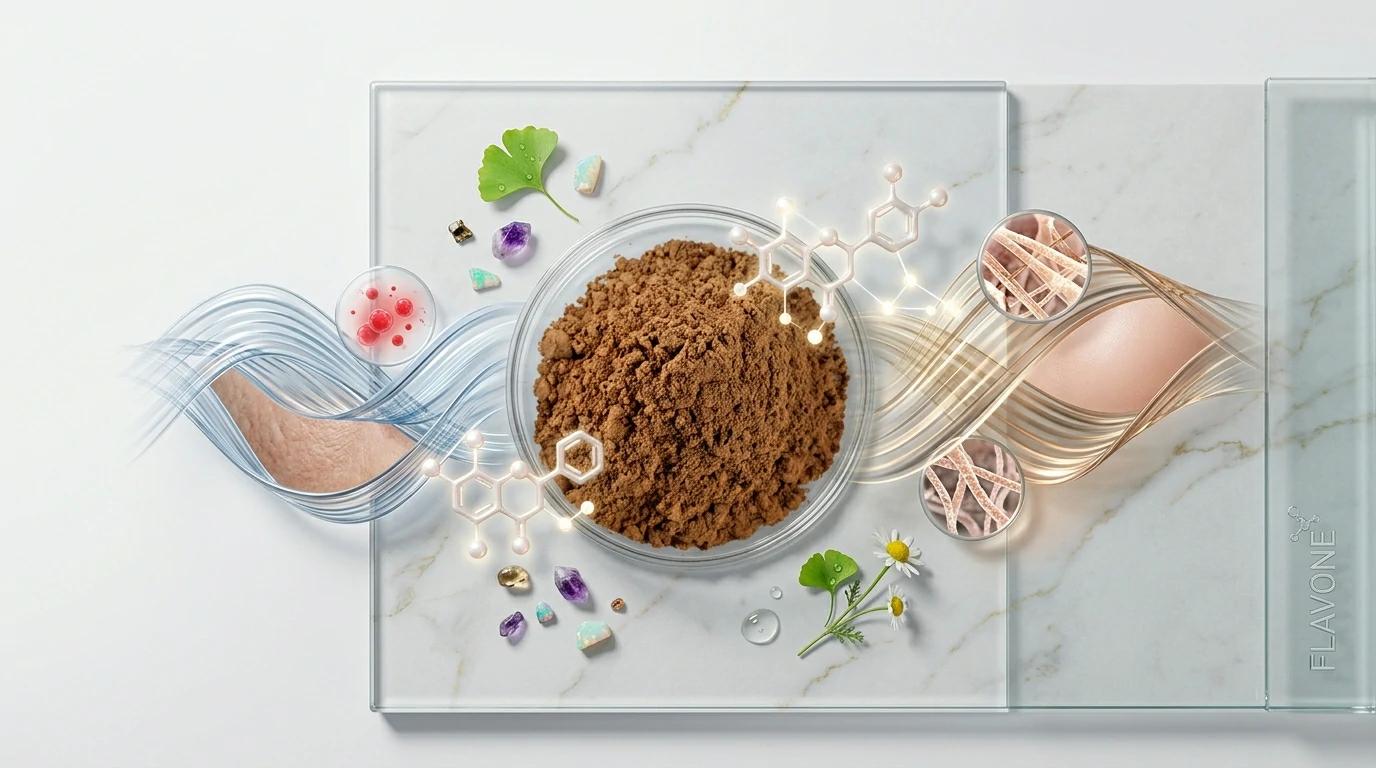
Flavone (2-Phenyl-4H-chromen-4-one) is the simplest member of the flavone subclass of flavonoids — a large family of plant polyphenols found ubiquitously in fruits, vegetables, herbs, and grains. It serves as the parent scaffold from which all flavone derivatives (Apigenin, Luteolin, Chrysin, Baicalein, Tangeretin, etc.) are structurally derived.
Flavone itself occurs naturally in small amounts in primrose flowers (Primula veris), celery, and various other plants, but is most commonly produced synthetically for research and commercial applications due to its structural simplicity and the need for high-purity material.
As the foundational flavone scaffold, it is widely used as:
- A reference standard in flavonoid research and analytical chemistry
- A bioactive ingredient in cosmetic and nutraceutical formulations
- A research tool for studying flavonoid structure-activity relationships
- A precursor for the synthesis of more complex flavone derivatives
CAS Number: 525-82-6
INCI Name: Flavone
Molecular Formula: C₁₅H₁₀O₂
Molecular Weight: 222.24 g/mol
Appearance: White to pale yellow crystalline powder
Solubility: Poorly soluble in water; soluble in ethanol, DMSO, acetone, and oils
Available Specs: 98% purity
Key Benefits of Flavone
- Antioxidant: Scavenges free radicals via the chromone ring system. While less potent than hydroxylated flavone derivatives (Luteolin, Apigenin), Flavone provides a baseline antioxidant activity relevant for formulation and research applications.
- Anti-inflammatory: Inhibits NF-κB and COX-2 pathways, reducing pro-inflammatory cytokine production. Studied for anti-inflammatory applications in both topical and oral contexts.
- Neuroprotection: Studied for neuroprotective effects via GABA-A receptor modulation (anxiolytic-like activity), antioxidant protection of neurons, and anti-neuroinflammatory mechanisms.
- Anti-cancer Research: Investigated for anti-proliferative and pro-apoptotic effects in multiple cancer cell lines, particularly via cell cycle arrest and topoisomerase inhibition.
- Estrogenic / Anti-estrogenic Activity: Exhibits selective estrogen receptor modulator (SERM) activity, with potential applications in hormone-related research.
- Skin Penetration Enhancer: The lipophilic nature of Flavone allows it to penetrate the stratum corneum effectively, and it has been studied as a carrier or penetration enhancer for other actives in topical formulations.
- Antimicrobial: Demonstrates moderate antimicrobial activity against gram-positive bacteria and certain fungi.
Flavone vs. Apigenin vs. Luteolin: Which Flavone Is Best?
Verdict: Flavone is the foundational scaffold and reference standard of the flavone family, with moderate biological activity. Apigenin and Luteolin — its hydroxylated derivatives — are significantly more potent antioxidants and anti-inflammatory agents due to their additional hydroxyl groups. For active cosmetic or nutraceutical applications, Apigenin or Luteolin are preferred. Flavone is most valuable as a research tool, reference standard, and for studying flavonoid structure-activity relationships.
Applications
Research & Analytical Chemistry:
Used as a reference standard in HPLC, mass spectrometry, and flavonoid research. Essential for structure-activity relationship (SAR) studies of the flavone scaffold.
Cosmetic & Skincare:
Used in anti-aging, antioxidant, and anti-inflammatory formulations. Oil-soluble; incorporate into the oil phase of emulsions or anhydrous formulations. Typical topical usage rate: 0.1–1%.
Pharmaceutical Research:
Investigated for neuroprotection, anti-cancer, and anti-inflammatory applications.
Recommended Usage
- Topical: 0.1–1% in oil-based serums, face oils, or oil-in-water emulsions. Incorporate into the oil phase. Combine with Luteolin, Apigenin, and Vitamin C for a comprehensive flavonoid antioxidant system.
- Research: Use as a reference standard or scaffold for flavone derivative synthesis and SAR studies. High purity (≥98%) ensures reliable analytical results.
- Storage: Store in a cool, dry place away from light and moisture. Recommended storage temperature: below 25°C. Keep tightly sealed.
Medical Disclaimer: The information provided here is for educational and informational purposes only and is not intended as medical advice. Always consult with a qualified healthcare provider or licensed physician before using Flavone for therapeutic purposes, especially if you are pregnant, nursing, have hormone-sensitive conditions, or are taking prescription medications. Individual results may vary.