Procyanidin B2
Functions / Benefits
Quality Specifications
| Specification Item | Standard |
|---|---|
| Grade | Cosmetic Grade |
| Recommended Usage | Topical: 0.5%–1.0% (w/w) in scalp tonics; Oral supplement: 100–300 mg/day |
| Property 1 | 98% |
Description
Is Procyanidin B2 Effective for Hair Growth? Benefits, Mechanism & Comparison Guide Explained
Yes, Procyanidin B2 is the most potent naturally occurring hair growth stimulant identified to date, with double-blind, placebo-controlled clinical evidence demonstrating significant increases in hair density and hair diameter after six months of topical application — with efficacy comparable to minoxidil and a superior safety profile.
What Is Procyanidin B2?
Procyanidin B2 (CAS 29106-49-8) is a naturally occurring polyphenol belonging to the proanthocyanidin (condensed tannin) family. Its molecular formula is C₃₀H₂₆O₁₂ and its molecular weight is 578.52 g/mol. It is a dimer of (-)-epicatechin linked via a 4β→8 bond — specifically, epicatechin-(4β→8)-epicatechin — and is the most abundant and most biologically active procyanidin dimer found in apple juice and grape seeds.
Procyanidin B2 belongs to the broader class of oligomeric proanthocyanidins (OPCs) — a family of polyphenolic compounds found throughout the plant kingdom, particularly concentrated in apple peel and juice, grape seeds, pine bark, cocoa, and berries. OPCs are among the most potent natural antioxidants known, with free radical scavenging activity significantly exceeding that of vitamins C and E.
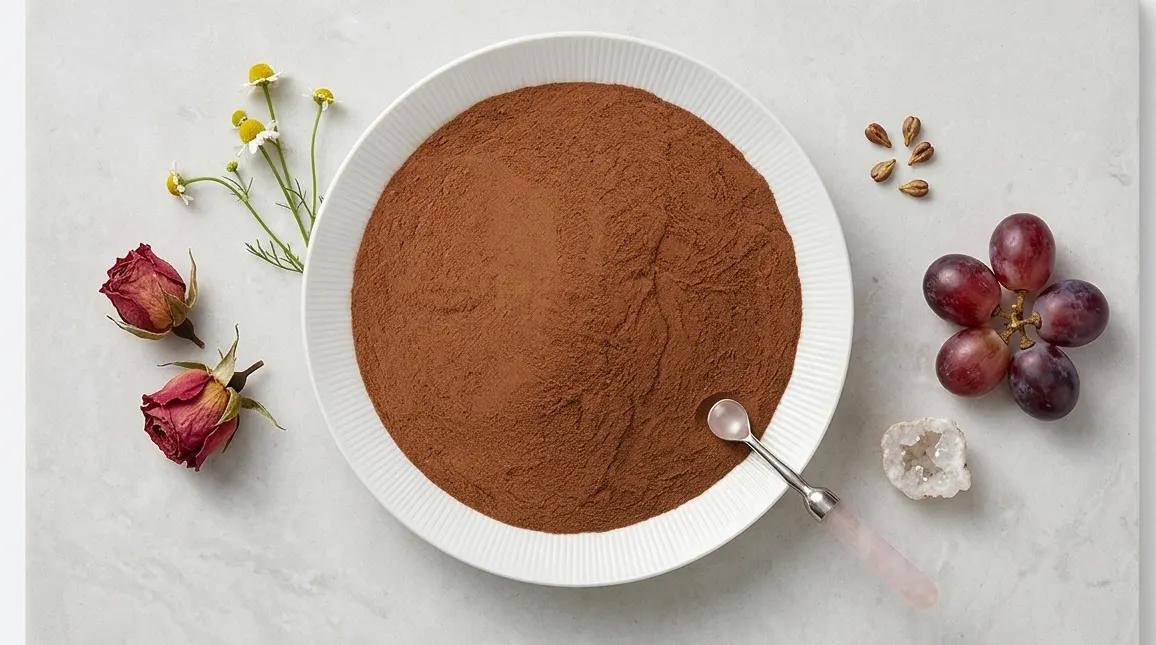
For cosmetic and nutraceutical applications, Procyanidin B2 is purified from apple juice or grape seed extract via HPLC fractionation to ≥95% purity. It is available as a light tan to off-white powder, is water-soluble, and is stable in acidic conditions but sensitive to oxidation at high pH and elevated temperatures.
Key Benefits of Procyanidin B2
Hair Growth Stimulation: The Most Potent Natural Hair Growth Agent. Procyanidin B2’s most distinctive and clinically validated benefit is its ability to stimulate hair growth. In a landmark screening study by Takahashi et al. (Kyowa Hakko Kogyo Co., Japan), researchers tested over 1,000 plant extracts for hair epithelial cell growth-promoting activity. Procyanidin B2 purified from apple juice emerged as the most potent compound identified — promoting hair epithelial cell proliferation at more than 300% relative to controls at 30 μM concentration, significantly outperforming minoxidil (160% at optimal concentration) in the same cell culture system.
The mechanism of action involves selective stimulation of hair epithelial cell proliferation (not dermal fibroblasts or dermal papilla cells), activation of the outer root sheath (which contains hair follicle stem cells), and induction of the anagen (growth) phase from the telogen (resting) phase of the hair cycle. This anagen-inducing activity is the same mechanism by which minoxidil promotes hair growth, but achieved through a distinct molecular pathway.
Clinical Evidence: Double-Blind, Placebo-Controlled Human Trial. A 6-month double-blind, placebo-controlled clinical trial (Takahashi et al., 2001, Cosmetics & Toiletries) involving 29 subjects with male pattern baldness (androgenetic alopecia) demonstrated that topical 1% Procyanidin B2 applied twice daily produced:
- Significant increase in total hair count: +6.68 hairs/0.25 cm² (vs. +0.08 in placebo, p < 0.005)
- Significant increase in non-vellus hairs (>40 μm diameter): +5.79 hairs/0.25 cm² (vs. -1.63 in placebo, p < 0.005)
- Significant increase in terminal hairs (>60 μm diameter): +1.99 hairs/0.25 cm² (vs. -0.82 in placebo, p < 0.02)
- Significantly higher global photographic assessment scores vs. placebo (p < 0.05)
- No adverse side effects: no itchiness, pain, dryness, or scaling
For context, 2% minoxidil therapy has been reported to increase total hair count by approximately 12.3 hairs/0.25 cm² after 12 months. Procyanidin B2 achieved 6.7 hairs/0.25 cm² in just 6 months — a rate of increase that compares favorably with minoxidil, with a significantly better tolerability profile.
Potent Antioxidant Activity. As an oligomeric proanthocyanidin, Procyanidin B2 is a powerful free radical scavenger. OPCs have been shown to have antioxidant activity 20–50 times greater than vitamin E and 15–20 times greater than vitamin C in certain assay systems. This antioxidant activity contributes to its hair growth benefits (oxidative stress is a known contributor to follicle miniaturization in androgenetic alopecia) and provides broader systemic benefits including cardiovascular protection, collagen preservation, and anti-aging effects.
Cardiovascular and Capillary Protection. Proanthocyanidins, including Procyanidin B2, have been extensively studied for cardiovascular benefits. They protect LDL cholesterol from oxidative modification, strengthen capillary walls by binding to collagen and elastin (inhibiting elastase and collagenase activity), reduce platelet aggregation, and improve endothelial function. These vascular benefits also support scalp microcirculation, contributing to improved nutrient delivery to hair follicles.
Collagen and Elastin Protection. Procyanidin B2 inhibits the enzymes elastase and collagenase, protecting the extracellular matrix from degradation. This collagen-protective effect has applications in both anti-aging skincare (reducing wrinkle formation and improving skin elasticity) and scalp health (maintaining the structural integrity of the dermal papilla and follicular environment).
Procyanidin B2 vs. Procyanidin C1 vs. OPC (Grape Seed Extract): Which Is Best?
The proanthocyanidin family includes monomers, dimers, trimers, and higher oligomers, each with different potency profiles and applications. Understanding the differences is essential for formulators and consumers.
Procyanidin B2 (CAS 29106-49-8) is an epicatechin dimer (degree of polymerization = 2), is the most potent single procyanidin compound for hair epithelial cell proliferation (>300% relative to controls at 30 μM), has the highest peak activity of all procyanidin species tested, is used at 0.5%–1.0% w/w in topical scalp tonics, has the strongest clinical evidence base for hair growth (6-month double-blind RCT), is purified from apple juice or grape seed extract to ≥95% purity, and is best suited for targeted hair growth formulations requiring maximum potency at a defined concentration. It is the gold standard single-compound procyanidin for hair growth.
Procyanidin C1 (CAS 37064-30-5) is an epicatechin trimer (degree of polymerization = 3), shows lower peak activity than Procyanidin B2 in hair epithelial cell assays but higher activity at lower concentrations, achieved 78.3% hair growth area in murine in vivo models (vs. 69.6% for Procyanidin B2 and 81.2% for minoxidil), is used at similar concentrations to Procyanidin B2, has emerging research interest for longevity and senolytic applications (2021 Mayo Clinic research), and is best suited for formulations targeting both hair growth and broader anti-aging/senolytic benefits. It is the next-generation procyanidin with expanding research interest.
OPC / Grape Seed Extract (Oligomeric Proanthocyanidins, mixed) is a complex mixture of monomers (catechin, epicatechin), dimers (B1, B2, B3, B4), trimers (C1), and higher oligomers, has the broadest antioxidant and cardiovascular evidence base of all proanthocyanidin forms, is standardized to 95% OPC content in commercial extracts, is used at 50–300 mg/day orally for cardiovascular and antioxidant benefits, has the most extensive clinical evidence for systemic use (cardiovascular protection, chronic venous insufficiency, edema reduction), and is best suited for oral supplementation targeting broad antioxidant, cardiovascular, and anti-inflammatory benefits. It is the most widely used and most cost-effective proanthocyanidin form for systemic health.
Bottom line: For targeted hair growth applications, purified Procyanidin B2 at ≥95% purity is the optimal choice — it delivers the highest peak hair epithelial cell proliferation activity and has the strongest clinical evidence for androgenetic alopecia. For broad antioxidant and cardiovascular benefits via oral supplementation, standardized OPC grape seed extract is the most practical and cost-effective option. Procyanidin C1 is an emerging ingredient of interest for both hair growth and longevity applications.
Formulation and Usage Recommendations
Topical use (hair growth): Procyanidin B2 is used at 0.5%–1.0% w/w in scalp tonic formulations. The clinically validated formulation (Takahashi et al., 2001) used 1% Procyanidin B2 in a 70% ethanol base with 1,3-butylene glycol, applied twice daily (approximately 1.8 ml per dose, delivering 30 mg Procyanidin B2/day). Apply directly to the affected scalp area and massage gently to promote absorption. Do not rinse. Use consistently for a minimum of 3–6 months for measurable results. Combine with biotin, ascorbyl palmitate, and vitamin E for enhanced formulation stability and synergistic scalp health benefits (as used in the clinical trial formulation).
Oral supplementation: For antioxidant and cardiovascular benefits, 100–300 mg/day of standardized OPC extract (or 50–150 mg/day of purified Procyanidin B2) is commonly used. Take with meals for optimal absorption. Procyanidin B2 is water-soluble and does not require fat co-ingestion for absorption.
Safety and Precautions
Procyanidin B2 has an excellent safety profile. Toxicological studies (Takahashi et al., 2001) confirmed no mutagenicity, no primary skin irritation, no skin sensitization, and no eye irritation at cosmetic use concentrations. Acute subcutaneous LD₅₀ > 2,000 mg/kg. No adverse side effects were reported in the 6-month clinical trial. It is non-toxic, non-irritating, and suitable for all skin and scalp types.
Oral proanthocyanidin supplementation is generally well tolerated. At high doses, mild gastrointestinal discomfort (nausea, stomach upset) may occur in some individuals. Procyanidin B2 may have mild antiplatelet effects — individuals taking anticoagulant or antiplatelet medications (warfarin, aspirin, clopidogrel) should consult a healthcare provider before supplementing. Pregnant and breastfeeding women should consult a healthcare provider before use.
Always consult with a qualified healthcare provider or dermatologist before starting Procyanidin B2 supplementation or incorporating new actives into clinical formulations, especially if you have a pre-existing medical condition, are pregnant or nursing, or are taking prescription medications. These statements have not been evaluated by the Food and Drug Administration. This product is not intended to diagnose, treat, cure, or prevent any disease.