Dipotassium Glycyrrhizinate
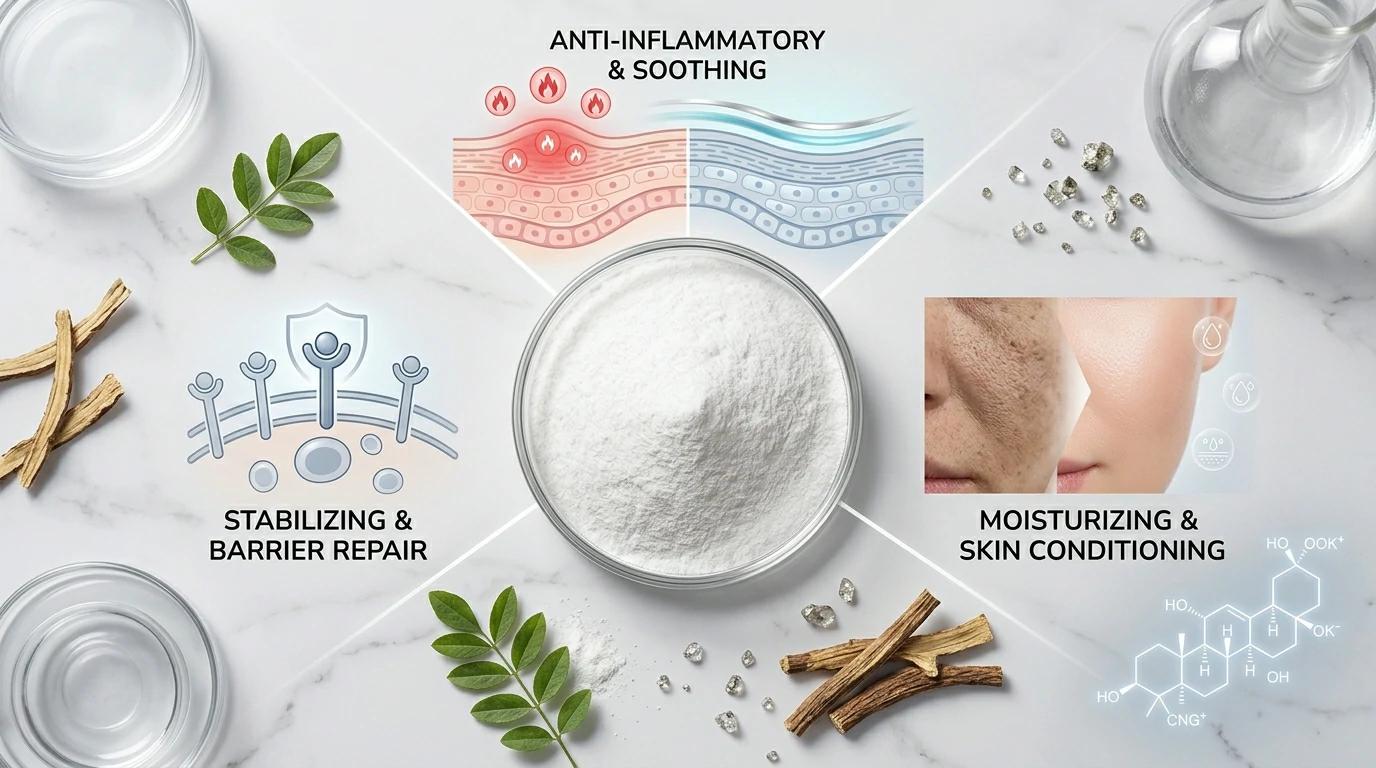
Functions / Benefits
Quality Specifications
| Specification Item | Standard |
|---|---|
| Grade | Cosmetic Grade |
| Recommended Usage | 0.1%–0.5% (topical formulations); 0.1%–0.5% (toothpaste) |
| Property 1 | 98% |
Description
Is Dipotassium Glycyrrhizinate Good for Sensitive Skin? Benefits, Uses & Science Explained
Yes, Dipotassium Glycyrrhizinate is one of the most effective and well-tolerated anti-inflammatory and soothing actives available for sensitive, reactive, and compromised skin — a water-soluble licorice-derived compound with a decades-long safety record in both cosmetics and pharmaceuticals.
What Is Dipotassium Glycyrrhizinate?
Dipotassium Glycyrrhizinate (DPG) is the dipotassium salt of Glycyrrhizic Acid, the primary bioactive saponin of Glycyrrhiza uralensis (Chinese Licorice) and Glycyrrhiza glabra (European Licorice) root. It is the water-soluble, cosmetically optimized form of Glycyrrhizic Acid, offering superior skin compatibility and formulation versatility compared to the free acid form.
Glycyrrhizic Acid is 50–150× sweeter than sucrose and has been used in Traditional Chinese Medicine for over 4,000 years as an anti-inflammatory, antiviral, and harmonizing herb. Dipotassium Glycyrrhizinate retains the full biological activity of Glycyrrhizic Acid while offering improved water solubility and reduced irritation potential — making it the preferred form for cosmetic applications.
CAS Number: 68797-35-3
INCI Name: Dipotassium Glycyrrhizate
Latin Name: Glycyrrhiza uralensis Fisch. / Glycyrrhiza glabra L.
Molecular Formula: C₄₂H₆K₂O₁₆
Molecular Weight: 899.10 g/mol
Appearance: White to off-white powder
Solubility: Water-soluble
Available Specs: 98% purity
Key Benefits of Dipotassium Glycyrrhizinate
- Anti-inflammatory (Cortisone-like): Inhibits phospholipase A2 and 11β-HSD2, producing a cortisone-like anti-inflammatory effect without the side effects of topical steroids. Reduces redness, swelling, and irritation in sensitive and reactive skin.
- Soothing & Calming: Rapidly calms skin reactivity, redness, and discomfort. Particularly effective for rosacea, eczema, contact dermatitis, and post-procedure skin recovery.
- Skin Brightening: Inhibits tyrosinase activity and melanin transfer, reducing hyperpigmentation, dark spots, and uneven skin tone. A key brightening active in Asian skincare formulations.
- Antioxidant: Scavenges free radicals and reduces oxidative stress-driven skin damage.
- Antiviral: Demonstrated antiviral activity against herpes simplex virus (HSV), influenza, and SARS-CoV-2 in vitro. Used in antiviral cosmetic and pharmaceutical formulations.
- Barrier Repair: Supports ceramide synthesis and skin barrier function, reducing transepidermal water loss (TEWL) in compromised skin.
- Preservative Booster: Enhances the efficacy of cosmetic preservative systems, allowing for reduced preservative concentrations in formulations.
- Oral Health: Used in oral care products (toothpastes, mouthwashes) for anti-inflammatory and antimicrobial benefits.
Dipotassium Glycyrrhizinate vs. Glycyrrhizic Acid vs. Glabridin: Which Licorice Active Is Best?
Verdict: Dipotassium Glycyrrhizinate is the most versatile and formulation-friendly licorice active, offering excellent water solubility, superior soothing and anti-inflammatory activity, and broad compatibility with cosmetic systems. Glabridin is the superior choice for skin brightening applications but requires oil-phase incorporation. For a comprehensive licorice-based formulation, combining Dipotassium Glycyrrhizinate (water phase, soothing) with Glabridin (oil phase, brightening) delivers synergistic anti-inflammatory and brightening benefits.
Applications
Cosmetic & Skincare:
Used in soothing serums, sensitive skin moisturizers, brightening treatments, rosacea formulations, post-procedure recovery products, and sunscreen formulations. Dipotassium Glycyrrhizinate is water-soluble and compatible with most cosmetic formulation systems. Typical topical usage rate: 0.1–1%. Stable across a wide pH range (4.0–7.5).
Oral Care:
Used in toothpastes, mouthwashes, and oral gels for anti-inflammatory and antimicrobial benefits. Typical usage rate: 0.1–0.5%.
Pharmaceutical:
Used in topical anti-inflammatory formulations, antiviral creams, and oral pharmaceutical preparations.
Recommended Usage
- Topical: 0.1–1% in water-based serums, toners, emulsions, or gel formulations. Add to the water phase during formulation. Combine with Niacinamide, Centella Asiatica, and Ceramides for a comprehensive sensitive skin and barrier-repair system. Suitable for all skin types, including sensitive, rosacea-prone, and post-procedure skin.
- Storage: Store in a cool, dry place away from light and moisture. Recommended storage temperature: below 25°C. Keep tightly sealed to prevent hygroscopic degradation.
Medical Disclaimer: The information provided here is for educational and informational purposes only and is not intended as medical advice. Always consult with a qualified healthcare provider or licensed physician before using Dipotassium Glycyrrhizinate for therapeutic purposes, especially if you are pregnant, nursing, have hypertension, kidney disease, or hypokalemia (oral glycyrrhizin can cause pseudoaldosteronism at high doses). Topical use at cosmetic concentrations is generally considered safe. Individual results may vary.