Glabridin
Functions / Benefits
Quality Specifications
| Specification Item | Standard |
|---|---|
| Grade | Cosmetic Grade |
| Recommended Usage | 0.01%–0.5% (topical formulations) |
| Property 1 | 90% |
| Property 2 | 98% |
Description
Is Glabridin the Best Natural Skin Brightening Ingredient? Benefits, Dosage & Science Explained
Yes, Glabridin is widely regarded as one of the most potent natural tyrosinase inhibitors available — a licorice-derived isoflavane with clinical evidence for reducing hyperpigmentation, dark spots, and uneven skin tone, making it a gold-standard brightening active in premium skincare formulations.
What Is Glabridin?
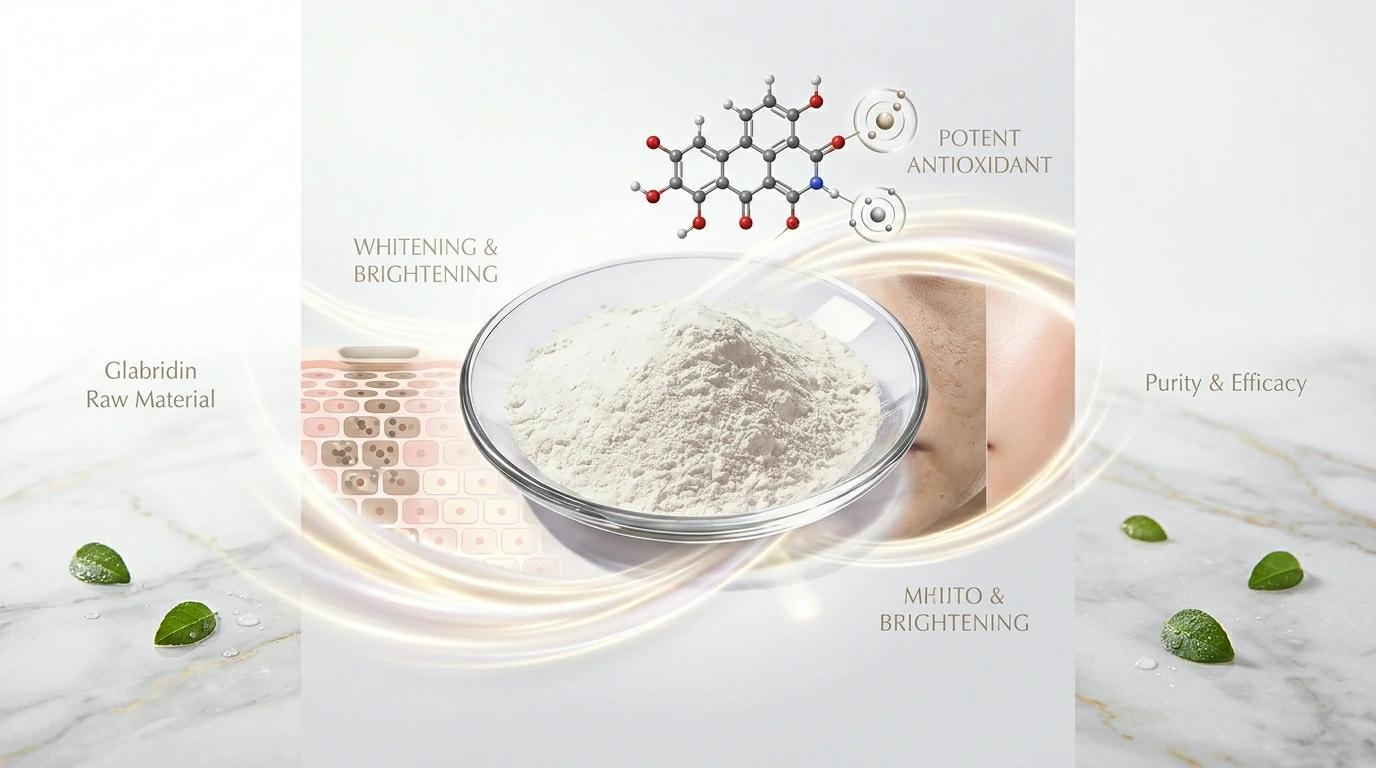
Glabridin is a prenylated isoflavane (a type of flavonoid) isolated from the root of Glycyrrhiza glabra (European Licorice). It is the primary lipophilic bioactive of licorice root, responsible for its exceptional skin-brightening, anti-inflammatory, and antioxidant properties.
Glabridin is oil-soluble (lipophilic), which gives it excellent skin penetration and affinity for the lipid-rich stratum corneum — a key advantage for topical brightening applications. It is one of the few natural ingredients with clinical human data demonstrating measurable reduction in UV-induced hyperpigmentation.
CAS Number: 59870-68-7
INCI Name: Glycyrrhiza Glabra (Licorice) Root Extract
Latin Name: Glycyrrhiza glabra L.
Molecular Formula: C₂₀H₂ O₄
Molecular Weight: 324.37 g/mol
Appearance: White to off-white powder
Solubility: Oil-soluble (lipophilic); soluble in ethanol, propylene glycol, and oils; poorly soluble in water
Available Specs: 90%, 98% purity
Key Benefits of Glabridin
- Skin Brightening (Tyrosinase Inhibition): Glabridin is a potent competitive inhibitor of tyrosinase, the key enzyme in melanin biosynthesis. Studies show it is approximately 16× more potent than kojic acid in tyrosinase inhibition. Reduces UV-induced hyperpigmentation, melasma, dark spots, and post-inflammatory hyperpigmentation (PIH).
- Anti-inflammatory: Inhibits cyclooxygenase (COX) activity and superoxide anion production, reducing skin inflammation and redness. Particularly effective for inflammation-driven hyperpigmentation.
- Antioxidant: Scavenges free radicals and reduces oxidative stress-driven skin damage. Protects against UV-induced lipid peroxidation in the skin.
- Estrogen-like Activity: Binds to estrogen receptors (ERα and ERβ) with selective activity, supporting skin hydration, collagen synthesis, and skin thickness — particularly relevant for menopausal skin care.
- Neuroprotection: Studied for neuroprotective effects via estrogen receptor modulation and antioxidant activity.
- Anti-adipogenic: Inhibits adipocyte differentiation and lipid accumulation, studied for body slimming and anti-cellulite applications.
Glabridin vs. Kojic Acid vs. Alpha-Arbutin: Which Is the Best Skin Brightening Ingredient?
Applications
Cosmetic & Skincare:
Used in brightening serums, spot treatments, anti-melasma creams, sunscreen formulations, and premium anti-aging products. Glabridin is oil-soluble and must be incorporated into the oil phase of emulsions or anhydrous formulations. Typical topical usage rate: 0.1–0.5%. Combine with Vitamin C, Niacinamide, and Dipotassium Glycyrrhizinate for a comprehensive brightening and soothing system.
Recommended Usage
- Topical: 0.1–0.5% in oil-based serums, face oils, or oil-in-water emulsions. Incorporate into the oil phase during formulation. Combine with Niacinamide (water phase) and Vitamin C for a comprehensive multi-pathway brightening system. Stable at pH 4.0–7.0. Protect from prolonged UV exposure to maintain stability.
- Storage: Store in a cool, dark place away from light, heat, and moisture. Recommended storage temperature: below 25°C. Keep tightly sealed to prevent oxidation.
Medical Disclaimer: The information provided here is for educational and informational purposes only and is not intended as medical advice. Always consult with a qualified healthcare provider or licensed physician before using Glabridin for therapeutic purposes, especially if you are pregnant or nursing (due to its estrogen-like activity), have hormone-sensitive conditions (estrogen-dependent cancers, endometriosis, uterine fibroids), or are taking hormone medications. Patch testing is recommended before full application. Individual results may vary.