Glutathione
Key Benefits
- Antioxidant
- Skin Brightening
- Whitening
- Anti-aging
- Detoxification
- Immune Support
- Anti-inflammatory
Product Overview & Specifications
Is Glutathione Good for Skin Brightening and Health? Benefits, Uses & Side Effects Explained
Yes, glutathione is one of the most potent antioxidants found in the human body, widely recognized for its skin-brightening, detoxifying, and immune-supporting properties. It is used extensively in both cosmetic formulations and oral supplements.
What Is Glutathione?
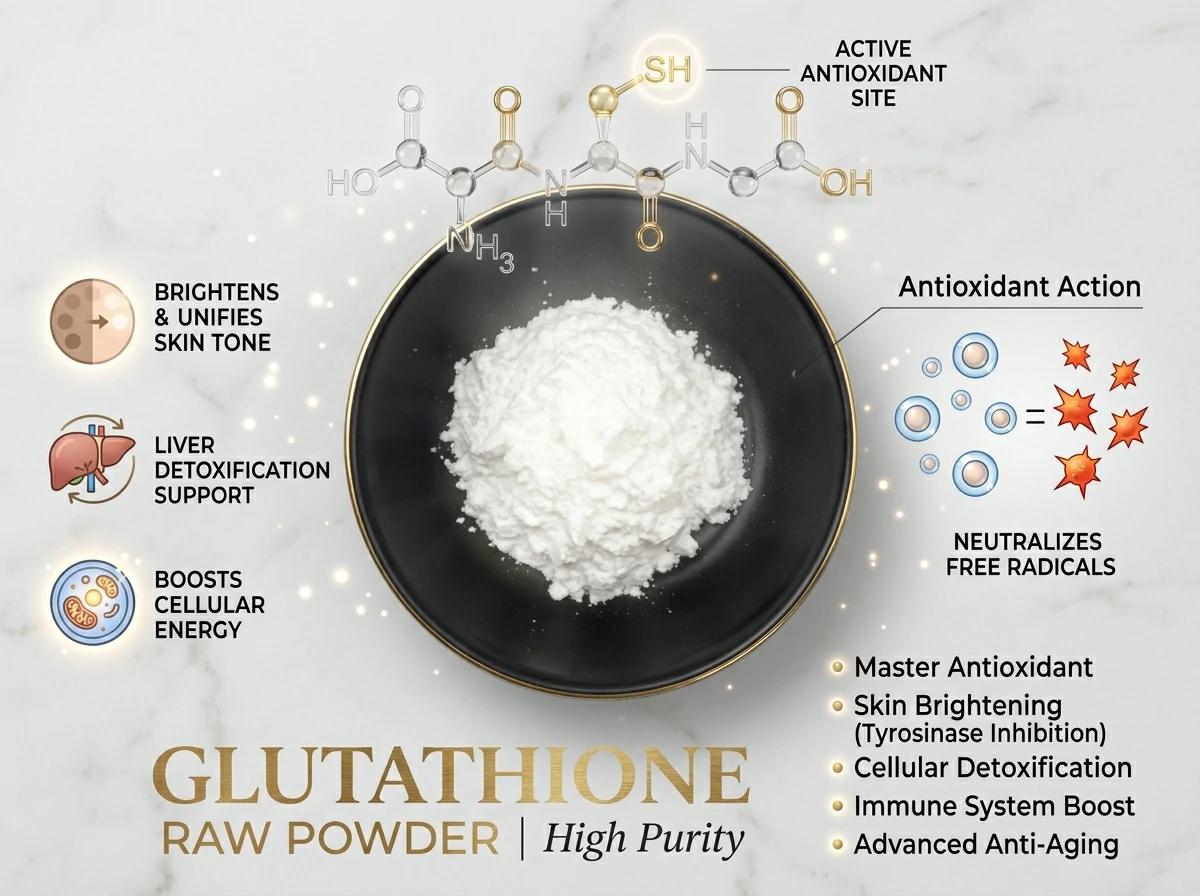
Glutathione (GSH) is a tripeptide composed of three amino acids: glutamine, cysteine, and glycine. It is naturally synthesized in the liver and is present in virtually every cell of the human body. As the body’s “master antioxidant,” it plays a critical role in neutralizing free radicals, supporting immune function, and facilitating detoxification.
CAS Number: 70-18-8
Molecular Formula: C₁₀H₁₇N₃O₆S
Molecular Weight: 307.32 g/mol
INCI Name: Glutathione
Appearance: White to off-white crystalline powder
Solubility: Freely soluble in water
Key Benefits of Glutathione
- Skin Brightening & Whitening: Inhibits tyrosinase activity, reducing melanin synthesis for a more even skin tone.
- Powerful Antioxidant: Neutralizes reactive oxygen species (ROS) and regenerates vitamins C and E.
- Detoxification: Binds to toxins, heavy metals, and carcinogens in the liver for safe elimination.
- Anti-aging: Reduces oxidative stress-related cellular damage, supporting skin elasticity and firmness.
- Immune Support: Enhances T-cell proliferation and natural killer (NK) cell activity.
- Anti-inflammatory: Modulates inflammatory pathways, reducing cytokine-driven inflammation.
Glutathione vs. Vitamin C: Which Is the Better Antioxidant?
Glutathione and Vitamin C are both cornerstone antioxidants, but they work differently and are often used together for synergistic effect.
Feature
Glutathione (GSH)
Vitamin C (Ascorbic Acid)
Type
Tripeptide
Small molecule vitamin
Primary Role
Master intracellular antioxidant
Extracellular antioxidant
Skin Brightening
✅ Strong (tyrosinase inhibition)
✅ Moderate
Bioavailability (oral)
Moderate (liposomal form preferred)
High
Regenerates Other Antioxidants
✅ Yes (recycles Vitamin C & E)
✅ Yes (recycles Vitamin E)
Detoxification
✅ Strong (liver phase II)
❌ Limited
Stability in Formulation
Moderate (sensitive to oxidation)
Low (highly unstable)
Recommended Combination
Often paired with Vitamin C
Often paired with Glutathione
Verdict: Glutathione and Vitamin C are complementary rather than competitive. Combining both amplifies antioxidant protection and skin-brightening efficacy — Vitamin C helps regenerate oxidized glutathione back to its active reduced form.
Applications
Cosmetic & Skincare:
Used in serums, creams, masks, and injectables targeting hyperpigmentation, uneven skin tone, and photoaging. Typical topical usage rate: 0.5–2%.
Nutraceuticals & Supplements:
Available in capsules, tablets, sublingual tablets, and liposomal formulations. Common oral dosage: 250–1000 mg/day.
Pharmaceutical:
Used in IV infusions for liver protection, chemotherapy support, and Parkinson’s disease research.
Recommended Usage
- Topical: 0.5–2% in finished formulations; combine with Vitamin C for enhanced stability and efficacy.
- Oral Supplement: 250–500 mg/day for general antioxidant support; up to 1000 mg/day under medical supervision.
- IV/Injection: Administered by healthcare professionals only; dosage varies by indication.
Medical Disclaimer: The information provided here is for educational and informational purposes only and is not intended as medical advice. Always consult with a qualified healthcare provider or licensed physician before starting any new supplement regimen, especially if you are pregnant, nursing, have a pre-existing medical condition, or are taking prescription medications. Individual results may vary.
Product Performance
- Purity≥98%
- Available specifications98%
- Latin nameGlutathione (GSH)
- Usage rate0.5–2% (topical); 250–1000 mg/day (oral supplement)
Technical Documentation
COA, MSDS, and HPLC assay report documents are available upon request for each batch.
Request Technical FilesWholesale Sourcing Request
Get HPLC reports, MSDS sheets, and bulk wholesale volume discounts.