
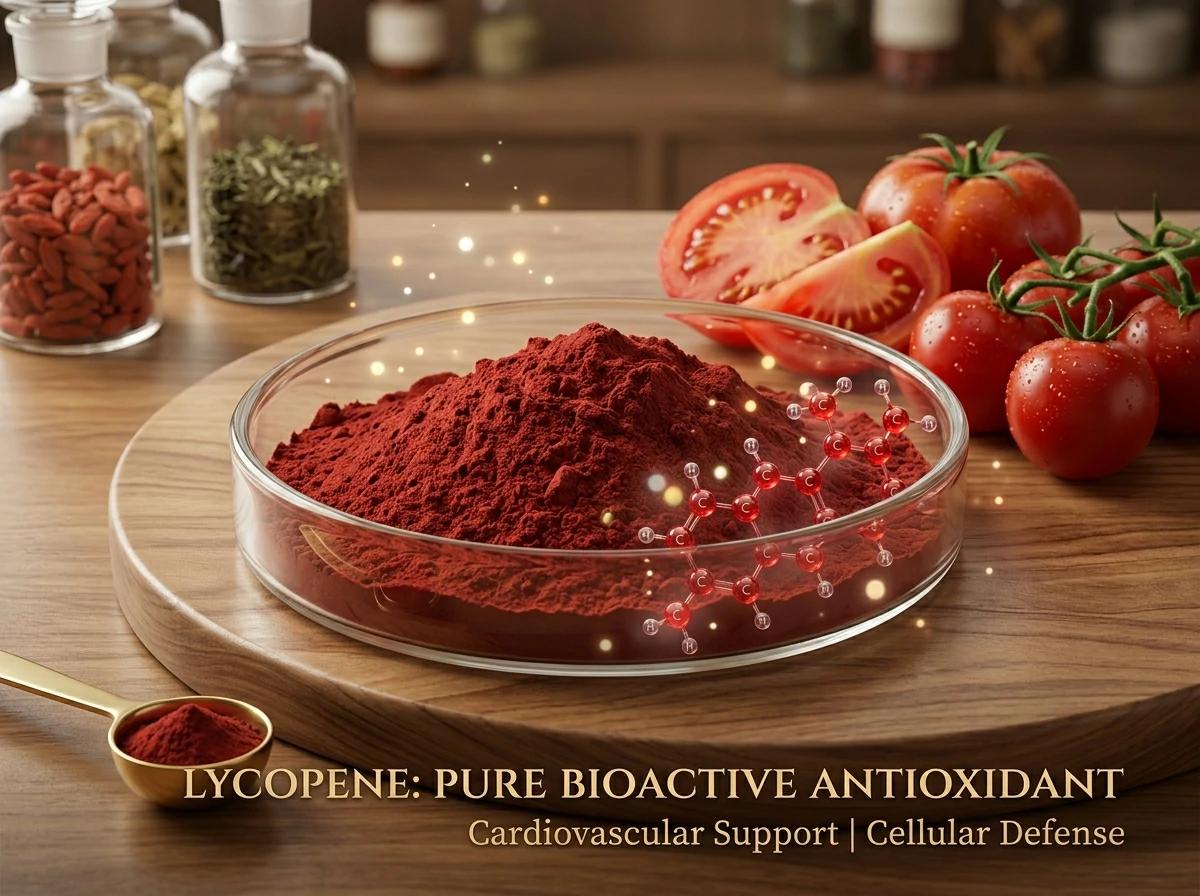
Lycopene
Functions / Benefits
Quality Specifications
| Specification Item | Standard |
|---|---|
| Grade | Food Grade |
| Recommended Usage | 0.01–0.05% (topical); 10–30 mg/day (oral supplement) |
| Property 1 | 10% |
| Property 2 | 20% |
| Property 3 | 6% |
Description
Is Lycopene Good for Skin and Prostate Health? Benefits, Dosage & Side Effects Explained
Yes, Lycopene is one of the most potent carotenoid antioxidants found in nature, with well-documented benefits for cardiovascular health, prostate protection, UV-induced skin aging, and systemic inflammation — backed by decades of clinical and epidemiological research.
What Is Lycopene?
Lycopene is a naturally occurring carotenoid pigment responsible for the vivid red color of tomatoes, watermelon, pink grapefruit, and guava. Unlike most carotenoids, lycopene has no pro-vitamin A activity, meaning it does not convert to retinol in the body — making it free from the toxicity risks associated with excess Vitamin A intake.
Lycopene is a highly unsaturated acyclic hydrocarbon with 11 conjugated double bonds, giving it exceptional singlet oxygen quenching capacity. It accumulates preferentially in the prostate gland, liver, adrenal glands, and skin, where it exerts targeted antioxidant and anti-inflammatory effects.
CAS Number: 502-65-8
INCI Name: Lycopene
Latin Name: Solanum lycopersicum (Tomato)
Molecular Formula: C₄₀H₅₆
Molecular Weight: 536.87 g/mol
Appearance: Dark red crystalline powder
Primary Source: Tomato (Solanum lycopersicum); also watermelon, pink grapefruit, guava
Available Specs: 5%, 10%, 20% standardized extract; ≥96% pure
Key Benefits of Lycopene
- Powerful Antioxidant: Quenches singlet oxygen approximately 100× more effectively than Vitamin C and twice as effectively as Beta-Carotene, neutralizing free radicals that drive cellular aging.
- Prostate Health: Epidemiological and clinical studies consistently associate higher lycopene intake with reduced risk of prostate cancer and benign prostatic hyperplasia (BPH). Lycopene accumulates at the highest concentrations in prostate tissue.
- Cardiovascular Protection: Reduces LDL oxidation, lowers inflammatory markers (CRP, IL-6), and supports healthy endothelial function, contributing to reduced cardiovascular disease risk.
- UV Photoprotection: Dietary lycopene accumulates in skin and provides measurable protection against UV-induced erythema (sunburn) and photoaging by neutralizing UV-generated ROS.
- Skin Anti-aging & Brightening: Protects collagen and elastin from oxidative degradation; reduces UV-triggered melanin overproduction for a more even skin tone.
- Anti-inflammatory: Inhibits NF-κB signaling and downregulates pro-inflammatory cytokines (TNF-α, IL-1β), supporting systemic anti-inflammatory activity.
- Anti-cancer Research: Extensively studied for chemopreventive properties across prostate, lung, breast, and gastric cancers, though clinical evidence remains investigational.
- Bone Health: Emerging research suggests lycopene may reduce oxidative stress-driven bone resorption, supporting skeletal health in postmenopausal women.
Lycopene vs. Astaxanthin vs. Beta-Carotene: Which Carotenoid Should You Choose?
Lycopene, Astaxanthin, and Beta-Carotene are the three most commercially significant carotenoids. Each has a distinct biological profile and optimal application range.
Verdict: Lycopene is the standout choice for prostate health and cardiovascular protection, with the strongest clinical evidence base among carotenoids for these indications. Astaxanthin leads in overall antioxidant potency and eye health. Beta-Carotene provides pro-vitamin A activity but carries pro-oxidant risk at high doses. For comprehensive carotenoid coverage, combining Lycopene with Astaxanthin and Vitamin E delivers broad-spectrum protection across skin, cardiovascular, and systemic health.
Applications
Cosmetic & Skincare:
Used in anti-aging serums, sunscreens, brightening creams, and after-sun formulations. Due to its intense red pigment, lycopene is typically used at low concentrations (0.01–0.05%) in oil-soluble or encapsulated forms to minimize color impact. Pairs well with Vitamin E and Astaxanthin for synergistic photoprotection.
Nutraceuticals & Supplements:
Available in softgels, capsules, and oil suspensions. Bioavailability is significantly enhanced by heat processing (cooked tomatoes, tomato paste) and co-ingestion with dietary fat. Common oral dosage: 10–30 mg/day. Tomato-derived lycopene is preferred over synthetic sources for human supplementation.
Functional Foods & Beverages:
Used as a natural red colorant and functional ingredient in health drinks, meal replacements, and fortified foods. Approved as a food colorant in the EU (E160d) and as a dietary supplement ingredient in the US.
Recommended Usage
- Topical: 0.01–0.05% in oil-based or emulsion formulations; use encapsulated or microencapsulated lycopene to control color and improve stability. Combine with Vitamin E and Astaxanthin for enhanced UV protection and anti-aging efficacy.
- Oral Supplement: 10–15 mg/day for general antioxidant and cardiovascular support; 20–30 mg/day for prostate health or intensive anti-aging protocols. Always take with a fat-containing meal to maximize absorption. Cooked or processed tomato-based foods (tomato paste, sauce) provide significantly higher bioavailable lycopene than raw tomatoes.
- Storage: Store in a cool, dark place away from light, heat, and oxygen. Recommended storage temperature: 2–8°C. Protect from UV exposure and moisture to prevent pigment degradation and isomerization.
Medical Disclaimer: The information provided here is for educational and informational purposes only and is not intended as medical advice. Always consult with a qualified healthcare provider or licensed physician before starting any new supplement regimen, especially if you are pregnant, nursing, managing a hormone-sensitive condition, or taking prescription medications. While lycopene has been associated with reduced cancer risk in observational studies, it is not approved as a cancer treatment or prevention therapy. Individual results may vary.