
KPV: The Skin's Immunomodulator
COSPEP introduces KPV (Lysine-Proline-Valine), a revolutionary biomimetic tripeptide for managing Atopic Dermatitis and Psoriasis. By inhibiting the NF-κB pathway and modulating cytokines, KPV offers a potent, non-steroidal alternative that restores skin homeostasis without the side effects of corticosteroids.
A New Era in Atopic Dermatitis and Psoriasis Management
At COSPEP, we have spent years at the forefront of peptide research, seeking raw materials that do more than just superficially hydrate or temporarily soothe the skin. We look for molecules that speak the skin’s biological language. Today, I want to talk to you about what is arguably the most exciting breakthrough in dermatological raw materials for chronic inflammatory conditions: the tripeptide KPV (Lysine-Proline-Valine).
As a supplier of premium cosmetic and dermatological active ingredients, we at COSPEP constantly hear from brand founders, formulators, and dermatologists about the same persistent challenges. The modern skincare landscape is battling an epidemic of compromised skin barriers. Among the most recalcitrant and agonizing of these conditions are Atopic Dermatitis (AD) and Psoriasis. For decades, the industry has relied on a double-edged sword to treat these conditions. But now, through the profound immunomodulatory power of KPV, we are looking at a genuine paradigm shift.
In this comprehensive overview, I will share our insights at COSPEP on how KPV is redefining the treatment of the skin's most stubborn inflammatory diseases, how it effectively dismantles the cycle of redness and itching, and why we believe it holds the key to dramatically reducing—and in some cases, replacing—the use of topical corticosteroids.
The Crisis of Chronic Inflammation and the Corticosteroid Trap
To understand why we at COSPEP are so deeply invested in KPV, we must first look at the clinical reality of the diseases we are trying to manage.
Atopic Dermatitis (eczema) and Psoriasis are not merely cosmetic issues; they are debilitating immunological disorders that manifest on the skin. AD is characterized by severe barrier dysfunction and a Th2-skewed immune response, leading to unbearable pruritus (itching), weeping lesions, and chronic erythema (redness). Psoriasis, on the other hand, is driven by a Th17-mediated immune response, resulting in the hyperproliferation of keratinocytes. This manifests as thick, scaly, and deeply inflamed erythematous plaques.
For over half a century, the gold standard for managing these fierce flare-ups has been Topical Corticosteroids (TCS). There is no denying that steroids work quickly to suppress the immune system and bring down inflammation. However, as raw material suppliers observing the long-term clinical outcomes, we know the "corticosteroid trap" all too well.
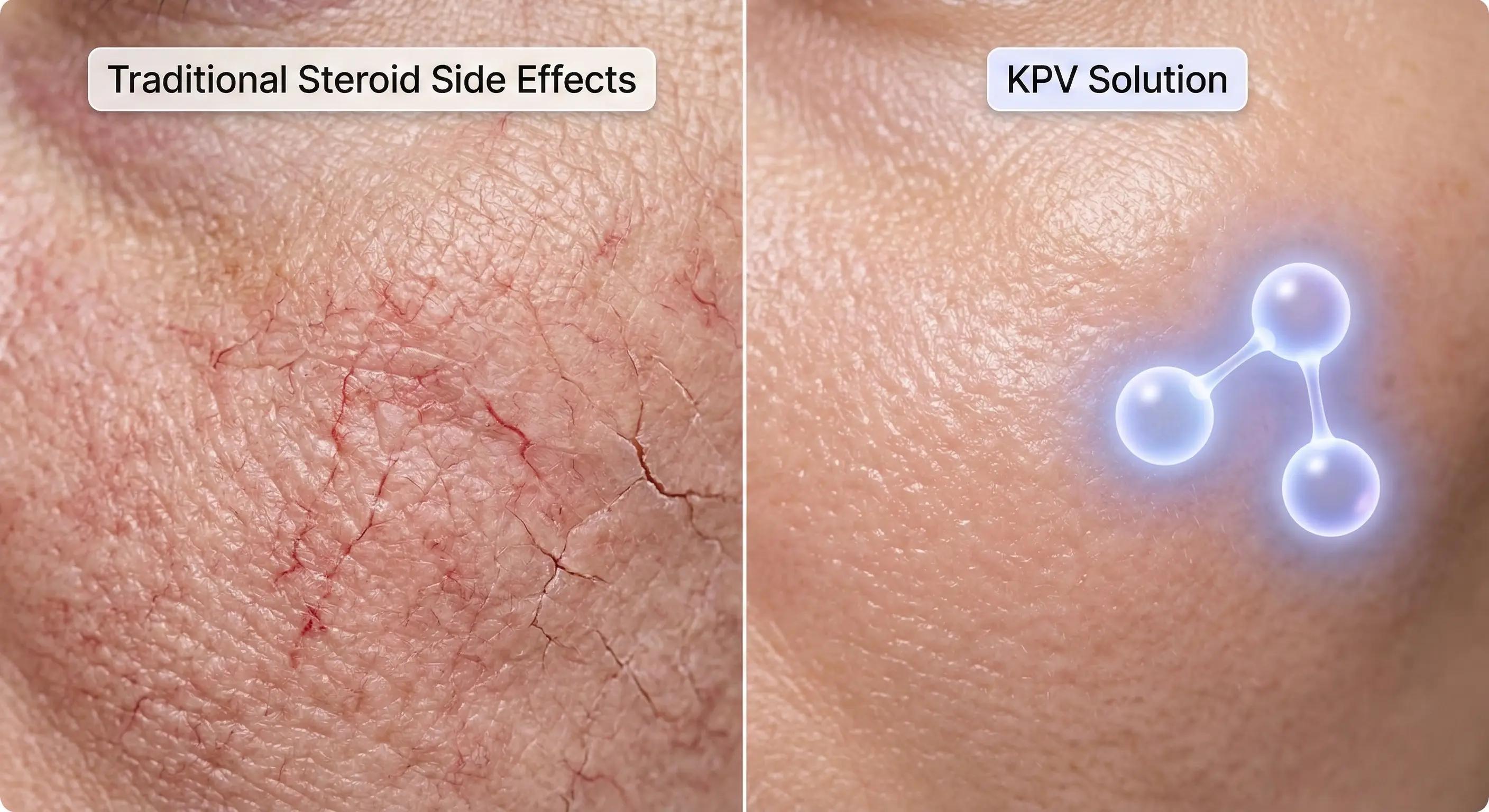
Prolonged use of TCS leads to skin atrophy (thinning), telangiectasia (spider veins), and a terrifying phenomenon known as Topical Steroid Withdrawal (TSW) or "red skin syndrome." The skin becomes addicted. When the patient tries to stop, the rebound flare is often worse than the original disease. Furthermore, corticosteroids do not repair the skin barrier; they merely mute the alarm system while the underlying structural integrity continues to degrade.
Formulators and medical professionals have been desperately searching for an alternative—a molecule that can mimic the profound anti-inflammatory power of steroids without the catastrophic side effects. At COSPEP, we recognized that the answer was hiding within the human body’s own regulatory systems. The answer is KPV.
What is KPV? The Alpha-MSH Connection
To introduce KPV, I must first introduce alpha-melanocyte-stimulating hormone (α-MSH). α-MSH is a naturally occurring peptide hormone in the human body known for its potent immunomodulatory and anti-inflammatory properties. When the body experiences severe inflammation, α-MSH is deployed to calm the storm and maintain homeostasis.
However, α-MSH is a large peptide (13 amino acids) and, as its name suggests, it stimulates melanocytes, leading to skin darkening—an undesirable side effect for most therapeutic skincare applications.
Through advanced peptide engineering, scientists discovered that the entire anti-inflammatory capability of α-MSH is localized in its very last three amino acids at the C-terminus: Lysine, Proline, and Valine. By isolating this specific tripeptide—KPV—we capture the pure, unadulterated anti-inflammatory power of the parent hormone without any of the pigment-inducing side effects.
At COSPEP, we have perfected the synthesis of KPV, producing a highly purified, exceptionally stable, and highly bioavailable raw material. Because it is a tiny tripeptide, KPV possesses a low molecular weight that allows it to penetrate the stratum corneum with remarkable efficiency, reaching the living layers of the epidermis and dermis where immune cells reside.
Modulating the Local Immune Microenvironment
So, how does COSPEP’s KPV actually work when applied to a psoriasis plaque or an oozing patch of atopic dermatitis? The magic lies in its ability to reprogram the local immune microenvironment. It does not blindly suppress the immune system like a corticosteroid; rather, it modulates it, restoring balance.
1. Shutting Down the NF-κB Pathway
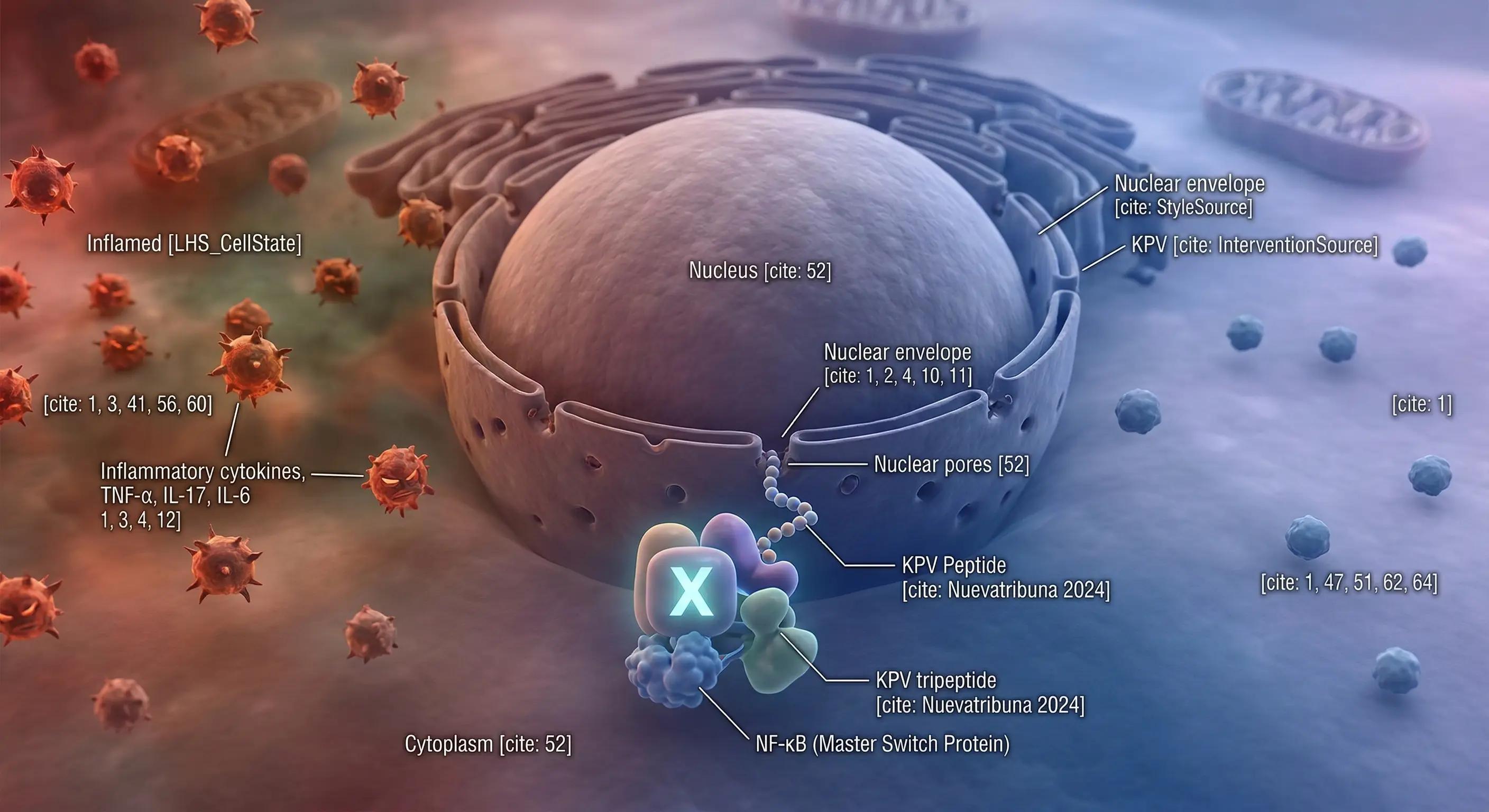
The cornerstone of KPV’s efficacy is its interaction with the NF-κB (Nuclear Factor kappa-light-chain-enhancer of activated B cells) signaling pathway. NF-κB is essentially the "master switch" for inflammation in human cells. In AD and Psoriasis, this switch is permanently stuck in the "ON" position.
When applied topically, KPV enters the skin cells (keratinocytes, macrophages, and dendritic cells) and inhibits the translocation of NF-κB into the cell nucleus. By preventing this transcription factor from reaching the DNA, KPV abruptly halts the production of a massive cascade of pro-inflammatory cytokines.
2. Downregulating Cytokine Storms
By shutting down NF-κB, we see a dramatic reduction in specific inflammatory messengers. In our research and collaborative studies, KPV has been shown to aggressively downregulate:
- IL-1β and TNF-α: The primary drivers of systemic and localized inflammation, responsible for tissue destruction and severe erythema (redness).
- IL-4 and IL-13: The key Th2 cytokines that drive the pathology of Atopic Dermatitis.
- IL-17 and IL-23: The primary culprits behind the rapid skin cell turnover and plaque formation in Psoriasis.
3. Promoting Regulatory T Cells (Tregs)
Perhaps the most fascinating aspect of KPV—and why we at COSPEP champion it so highly—is its ability to promote an immunosuppressive, healing microenvironment. While it dials down the aggressive Th1, Th2, and Th17 cells, it actively supports the function of Regulatory T cells (Tregs). Tregs are the "peacekeepers" of the immune system. By boosting Treg activity locally in the skin, KPV helps the skin "remember" how to tolerate environmental triggers, leading to longer periods of remission between flare-ups.
Breaking the Itch-Scratch Cycle in Atopic Dermatitis
If you ask any patient with Atopic Dermatitis what the worst part of their disease is, the answer is always the same: the itch. Pruritus in AD is unrelenting. It causes sleep deprivation, psychological distress, and triggers the "itch-scratch cycle." Scratching physically tears the already fragile skin barrier, introducing bacteria (like Staphylococcus aureus) which triggers more inflammation, which in turn causes more itching.
At COSPEP, we evaluate raw materials based on their ability to intervene in this specific, vicious cycle. KPV excels here through two distinct mechanisms:
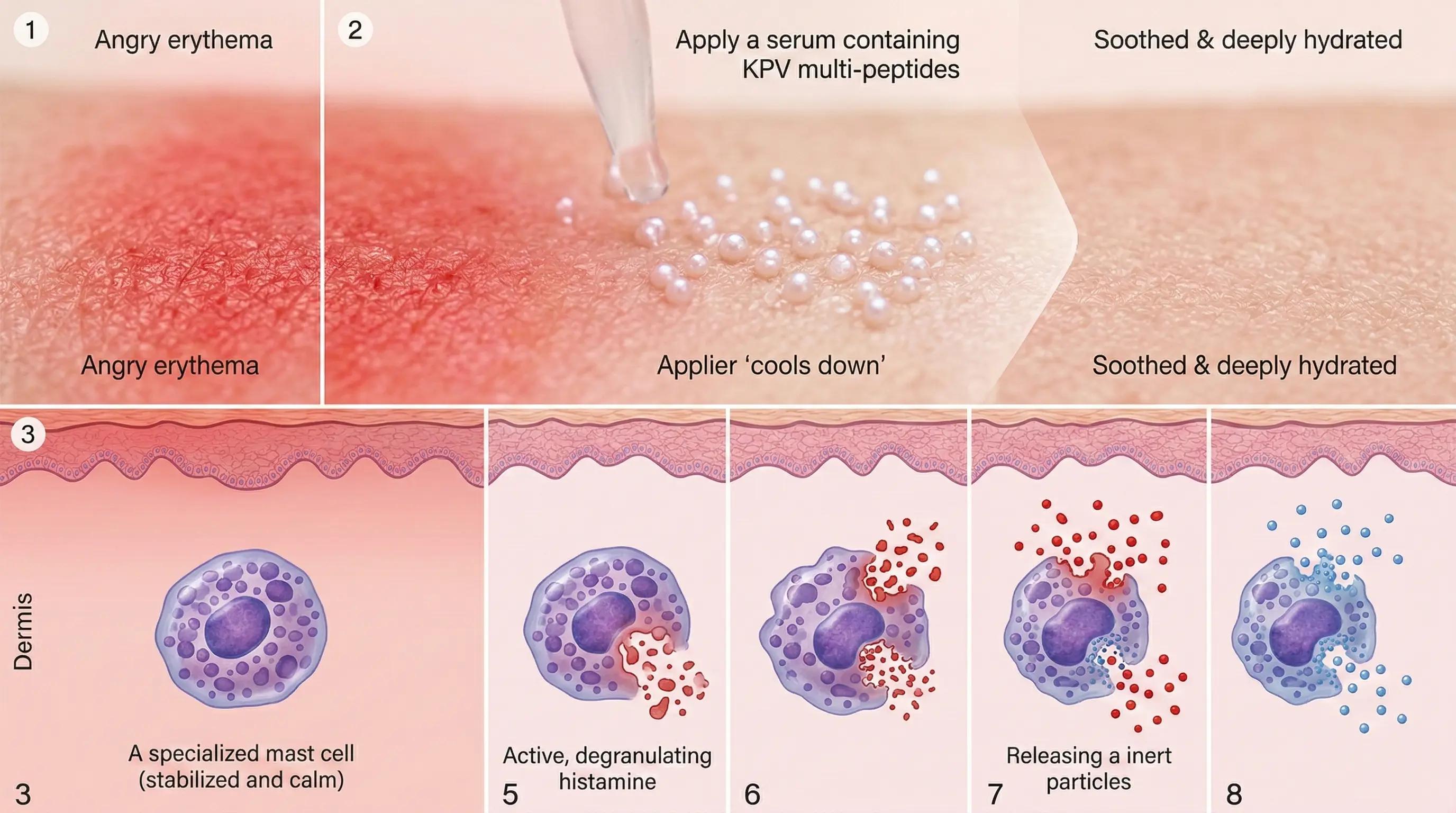
1. Eradicating Erythema and Edema: The redness (erythema) and swelling (edema) in AD are caused by severe vasodilation. Inflammatory mediators cause local blood vessels to widen and leak fluid into the tissue. By shutting down the production of prostaglandins and nitric oxide via the NF-κB pathway, KPV acts as a potent vasoconstrictor in inflamed tissues. Within days of formulating with KPV, brands report a visible, dramatic reduction in the angry, fiery redness associated with eczema patches. The skin goes from a state of acute crisis to a state of calm.
2. Mast Cell Stabilization and Neuroimmune Calming: The itch in AD is driven both by histamine (released by mast cells) and non-histamine pathways (cytokines directly stimulating cutaneous nerve endings). KPV acts directly on mast cells in the dermis, stabilizing their membranes and preventing the degranulation that releases histamine.
Furthermore, by reducing the overall cytokine load in the tissue, KPV quiets the "neuroimmune cross-talk." The hyper-sensitized nerve endings in the skin stop receiving the chemical signals that tell the brain to itch. When the itching stops, the scratching stops. When the scratching stops, the physical barrier finally has the opportunity to heal.
Calming the Storm in Psoriasis
While AD is a disease of barrier failure and Th2 inflammation, Psoriasis is characterized by a hyperactive epidermis driven by Th17 cells. In a normal human, skin cells mature and shed over 28 days. In a psoriasis patient, this process happens in 3 to 4 days. The cells pile up, creating thick, silvery, bleeding plaques.
Treating psoriasis topically is notoriously difficult. Heavy ointments and high-potency steroids are the norm. However, KPV offers a highly elegant solution.
Because KPV effectively interrupts the IL-23/IL-17 axis by calming the dendritic cells that initiate this pathway, it removes the chemical stimulus that forces keratinocytes to multiply so rapidly. We have seen that formulations utilizing COSPEP’s KPV can significantly reduce the induration (thickness) of psoriatic plaques.
Moreover, psoriasis plaques are highly vascularized (which is why they bleed so easily when scratched—the Auspitz sign). KPV's ability to normalize the local vascular environment helps to reduce the aggressive angiogenesis (new blood vessel formation) that feeds the psoriasis plaque. Over continuous use, KPV helps the skin transition from a state of hyperproliferation back to normal terminal differentiation. The scaling diminishes, the plaques flatten, and the severe redness fades to a normal skin tone.
The Ultimate Goal: A Corticosteroid-Sparing Agent
This brings me to the core philosophy behind why COSPEP synthesizes and champions KPV. The ultimate goal in modern dermatology is to find effective "corticosteroid-sparing" agents.
Doctors and patients need therapies that allow them to taper off steroids without triggering massive rebound flares. They need a maintenance therapy that is safe for long-term use, safe for the delicate skin of the face and eyelids, and safe for pediatric patients who are highly susceptible to the systemic absorption of steroids.
KPV is exactly that agent.
Why KPV can replace or reduce Glucocorticoids:
- No Skin Atrophy: Unlike steroids, which inhibit collagen synthesis and cause the skin to thin out like tissue paper, KPV does not negatively impact fibroblast function or collagen production. In fact, by reducing chronic inflammation, it allows the skin's natural extracellular matrix repair mechanisms to function optimally.
- No Rebound Effect: Because KPV works by restoring immunological homeostasis (promoting Tregs, calming NF-κB) rather than forcefully paralyzing the immune system, sudden withdrawal does not lead to the violent rebound inflammation seen with steroids.
- Barrier Restoration, Not Just Suppression: Steroids ignore the skin barrier. KPV, by eliminating the inflammatory cytokines that downregulate filaggrin (a crucial structural protein in the skin), actively allows the skin barrier to rebuild itself. It heals the wall while putting out the fire.
- Synergistic Potential: For formulators, KPV does not necessarily have to replace steroids overnight in severe medical cases. It can be used as an adjunct therapy. By formulating base creams with KPV, dermatologists can step patients down to lower-potency steroids much faster, eventually transitioning them entirely onto KPV-based maintenance therapy.
The COSPEP Advantage for Formulators
As your raw material partner, we at COSPEP know that an active ingredient is only as good as its formulation profile. We have engineered our KPV to overcome the historical challenges of peptide delivery.
Our KPV is highly water-soluble, making it incredibly versatile for formulators. It can be seamlessly integrated into lightweight hydrogels for acute, weeping AD flares, or incorporated into rich, lipid-heavy emulsions and ointments designed to soften thick psoriatic plaques. It exhibits excellent thermal and pH stability within the standard ranges used in dermocosmetics.
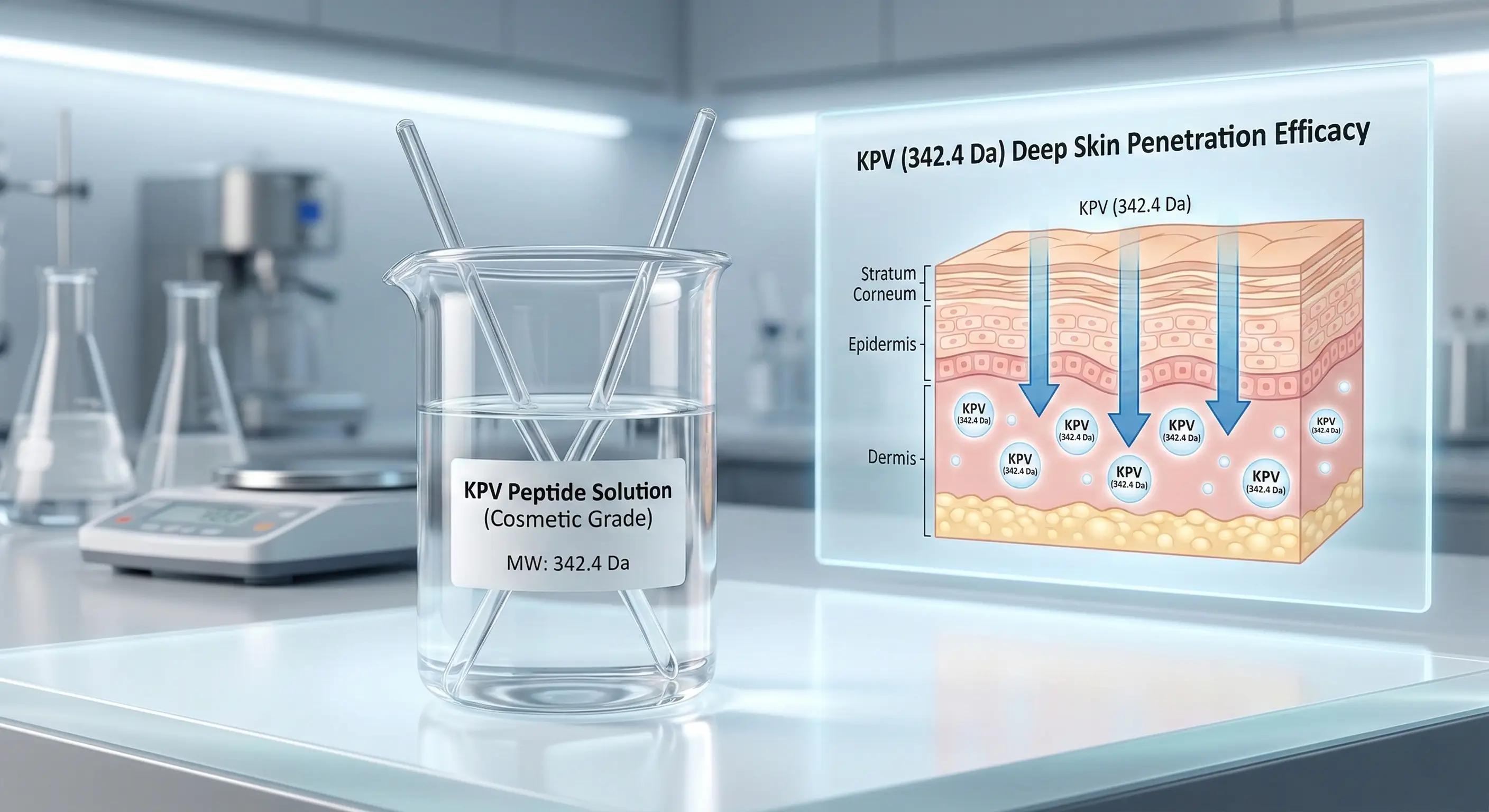
Furthermore, its low molecular weight of approximately 342.4 Daltons ensures that it naturally passes the 500-Dalton rule for skin penetration. However, we also work with partners to encapsulate KPV in liposomal delivery systems to ensure targeted, slow release deep within the dermal-epidermal junction, maximizing its interaction with resident immune cells.
Conclusion: A Paradigm Shift in Dermatological Care
We are standing at the precipice of a new era in skin health. For too long, patients suffering from atopic dermatitis and psoriasis have been trapped in an endless loop of inflammation, unbearable itching, steroid use, skin thinning, and rebound flares.
At COSPEP, we believe the future of treating recalcitrant skin diseases lies in biomimetics—using the body's own biological logic to heal itself. KPV represents the pinnacle of this philosophy. By harnessing the anti-inflammatory core of alpha-MSH, KPV offers profound relief from erythema and pruritus. It fundamentally alters the local immune microenvironment, silencing the destructive cytokine storms of AD and Psoriasis while nurturing the skin back to a state of resilient homeostasis.
Most importantly, KPV offers a genuine, scientifically validated alternative to the over-reliance on topical corticosteroids. It repairs rather than degrades; it balances rather than suppresses.
We invite forward-thinking skincare brands, pharmaceutical developers, and dermatological researchers to partner with us at COSPEP. By incorporating our high-purity KPV into your next generation of therapeutic formulations, we can collectively offer patients what they have been desperately seeking: safe, sustainable, and profound relief. Let us work together to heal the skin barrier, from the inside out.