Astaxanthin
Functions / Benefits
Quality Specifications
| Specification Item | Standard |
|---|---|
| Grade | Cosmetic Grade |
| Recommended Usage | 0.01–0.1% (topical); 4–12 mg/day (oral supplement) |
| Property 1 | 1% |
| Property 2 | 2% |
| Property 3 | 5% |
Description
Is Astaxanthin the Most Powerful Antioxidant? Benefits, Dosage & Side Effects Explained
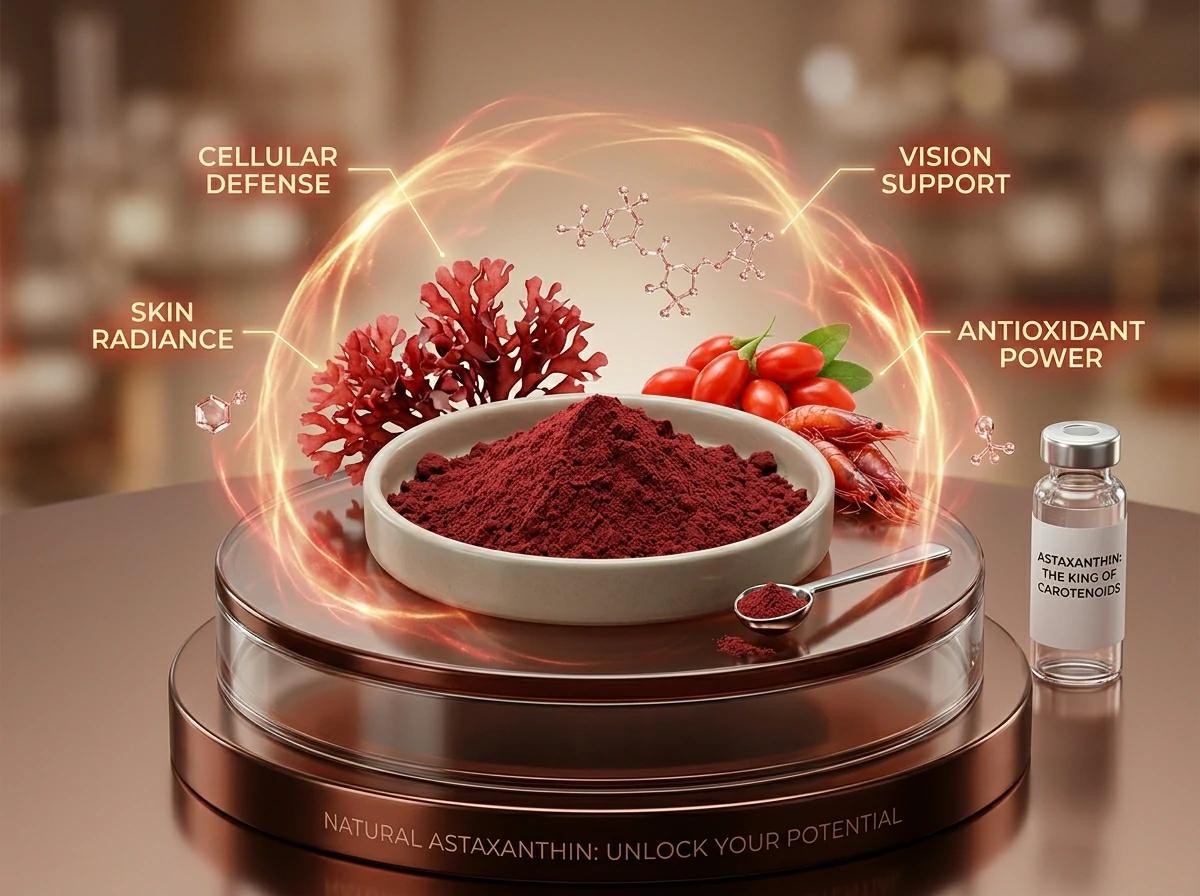
Yes, Astaxanthin is widely regarded as the most potent naturally occurring antioxidant ever tested, with singlet oxygen quenching activity up to 6,000 times stronger than Vitamin C — making it a gold-standard ingredient for anti-aging, UV protection, and systemic health support.
What Is Astaxanthin?
Astaxanthin is a ketocarotenoid pigment naturally produced by the microalgae Haematococcus pluvialis as a stress-response mechanism against UV radiation and nutrient deprivation. It is responsible for the characteristic pink-red coloration of salmon, shrimp, flamingos, and other marine animals that consume astaxanthin-rich algae.
Unlike most carotenoids, astaxanthin never converts to pro-oxidant Vitamin A in the body, and its unique molecular structure — spanning the full width of the cell membrane — allows it to protect both the inner and outer layers of every cell simultaneously.
CAS Number: 472-61-7
INCI Name: Haematococcus Pluvialis Extract
Latin Name: Haematococcus pluvialis
Molecular Formula: C₄₀H₅₂O₄
Molecular Weight: 596.84 g/mol
Appearance: Dark red to purple powder or oil
Primary Source: Haematococcus pluvialis microalgae (natural); synthetic (petrochemical-derived)
Available Specs: 1%, 2%, 5%, 10% standardized extract; ≥98% pure
Key Benefits of Astaxanthin
- Exceptional Antioxidant Power: Quenches singlet oxygen 6,000× more effectively than Vitamin C, 800× more than CoQ10, and 550× more than Vitamin E.
- Anti-aging & Skin Elasticity: Reduces UV-induced photoaging, fine lines, and age spots by protecting collagen and elastin from oxidative degradation.
- UV Photoprotection: Acts as an internal sunscreen by neutralizing UV-generated free radicals in skin cells, reducing sunburn cell formation.
- Skin Brightening & Tone Evenness: Inhibits melanin overproduction triggered by UV stress, supporting a more uniform complexion.
- Anti-inflammatory: Inhibits NF-κB and COX-2 pathways, reducing chronic low-grade inflammation linked to aging and metabolic disease.
- Eye Health: Crosses the blood-retinal barrier; clinically studied for reducing eye fatigue, improving visual acuity, and protecting against macular degeneration.
- Sports Recovery: Reduces exercise-induced oxidative stress and muscle damage, supporting faster recovery and endurance.
- Cardiovascular Support: Improves lipid profiles, reduces LDL oxidation, and supports healthy blood flow.
Astaxanthin vs. Beta-Carotene vs. Lycopene: Which Carotenoid Is Best?
Astaxanthin, Beta-Carotene, and Lycopene are all carotenoid antioxidants, but they differ significantly in potency, safety profile, and application range.
Verdict: Astaxanthin is the clear leader in antioxidant potency, UV protection, and eye health. Beta-Carotene offers pro-vitamin A activity but carries pro-oxidant risk at high doses. Lycopene excels in cardiovascular and prostate health. For comprehensive anti-aging and photoprotection, Astaxanthin is the superior choice — and it can be combined with Lycopene and Beta-Carotene for a full-spectrum carotenoid defense.
Applications
Cosmetic & Skincare:
Used in anti-aging serums, sunscreens, eye creams, and brightening formulations. Due to its intense red pigment, it is typically used at low concentrations (0.01–0.1%) or in oil-soluble bases. Encapsulated forms are available to minimize color impact in leave-on products.
Nutraceuticals & Supplements:
Available in softgels, capsules, and oil suspensions. Always taken with a fat-containing meal for optimal absorption. Common oral dosage: 4–12 mg/day. Natural astaxanthin from H. pluvialis is strongly preferred over synthetic forms for human consumption.
Functional Foods & Beverages:
Used as a natural colorant and functional ingredient in health drinks, protein powders, and fortified foods.
Recommended Usage
- Topical: 0.01–0.1% in oil-based or emulsion formulations; use encapsulated astaxanthin to control color and improve stability. Combine with Vitamin C, Vitamin E, or Glutathione for a synergistic antioxidant and brightening effect.
- Oral Supplement: 4–6 mg/day for general antioxidant and skin health support; 8–12 mg/day for sports recovery or intensive anti-aging protocols. Always take with a meal containing dietary fat to maximize absorption. Choose natural astaxanthin from Haematococcus pluvialis over synthetic sources.
- Storage: Store in a cool, dark place away from light, heat, and oxygen. Recommended storage temperature: 2–8°C. Protect from UV exposure to prevent pigment degradation.
Medical Disclaimer: The information provided here is for educational and informational purposes only and is not intended as medical advice. Always consult with a qualified healthcare provider or licensed physician before starting any new supplement regimen, especially if you are pregnant, nursing, taking blood-thinning medications, or managing a chronic health condition. Astaxanthin may interact with certain medications including anticoagulants and blood pressure drugs. Individual results may vary.