EGCG
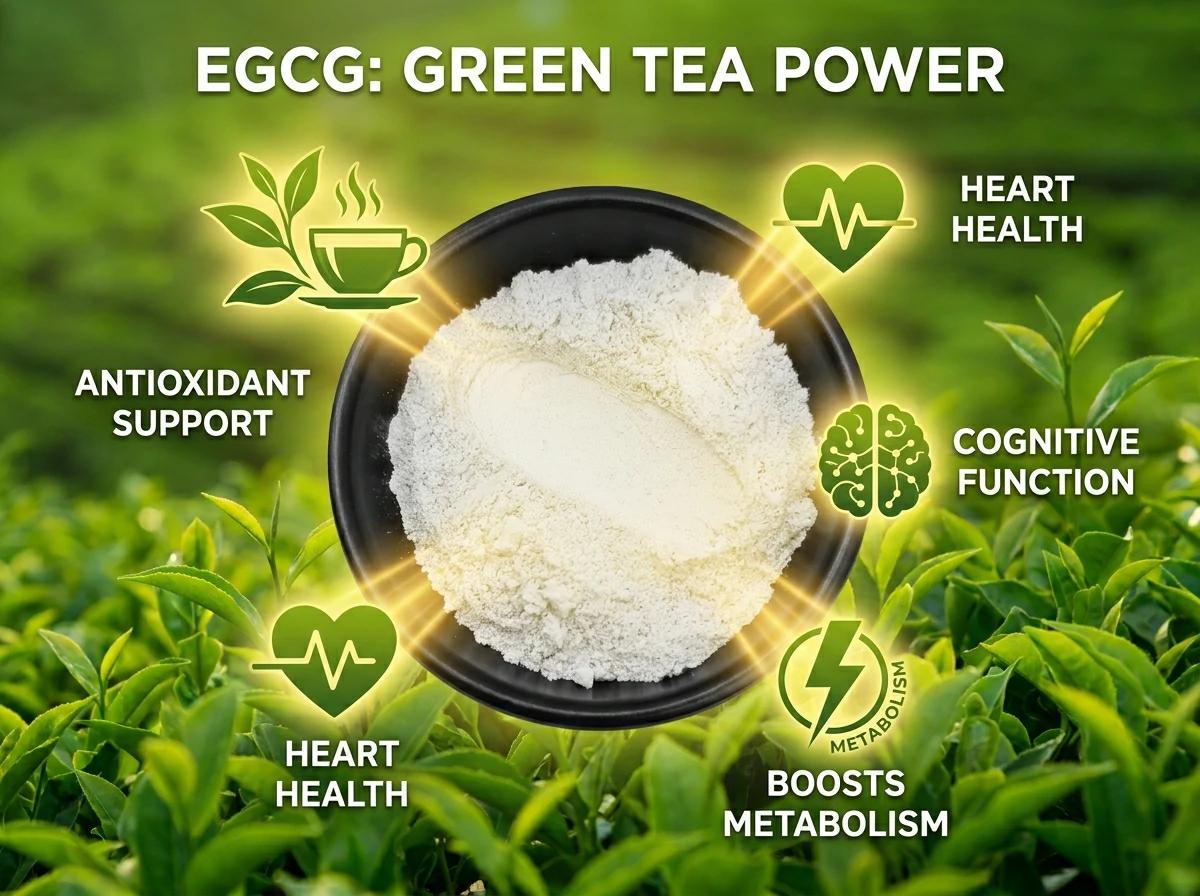
Functions / Benefits
Quality Specifications
| Specification Item | Standard |
|---|---|
| Grade | Pharmaceutical Grade |
| Recommended Usage | Topical: 0.1%–1.0% (w/w); Oral supplement: 200–800 mg/day EGCG (standardized green tea extract) |
| Property 1 | 95% |
| Property 2 | 98% |
Description
Is EGCG (Epigallocatechin Gallate) Good for Health? Benefits, Dosage & Side Effects Explained
Yes, EGCG (Epigallocatechin Gallate) is the most bioactive and extensively studied polyphenol in green tea, with robust clinical and preclinical evidence for antioxidant protection, metabolic enhancement, cardiovascular health, neuroprotection, and cancer chemoprevention — making it one of the most comprehensively researched plant-derived bioactives in modern nutritional science.
What Is EGCG (Epigallocatechin Gallate)?
EGCG (CAS 989-51-5) is a polyphenolic catechin with the molecular formula C₂₂H₁₈O₁₁ and a molecular weight of 458.37 g/mol. Its INCI name is Epigallocatechin Gallate, and it is also known as (-)-Epigallocatechin-3-O-Gallate or EGCg. It is the most abundant and most biologically active catechin in green tea (Camellia sinensis), comprising approximately 50–80% of the total catechin content in green tea leaves.
EGCG belongs to the flavan-3-ol subclass of flavonoids and is structurally characterized by a trihydroxyphenyl B-ring (pyrogallol group) and a galloyl ester at the 3-position of the C-ring — structural features that confer its exceptional antioxidant potency and broad biological activity. It is the galloyl ester group that distinguishes EGCG from the other major green tea catechins (EGC, ECG, EC) and is primarily responsible for its superior free radical scavenging capacity.
For nutraceutical and cosmetic applications, EGCG is purified from green tea leaves via hot water extraction followed by HPLC fractionation to ≥95% purity. It is available as a white to off-white crystalline powder, is water-soluble (though solubility decreases at neutral to alkaline pH), and is sensitive to oxidation, heat, and alkaline conditions. Optimal stability is achieved at pH 3.0–5.0 and temperatures below 40°C.
Key Benefits of EGCG
Exceptional Antioxidant Activity. EGCG is one of the most potent natural antioxidants identified. Its antioxidant capacity — measured by ORAC (Oxygen Radical Absorbance Capacity) and DPPH radical scavenging assays — significantly exceeds that of vitamins C and E, resveratrol, and most other plant polyphenols. The pyrogallol B-ring and galloyl ester group enable EGCG to donate multiple hydrogen atoms to neutralize free radicals, chelate transition metal ions (iron, copper) that catalyze oxidative reactions, and regenerate other antioxidants. This multi-mechanism antioxidant activity provides comprehensive protection against oxidative stress in both aqueous and lipid environments.
Metabolic Enhancement and Fat Oxidation. EGCG is the primary active compound responsible for green tea’s well-documented metabolic benefits. It inhibits catechol-O-methyltransferase (COMT), the enzyme that degrades norepinephrine, thereby prolonging sympathetic nervous system activation and increasing thermogenesis and fat oxidation. A meta-analysis of 11 randomized controlled trials (Hursel et al., 2009, Obesity Reviews) confirmed that green tea catechins (primarily EGCG) significantly increased 24-hour energy expenditure and fat oxidation. Clinical studies show that 270–600 mg/day EGCG combined with caffeine produces meaningful increases in fat oxidation during exercise and at rest, with particular efficacy for abdominal fat reduction.
Cardiovascular Protection. EGCG provides comprehensive cardiovascular protection through multiple mechanisms: it reduces LDL cholesterol oxidation (a key step in atherosclerosis), inhibits platelet aggregation, improves endothelial function (increasing nitric oxide bioavailability), reduces blood pressure, and has anti-inflammatory effects in vascular tissue. Large-scale epidemiological studies from Japan (Kuriyama et al., 2006, JAMA) associate regular green tea consumption (5+ cups/day) with significantly reduced cardiovascular disease mortality. A meta-analysis of 14 RCTs confirmed that green tea catechins significantly reduce LDL cholesterol and blood pressure.
Neuroprotection and Cognitive Support. EGCG crosses the blood-brain barrier and exerts neuroprotective effects through antioxidant activity, anti-inflammatory signaling, and direct modulation of neuronal survival pathways. It activates the Nrf2 antioxidant response pathway, inhibits neuroinflammatory NF-κB signaling, and promotes BDNF (brain-derived neurotrophic factor) expression. Epidemiological studies associate regular green tea consumption with reduced risk of Alzheimer’s disease, Parkinson’s disease, and age-related cognitive decline. EGCG has also been shown to inhibit the aggregation of amyloid-β peptides and tau proteins — the hallmark pathological proteins in Alzheimer’s disease.
Cancer Chemoprevention. EGCG is one of the most extensively studied natural chemopreventive agents. It inhibits cancer cell proliferation, induces apoptosis (programmed cell death) in cancer cells while sparing normal cells, inhibits angiogenesis (tumor blood vessel formation), and reduces metastasis. Mechanistically, EGCG inhibits multiple oncogenic signaling pathways including EGFR, VEGFR, PI3K/Akt, MAPK, and NF-κB. Epidemiological evidence associates higher green tea consumption with reduced risk of several cancers including breast, prostate, colorectal, and lung cancer, though causality has not been definitively established in human RCTs.
Blood Sugar Regulation. EGCG improves insulin sensitivity and glucose metabolism by inhibiting α-amylase and α-glucosidase (reducing carbohydrate digestion and post-meal glucose spikes), activating AMPK (improving cellular glucose uptake), and reducing hepatic glucose production. Meta-analyses of RCTs confirm that green tea catechins significantly reduce fasting blood glucose and HbA1c in individuals with impaired glucose tolerance and type 2 diabetes.
Skin Photoprotection and Anti-aging. Topically applied EGCG provides significant photoprotection by neutralizing UV-induced ROS, inhibiting UV-induced MMP (matrix metalloproteinase) expression (protecting collagen from degradation), reducing UV-induced inflammation, and inhibiting UV-induced immunosuppression. Clinical studies confirm that topical EGCG reduces UV-induced erythema, DNA damage, and inflammatory cytokine production. Its collagen-protective and anti-inflammatory effects also contribute to anti-aging benefits in topical formulations.
Hair Growth Support. EGCG has been shown to stimulate hair follicle cell proliferation and inhibit 5α-reductase (the enzyme that converts testosterone to DHT, the primary driver of androgenetic alopecia). In vitro studies demonstrate that EGCG promotes the survival of dermal papilla cells and prolongs the anagen phase of the hair cycle, suggesting potential applications in hair loss prevention and treatment.
EGCG vs. Other Green Tea Catechins: Which Is Most Effective?
Green tea contains four major catechins: EGCG, EGC (epigallocatechin), ECG (epicatechin gallate), and EC (epicatechin). Understanding their differences is essential for formulators and consumers seeking to optimize green tea’s health benefits.
EGCG (Epigallocatechin Gallate, CAS 989-51-5) is the most abundant catechin in green tea (50–80% of total catechins), has the highest antioxidant potency of all green tea catechins (due to the trihydroxyphenyl B-ring + galloyl ester combination), has the broadest and most extensively studied biological activity spectrum (metabolic, cardiovascular, neuroprotective, chemopreventive), has the most clinical evidence for health benefits, has relatively low oral bioavailability (1–2% in humans due to poor absorption and rapid metabolism), is used at 0.1%–1.0% w/w topically and 200–800 mg/day orally, and is best suited for applications requiring maximum antioxidant potency and the broadest health benefit profile. It is the gold standard green tea catechin.
EGC (Epigallocatechin, CAS 970-74-1) is the second most abundant catechin in green tea (15–25% of total catechins), has a trihydroxyphenyl B-ring but lacks the galloyl ester group, has slightly lower antioxidant potency than EGCG but higher oral bioavailability, has significant antioxidant and anti-inflammatory activity, and is best suited for applications where bioavailability is prioritized over peak antioxidant potency.
ECG (Epicatechin Gallate, CAS 1257-08-5) has a dihydroxyphenyl B-ring (catechol group) with a galloyl ester, has intermediate antioxidant potency between EGCG and EC, has significant antimicrobial and anti-cancer activity, and is best suited for antimicrobial and cancer chemoprevention applications.
EC (Epicatechin, CAS 490-46-0) is the simplest green tea catechin (dihydroxyphenyl B-ring, no galloyl ester), has the lowest antioxidant potency of the four major catechins but the highest oral bioavailability, has well-documented cardiovascular benefits (endothelial function, blood pressure), and is best suited for cardiovascular applications where bioavailability is the primary concern. It is the primary active catechin in dark chocolate.
Bottom line: EGCG is the most potent and most studied green tea catechin for the broadest range of health applications. However, its low oral bioavailability (1–2%) means that standardized green tea extracts containing the full catechin spectrum — including EGC, ECG, and EC alongside EGCG — may provide more comprehensive systemic benefits than isolated EGCG alone. For topical applications, purified EGCG at ≥95% purity delivers maximum antioxidant and photoprotective potency. For oral supplementation, standardized green tea extract (50% EGCG) or purified EGCG with bioavailability-enhancing formulations (piperine, liposomal delivery) are preferred.
Formulation and Usage Recommendations
Topical use: EGCG is used at 0.1%–1.0% w/w in finished formulations. It is water-soluble and should be added to the aqueous phase at temperatures below 40°C. Optimal pH range is 3.0–5.0 for stability. Protect from light and oxidation with opaque packaging and antioxidant co-stabilizers (vitamin C, vitamin E). Combine with vitamin C (synergistic antioxidant regeneration), niacinamide (anti-inflammatory + barrier support), and sunscreen actives for comprehensive photoprotection.
Oral supplementation: For general antioxidant and health benefits, 200–400 mg/day EGCG (or 400–800 mg/day standardized green tea extract at 50% EGCG) is commonly used. For metabolic and fat oxidation benefits, 270–600 mg/day EGCG combined with caffeine has the strongest clinical evidence. Take with food to reduce gastrointestinal discomfort. Avoid taking on an empty stomach, particularly at higher doses. Bioavailability is enhanced by piperine (black pepper extract) co-administration.
Safety and Precautions
EGCG has a good safety profile at moderate doses. At doses up to 800 mg/day EGCG, it is generally well tolerated. However, high-dose EGCG supplementation (above 800 mg/day, particularly in fasted state) has been associated with hepatotoxicity (liver toxicity) in rare cases — this is the primary safety concern with concentrated EGCG supplements. The European Food Safety Authority (EFSA) has issued guidance recommending that EGCG intake from supplements not exceed 800 mg/day, and that supplements be taken with food.
EGCG may interact with certain medications: it inhibits drug-metabolizing enzymes (CYP3A4, CYP2C9) and may affect the metabolism of warfarin, statins, and certain chemotherapy agents. It has mild antiplatelet effects and should be used with caution alongside anticoagulant medications. EGCG reduces iron absorption when taken with iron-rich meals — individuals with iron deficiency anemia should take EGCG supplements between meals or consult a healthcare provider.
Pregnant and breastfeeding women should limit green tea consumption and avoid high-dose EGCG supplements due to the caffeine content of green tea extracts and the potential for folate metabolism interference at very high doses.
Always consult with a qualified healthcare provider before starting high-dose EGCG supplementation, especially if you have liver disease, are taking prescription medications (particularly anticoagulants, statins, or chemotherapy agents), are pregnant or nursing, or have iron deficiency anemia. These statements have not been evaluated by the Food and Drug Administration. This product is not intended to diagnose, treat, cure, or prevent any disease.