
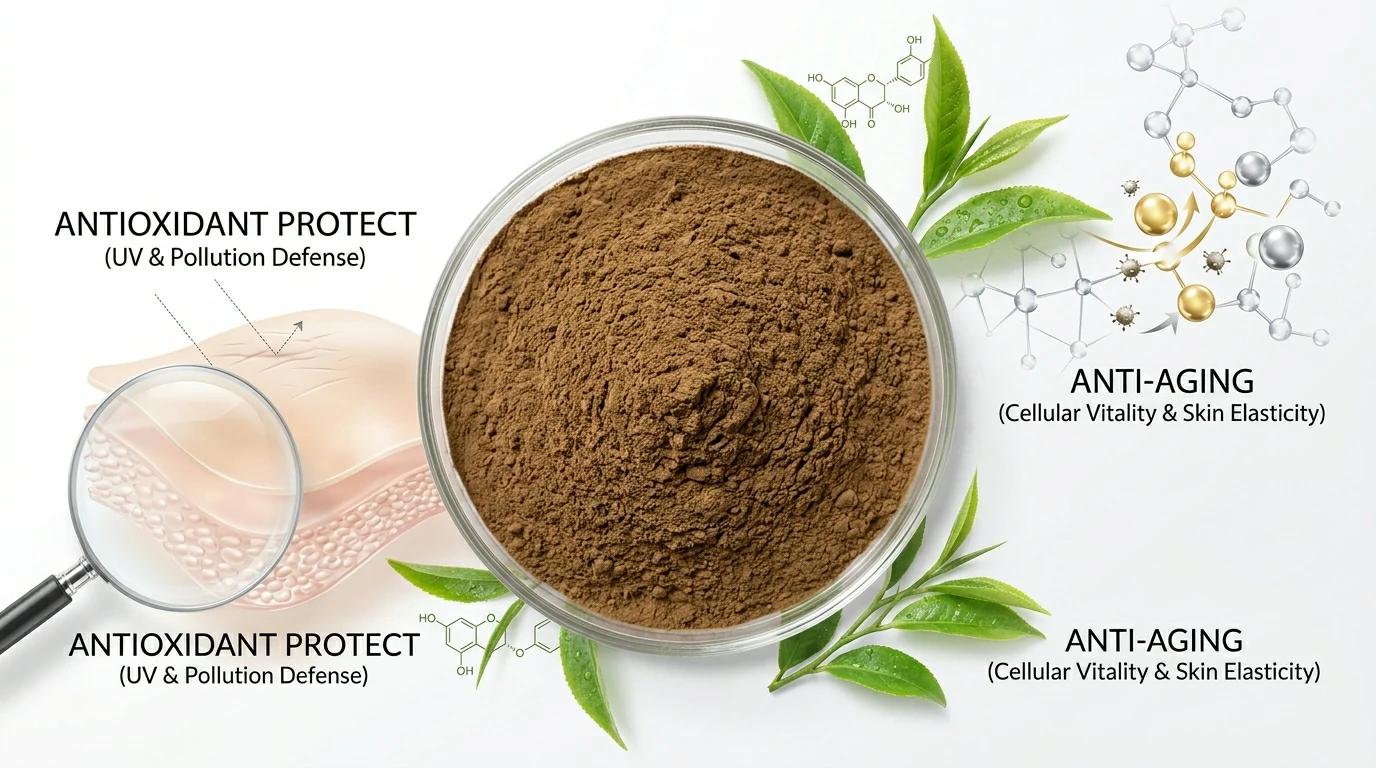
Tea Polyphenols
Functions / Benefits
Quality Specifications
| Specification Item | Standard |
|---|---|
| Grade | Cosmetic Grade |
| Recommended Usage | 0.1%–2% (topical formulations) |
| Property 1 | 98% |
Description
Are Tea Polyphenols Good for Skin and Health? Benefits, Dosage & Science Explained
Yes, Tea Polyphenols are among the most extensively studied natural bioactives in the world, with robust clinical evidence for antioxidant, anti-inflammatory, anti-aging, antimicrobial, and metabolic health benefits — making them a cornerstone ingredient in both premium skincare and functional nutraceuticals.
What Are Tea Polyphenols?
Tea Polyphenols are a complex mixture of polyphenolic compounds extracted from the leaves of Camellia sinensis (green tea, white tea, black tea, oolong tea). They represent the primary bioactive fraction responsible for tea’s well-documented health benefits, comprising approximately 30–40% of the dry weight of green tea leaves.
The major classes of tea polyphenols include:
- Catechins (the most abundant and bioactive): EGCG (Epigallocatechin Gallate), EGC, ECG, EC — EGCG is the most potent and most studied
- Theaflavins and Thearubigins (formed during black tea fermentation)
- Flavonols: Quercetin, Kaempferol, Myricetin
- Phenolic acids: Gallic acid, Chlorogenic acid
At 98% purity, this product delivers a highly concentrated, standardized Tea Polyphenol extract with maximum EGCG content for both cosmetic and nutraceutical applications.
CAS Number: 84650-60-2
INCI Name: Camellia Sinensis Leaf Extract
Latin Name: Camellia sinensis (L.) Kuntze
Appearance: Off-white to light brown powder
Solubility: Water-soluble; also soluble in ethanol
Available Specs: 98% purity
Key Benefits of Tea Polyphenols
- Powerful Antioxidant: EGCG has an antioxidant potency approximately 25–50× greater than Vitamin C and 100× greater than Vitamin E in certain assays. Scavenges free radicals, chelates metal ions, and upregulates endogenous antioxidant enzymes (SOD, catalase).
- Skin Anti-aging: Inhibits MMP-1, MMP-3, and MMP-9 (collagen-degrading enzymes), protecting skin structure. Reduces UV-induced oxidative damage and photoaging. Supports collagen synthesis via TGF-β pathway activation.
- Anti-inflammatory: Inhibits NF-κB, COX-2, and pro-inflammatory cytokines (IL-1β, TNF-α, IL-6). Effective against both acute and chronic inflammation.
- Antimicrobial: Broad-spectrum antimicrobial activity against Staphylococcus aureus, P. acnes (acne-causing bacteria), E. coli, and various fungi. Particularly relevant for acne-prone skin formulations.
- Skin Brightening: Inhibits tyrosinase activity, reducing melanin synthesis and supporting an even skin tone.
- Metabolic Health: Supports healthy blood glucose, lipid profiles, and body weight management via AMPK activation and fat oxidation enhancement.
- Cardiovascular Support: Improves endothelial function, reduces LDL oxidation, and supports healthy blood pressure.
- Neuroprotection: Crosses the blood-brain barrier; studied for Alzheimer’s disease, Parkinson’s disease, and cognitive decline prevention.
- Anti-cancer Research: One of the most studied natural compounds in cancer biology, with evidence for anti-proliferative and pro-apoptotic effects across multiple cancer types.
Tea Polyphenols vs. Resveratrol vs. Quercetin: Which Polyphenol Is Best?
Verdict: Tea Polyphenols (EGCG) offer the broadest spectrum of clinically validated benefits, with particular strength in antioxidant potency, antimicrobial activity, skin brightening, and metabolic health. Resveratrol leads in sirtuin/NAD+ pathway anti-aging and longevity research. Quercetin is the superior choice for anti-allergy and mast cell stabilization applications. For a comprehensive polyphenol system, combining Tea Polyphenols with Quercetin and Vitamin C delivers synergistic antioxidant, anti-inflammatory, and brightening benefits.
Applications
Cosmetic & Skincare:
Used in anti-aging serums, brightening treatments, acne formulations, sunscreen boosters, and toners. Tea Polyphenols are water-soluble and compatible with most cosmetic formulation systems. Typical topical usage rate: 0.1–2%. Particularly effective in AM formulations targeting UV protection, brightening, and anti-pollution benefits.
Nutraceuticals & Supplements:
Available in capsules, tablets, and powders for antioxidant, metabolic, cardiovascular, and neuroprotective support. Common oral dosage: 400–800 mg/day of standardized green tea extract (standardized to ≥45% EGCG). Take with food to minimize gastrointestinal discomfort. Avoid taking on an empty stomach.
Recommended Usage
- Topical: 0.1–2% in water-based serums, toners, emulsions, or gel formulations. Add to the water phase during formulation. Combine with Vitamin C and Niacinamide for a comprehensive brightening and anti-aging system. Stable at pH 3.5–6.0; avoid high pH formulations which accelerate oxidation.
- Oral Supplement: 400–800 mg/day of standardized green tea extract (≥45% EGCG) for general antioxidant and health support. Take with food. Avoid combining with iron supplements (Tea Polyphenols chelate iron and may reduce absorption). Limit caffeine intake from other sources if using high-dose extracts.
- Storage: Store in a cool, dry place away from light and moisture. Recommended storage temperature: below 25°C. Keep tightly sealed to prevent oxidation and hygroscopic degradation.
Medical Disclaimer: The information provided here is for educational and informational purposes only and is not intended as medical advice. Always consult with a qualified healthcare provider or licensed physician before starting any new supplement regimen, especially if you are pregnant, nursing, have liver conditions (high-dose EGCG has been associated with rare cases of hepatotoxicity), anemia, or are taking blood thinners, stimulant medications, or iron supplements. High-dose green tea extract should not be taken on an empty stomach. Individual results may vary.