How Does Retatrutide Work? Triple Receptor Mechanism Explained
Table of Contents
The Triple Receptor Mechanism
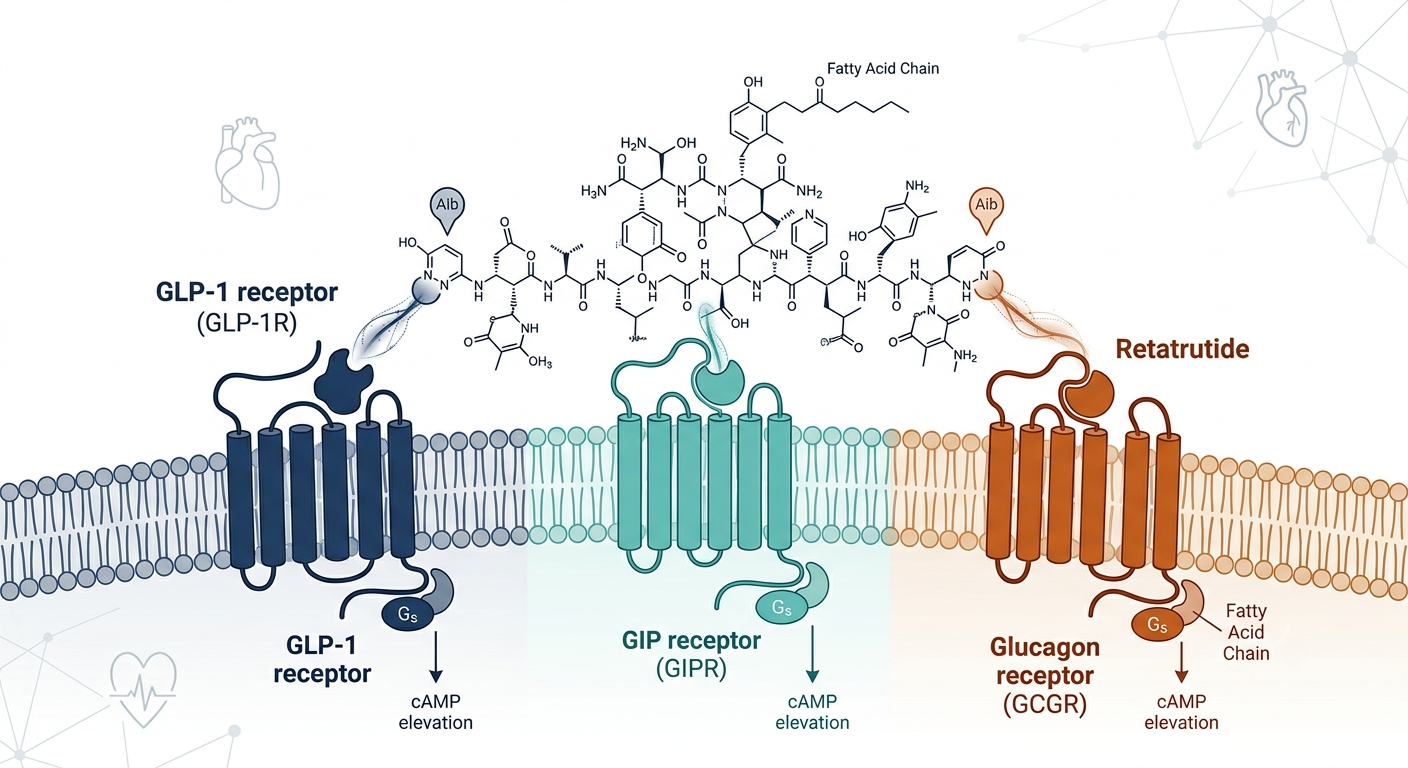
Retatrutide represents a significant advancement in multi-receptor pharmacology. Its mechanism of action is built on the simultaneous activation of three metabolically critical receptors — a design strategy that distinguishes it from all previously developed incretin-based therapeutics.
To understand how retatrutide works, it is essential to examine each receptor pathway individually and then consider how their combined activation produces a coordinated metabolic response.
GLP-1 Receptor: Appetite & Glucose Control
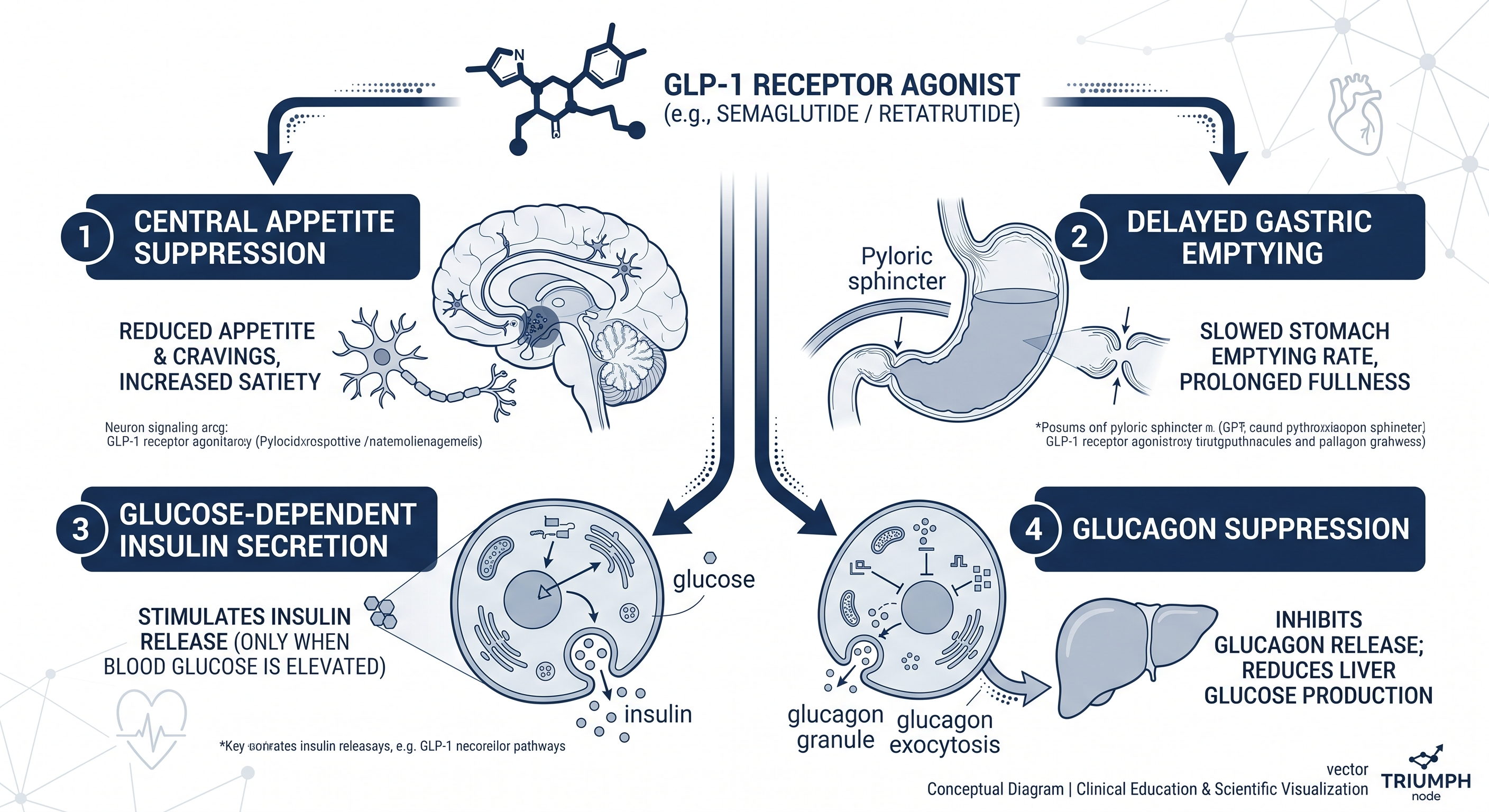
GLP-1 (glucagon-like peptide-1) is an incretin hormone naturally secreted by intestinal L-cells in response to nutrient intake. Its physiological roles include:
Central appetite suppression: GLP-1 crosses the blood-brain barrier and acts on hypothalamic nuclei and brainstem centers to reduce hunger signaling and promote satiety.
Delayed gastric emptying: Slowing the rate at which food leaves the stomach contributes to prolonged feelings of fullness and more gradual nutrient absorption.
Glucose-dependent insulin secretion: GLP-1 stimulates pancreatic beta cells to release insulin, but only when blood glucose is elevated — reducing the risk of hypoglycemia.
Glucagon suppression: GLP-1 inhibits alpha-cell glucagon secretion, helping to limit hepatic glucose output.
Retatrutide's GLP-1 receptor agonism is engineered to provide sustained, once-weekly activation through structural modifications including a fatty acid side chain that promotes albumin binding and extends half-life.
GIP Receptor: Insulin & Lipid Metabolism
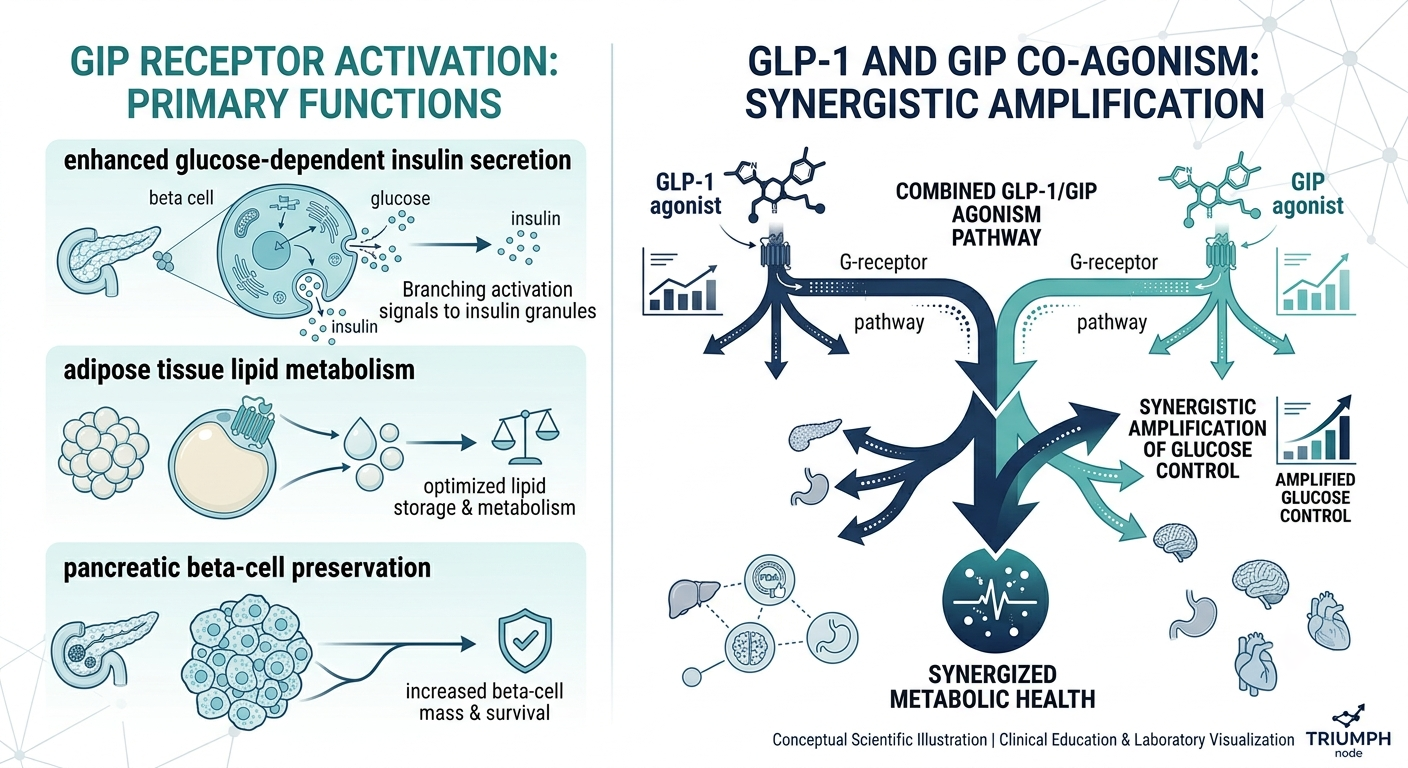
GIP (glucose-dependent insulinotropic polypeptide) is another incretin hormone, secreted by intestinal K-cells. While historically less studied than GLP-1, GIP has emerged as a critical contributor to metabolic regulation:
Insulin secretion enhancement: GIP is a potent stimulator of glucose-dependent insulin release, complementing and amplifying the insulinotropic effects of GLP-1.
Lipid metabolism: GIP receptor activation in adipose tissue may improve lipid handling and reduce ectopic fat deposition.
Beta-cell preservation: Preclinical evidence suggests GIP may support pancreatic beta-cell health and function.
The synergy between GLP-1 and GIP agonism — first demonstrated clinically by tirzepatide — provides the foundation upon which retatrutide builds its triple-receptor mechanism.
Glucagon Receptor: Energy Expenditure & Fat Oxidation
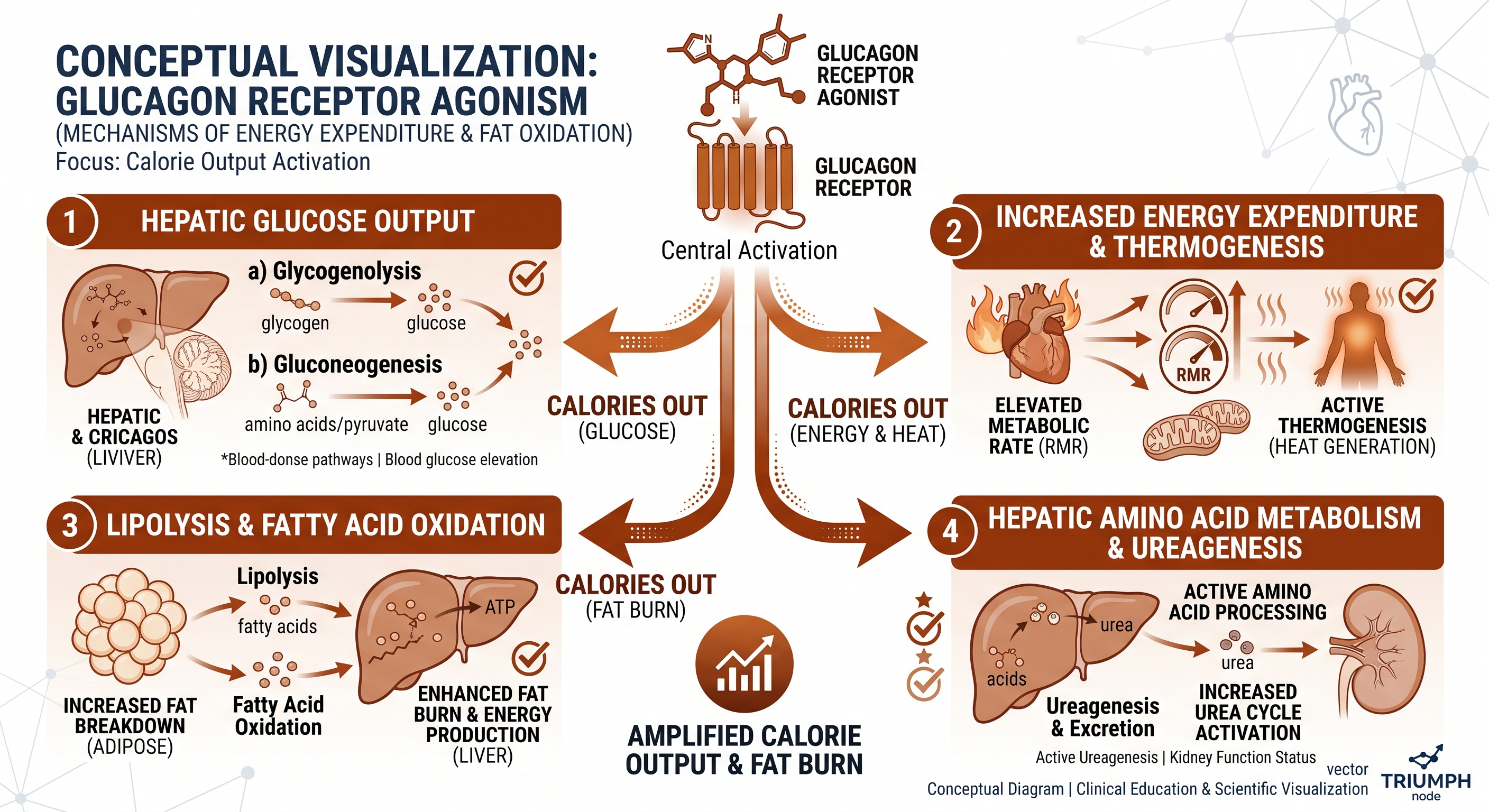
This is the critical addition that defines retatrutide. Glucagon is a hormone produced by pancreatic alpha cells, traditionally understood as the counter-regulatory hormone to insulin. Its primary role is to mobilize energy stores during fasting:
Hepatic glucose output: Glucagon stimulates glycogenolysis and gluconeogenesis in the liver, raising blood glucose. In retatrutide, this effect is counterbalanced by simultaneous GLP-1/GIP-mediated insulin secretion, preventing hyperglycemia.
Energy expenditure / thermogenesis: Glucagon signaling increases metabolic rate and heat production (thermogenesis), effectively elevating the 'calories out' side of the energy balance equation.
Lipolysis & fatty acid oxidation: Glucagon promotes the breakdown of stored triglycerides in adipose tissue (lipolysis) and enhances the liver's capacity to oxidize fatty acids for energy.
Amino acid metabolism: Glucagon influences hepatic amino acid uptake and ureagenesis, contributing to nitrogen balance.
The glucagon component is believed to be responsible for the pronounced visceral fat reduction observed in retatrutide clinical trials — an effect that distinguishes it from GLP-1-only and GLP-1/GIP dual-agonist approaches.
Why Three Receptors? The Scientific Rationale
The rationale for targeting all three receptors simultaneously stems from the recognition that obesity and metabolic disease involve multiple, interconnected physiological systems. Single-receptor approaches (GLP-1 only) address appetite and insulin secretion but do not directly affect energy expenditure. Dual-receptor approaches (GLP-1 + GIP) enhance insulin sensitivity and may improve lipid metabolism but still leave the energy expenditure pathway largely unaddressed.
Triple receptor agonism attempts to close this gap: GLP-1 reduces intake (calories in), GIP enhances nutrient partitioning and insulin sensitivity (how calories are processed), and glucagon increases expenditure (calories out). This coordinated, multi-pronged approach represents a shift from treating individual metabolic pathways in isolation to addressing the broader metabolic regulatory network.
Structural Design & Pharmacokinetics
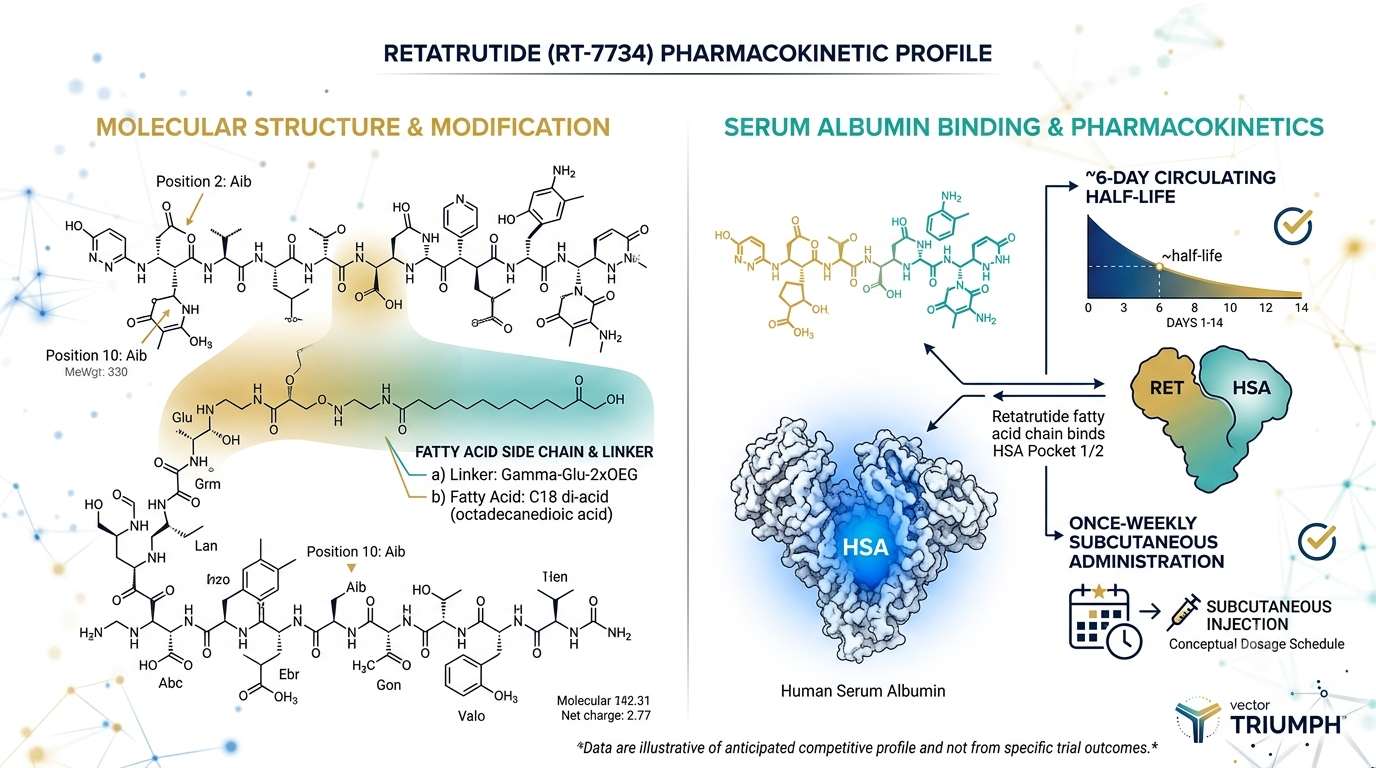
Retatrutide's molecular design incorporates a fatty acid side chain that enables reversible binding to serum albumin. This extends the peptide's circulating half-life to approximately 6 days, supporting once-weekly subcutaneous administration. The balanced activity ratio across the three receptors has been carefully engineered to achieve therapeutic effects at each target while managing potential adverse interactions — particularly the hyperglycemic potential of glucagon agonism, which is mitigated by simultaneous GLP-1/GIP-mediated insulin secretion.
For high-purity, research-grade retatrutide with comprehensive analytical documentation, visit the COSPEP Retatrutide product page.
Frequently Asked Questions
How does retatrutide work?
Retatrutide works by simultaneously activating three metabolic receptors: GLP-1 (appetite suppression, insulin secretion), GIP (enhanced insulin secretion, lipid metabolism), and glucagon (energy expenditure, fat oxidation). This triple mechanism provides a coordinated metabolic effect.
What is the mechanism of action of retatrutide?
Retatrutide is a balanced triple agonist at GLP-1, GIP, and glucagon receptors. GLP-1 reduces appetite and slows gastric emptying. GIP enhances insulin secretion. Glucagon increases energy expenditure and promotes fat breakdown. Together, they create a multi-pronged metabolic intervention.
Why does retatrutide target three receptors?
Single receptor targeting (GLP-1 only) addresses appetite but not energy expenditure. Adding glucagon receptor agonism provides a direct 'calories out' effect through thermogenesis and lipolysis, complementing the 'calories in' effects of appetite suppression and insulin sensitization.
How long does retatrutide stay in the system?
Retatrutide has an engineered half-life of approximately 6 days, achieved through a fatty acid side chain that promotes albumin binding. This supports once-weekly subcutaneous administration in clinical trials.
Does retatrutide's glucagon activity cause high blood sugar?
In clinical trials, retatrutide produced net improvements in glycemic control despite containing glucagon agonism. This is because the hyperglycemic potential of glucagon is counterbalanced by simultaneous GLP-1 and GIP-mediated insulin secretion.
Need Bulk Peptide Raw Materials?
COSPEP Biotech is a GMP-compliant China peptide supplier providing worldwide shipping and custom formulations.