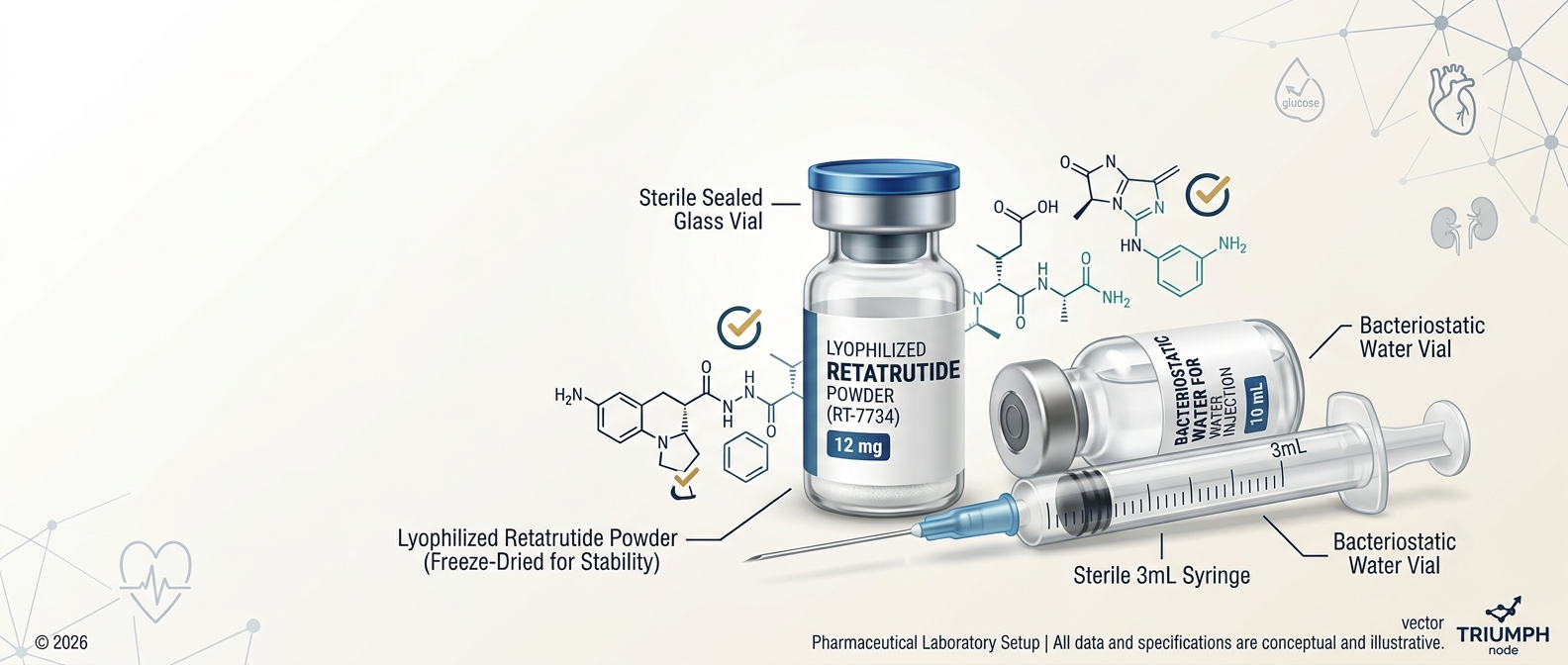
How to Reconstitute Retatrutide: Research Laboratory Guide
Table of Contents
- •Understanding Lyophilized Peptide Reconstitution
- •Required Materials
- •Step-by-Step Reconstitution Procedure
- •Step 1: Preparation
- •Step 2: Solvent Selection & Volume Calculation
- •Step 3: Draw Up Solvent
- •Step 4: Add Solvent to Vial
- •Step 5: Dissolve the Peptide
- •Step 6: Verify and Label
- •Storage After Reconstitution
- •Common Reconstitution Questions
- •How much BAC water for a 10 mg retatrutide vial?
- •Can I use sterile water instead of BAC water?
- •How long does reconstituted retatrutide last?
Understanding Lyophilized Peptide Reconstitution
Retatrutide for research purposes is supplied as a lyophilized (freeze-dried) powder in sterile, sealed glass vials. Lyophilization removes water under vacuum while preserving the peptide's structural integrity, enabling long-term storage. Before the peptide can be used in laboratory experiments, it must be reconstituted — dissolved back into a liquid solution using an appropriate solvent.
Important: This guide is for laboratory research personnel only. All procedures should be performed using standard aseptic technique under appropriate laboratory conditions. Retatrutide is for research use only and is not intended for human application.
Required Materials
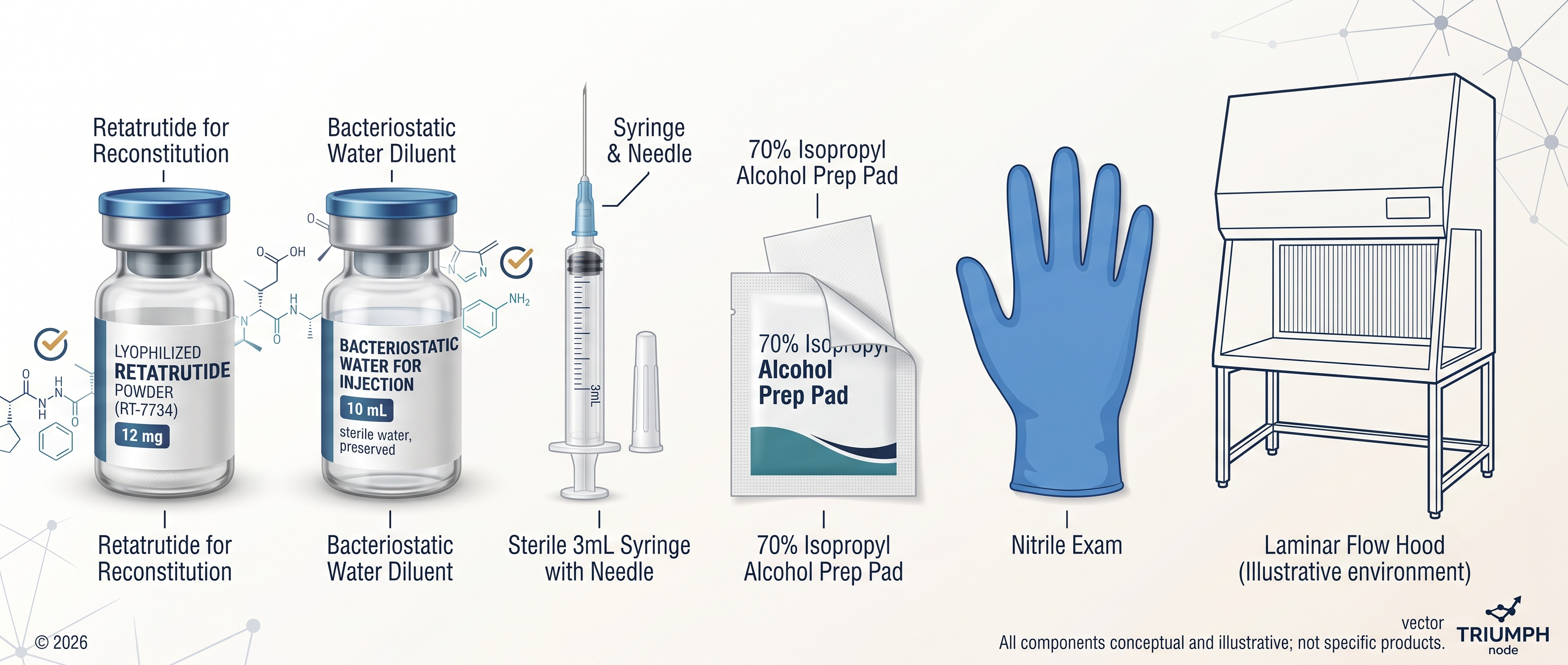
For proper reconstitution of retatrutide in a research laboratory setting, you will need:
Lyophilized retatrutide peptide vial
Bacteriostatic water (BAC water / 0.9% benzyl alcohol) or sterile water for injection
Sterile syringes with appropriate gauge needles
Alcohol prep pads / 70% isopropyl alcohol wipes
Sterile work surface (laminar flow hood recommended)
Personal protective equipment (gloves, lab coat)
Step-by-Step Reconstitution Procedure
Step 1: Preparation
Allow the lyophilized retatrutide vial to reach room temperature before beginning reconstitution. Wash hands thoroughly and don appropriate PPE. Clean the work surface with 70% ethanol or isopropyl alcohol.
Step 2: Solvent Selection & Volume Calculation
Bacteriostatic water (0.9% benzyl alcohol) is recommended for research applications where multiple draws from the same vial are planned, as the benzyl alcohol helps inhibit bacterial growth. Sterile water for injection may be used for single-use protocols.
Common concentration calculations for a 10 mg retatrutide vial:
0.5 mL solvent: 20 mg/mL concentration
1.0 mL solvent: 10 mg/mL concentration
2.0 mL solvent: 5 mg/mL concentration
5.0 mL solvent: 2 mg/mL concentration
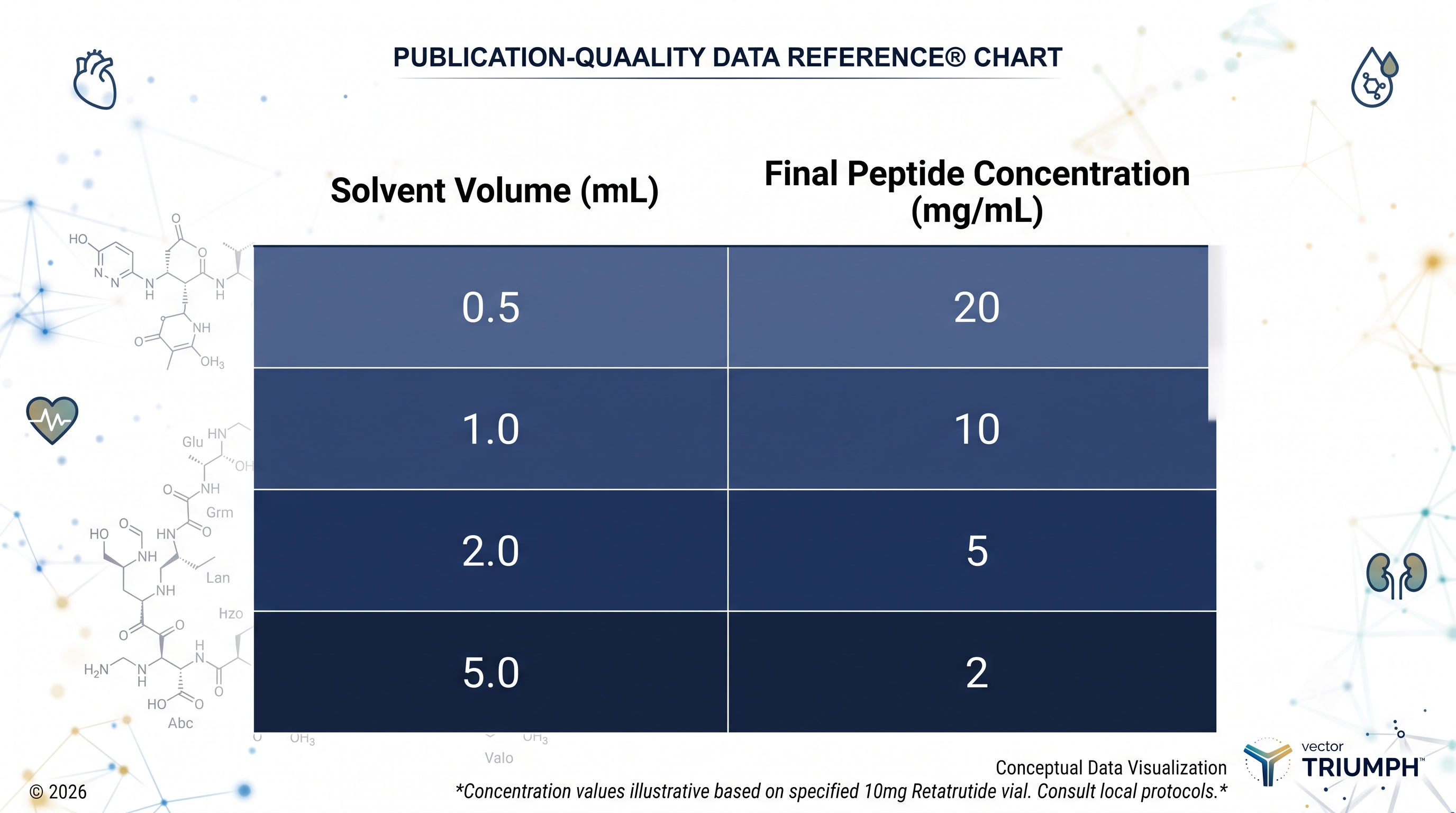
Select the solvent volume based on your experimental protocol requirements. For example, if your protocol calls for a 2 mg dose equivalent, using 5 mL yields 2 mg/mL where 1.0 mL provides the target amount.
Step 3: Draw Up Solvent
Using a sterile syringe, draw the calculated volume of bacteriostatic water or sterile water. Remove any air bubbles from the syringe by gently tapping and expelling the air.
Step 4: Add Solvent to Vial
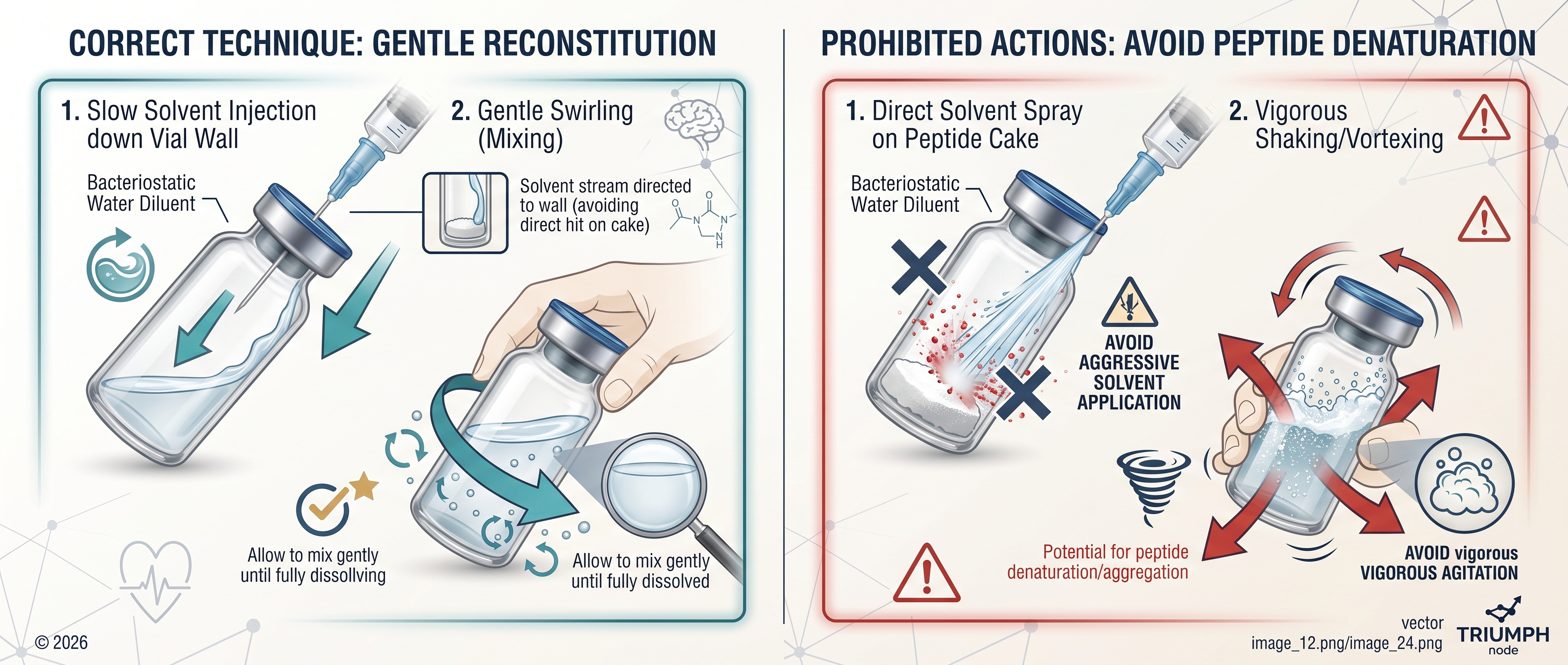
Critical: Remove the flip cap from the retatrutide vial and clean the rubber stopper with an alcohol prep pad. Allow to dry. Insert the needle through the center of the rubber stopper. Inject the solvent slowly down the inner wall of the vial — do NOT aim the stream directly at the lyophilized peptide cake, as the force can damage the peptide structure.
Step 5: Dissolve the Peptide
Once the solvent has been added, gently swirl the vial in a circular motion to dissolve the powder. Do NOT shake, vortex, or agitate vigorously, as mechanical stress can denature the peptide. The solution should become clear and particle-free within 1-2 minutes. If particles or cloudiness persist, allow the vial to sit at room temperature for an additional 5-10 minutes and gently swirl again.
Step 6: Verify and Label
Inspect the solution visually — it should be clear, colorless, and free of particulate matter. Label the vial with the reconstitution date, concentration, and solvent used. This is essential for maintaining accurate experimental records.
Storage After Reconstitution
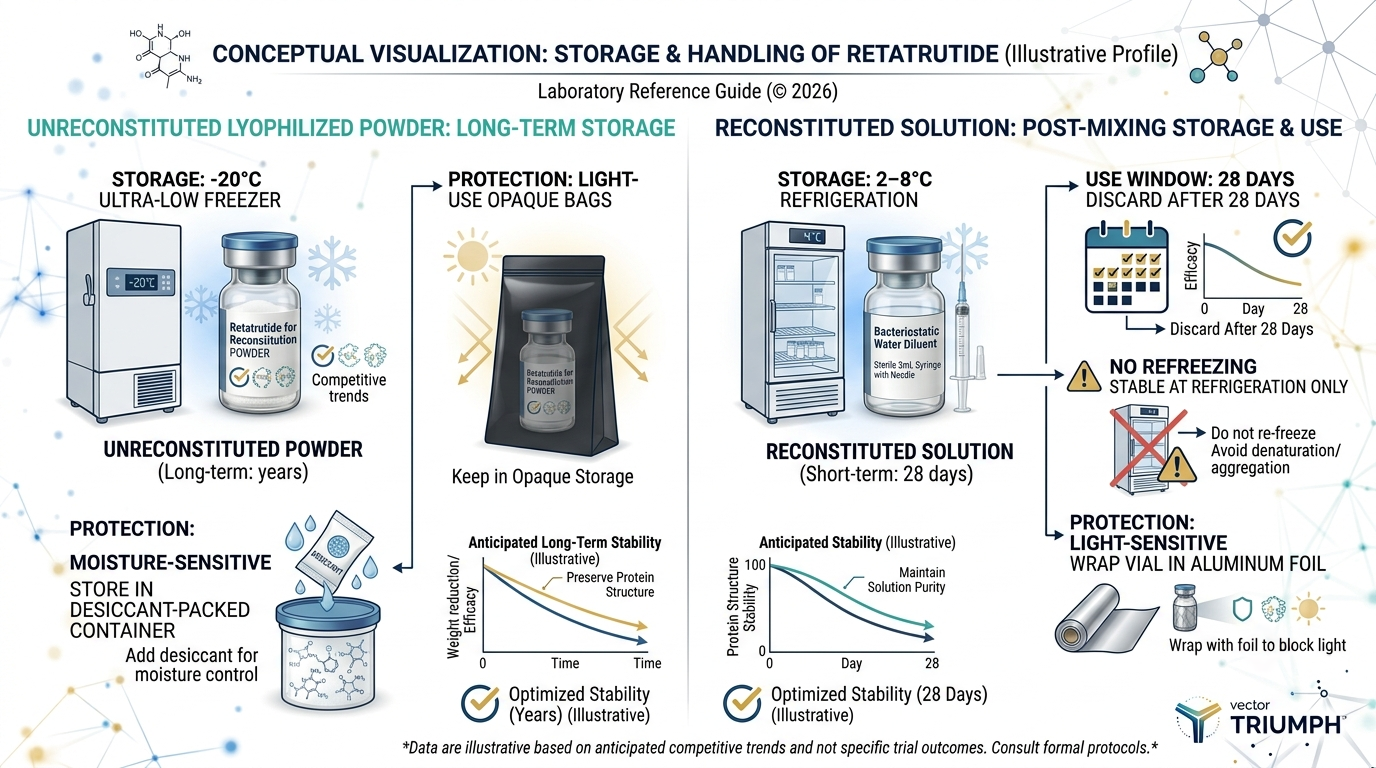
Unreconstituted powder: Store at -20C, protected from light and moisture. Stable for the duration indicated on the Certificate of Analysis.
Reconstituted solution: Store at 2-8C (refrigerated). Use within 28 days. Do not refreeze after reconstitution, as freeze-thaw cycles degrade peptide integrity.
Light sensitivity: Retatrutide in solution should be protected from prolonged light exposure. Wrap the vial in aluminum foil or store in an opaque container if the refrigerator has a light that activates when opened.
Common Reconstitution Questions
How much BAC water for a 10 mg retatrutide vial?
The most commonly used volume is 1-2 mL. With 1 mL, the concentration is 10 mg/mL. With 2 mL, it is 5 mg/mL. The choice depends on your protocol's required concentration and the precision needed for measurement. Higher volumes (lower concentrations) allow for more precise measurement of small amounts.
Can I use sterile water instead of BAC water?
Strictly speaking, yes — sterile water for injection will dissolve the peptide. However, bacteriostatic water is preferred for research applications because the benzyl alcohol preservative inhibits bacterial growth, making it appropriate for multi-dose vials. Sterile water should only be used for single-use protocols.
How long does reconstituted retatrutide last?
Reconstituted retatrutide should be used within 28 days when stored at 2-8C. Peptide degradation is a gradual process; potency may begin to decline before 28 days, particularly if storage conditions are not optimal. For critical experiments, use freshly reconstituted peptide whenever possible.
For high-purity, research-grade retatrutide with comprehensive analytical documentation, visit the COSPEP Retatrutide product page.
Frequently Asked Questions
How do you reconstitute retatrutide for research?
Add bacteriostatic water slowly down the inner wall of the vial (not directly onto the peptide cake). Gently swirl (do not shake) until completely dissolved. A 10 mg vial with 1 mL yields 10 mg/mL; with 2 mL yields 5 mg/mL.
How much BAC water for 10 mg retatrutide?
Common volumes are 1 mL (10 mg/mL concentration) or 2 mL (5 mg/mL). Choose based on your experimental protocol requirements. Higher volumes provide more precise measurement for small amounts.
How to store reconstituted retatrutide?
Store reconstituted retatrutide at 2-8C (refrigerated). Use within 28 days. Do not freeze after reconstitution, as freeze-thaw cycles degrade peptide integrity. Protect from light.
Can you use sterile water to reconstitute retatrutide?
Sterile water can dissolve the peptide but is not ideal for multi-use vials. Bacteriostatic water (0.9% benzyl alcohol) is preferred as it inhibits bacterial growth. Use sterile water only for single-use protocols.
How long is reconstituted retatrutide stable?
Reconstituted retatrutide is stable for up to 28 days when stored at 2-8C. For optimal results in critical experiments, use freshly reconstituted peptide when possible, as potency gradually declines over time.
Need Bulk Peptide Raw Materials?
COSPEP Biotech is a GMP-compliant China peptide supplier providing worldwide shipping and custom formulations.