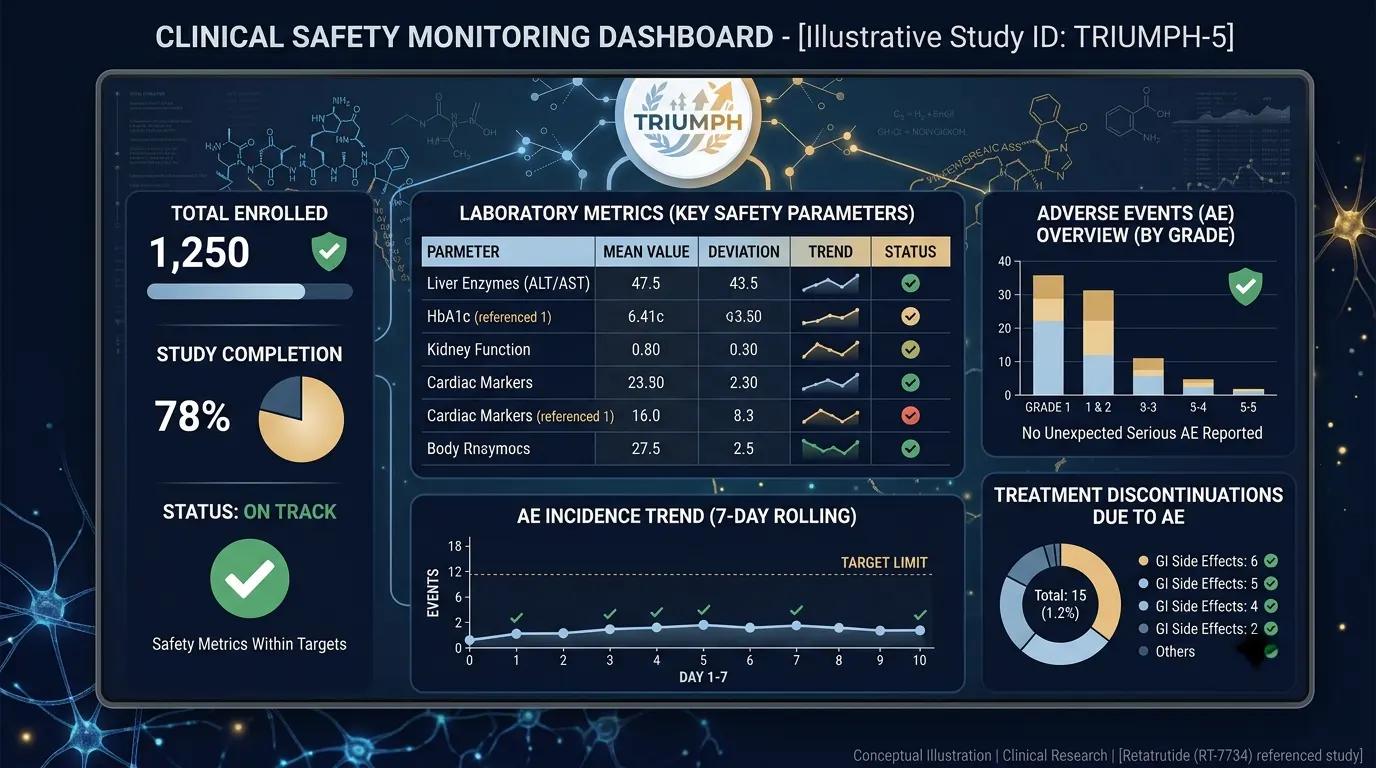
Retatrutide Side Effects & Safety: Clinical Trial Data Analysis
Table of Contents
- •Overview of the Retatrutide Safety Profile
- •Gastrointestinal Adverse Events
- •Nausea
- •Vomiting & Diarrhea
- •Constipation
- •Gastrointestinal Tolerability Strategy
- •Cardiovascular Safety Signals
- •Metabolic & Endocrine Considerations
- •Hair-Related Concerns
- •Injection Site Reactions
- •Serious Adverse Events & Discontinuation Rates
- •Research Safety Disclaimer
Overview of the Retatrutide Safety Profile
Understanding the safety and tolerability profile of investigational compounds is a critical component of research due diligence. Retatrutide (LY3437943), Eli Lilly's triple receptor agonist targeting GLP-1, GIP, and glucagon receptors, has generated significant scientific interest. This article summarizes the adverse event data from published Phase 2 clinical trials to provide researchers with a comprehensive reference for the safety landscape of this novel peptide.
Disclaimer: The information below is extracted from published clinical research and is provided for informational and educational purposes only. It does not constitute medical advice or safety claims about research products.
Gastrointestinal Adverse Events
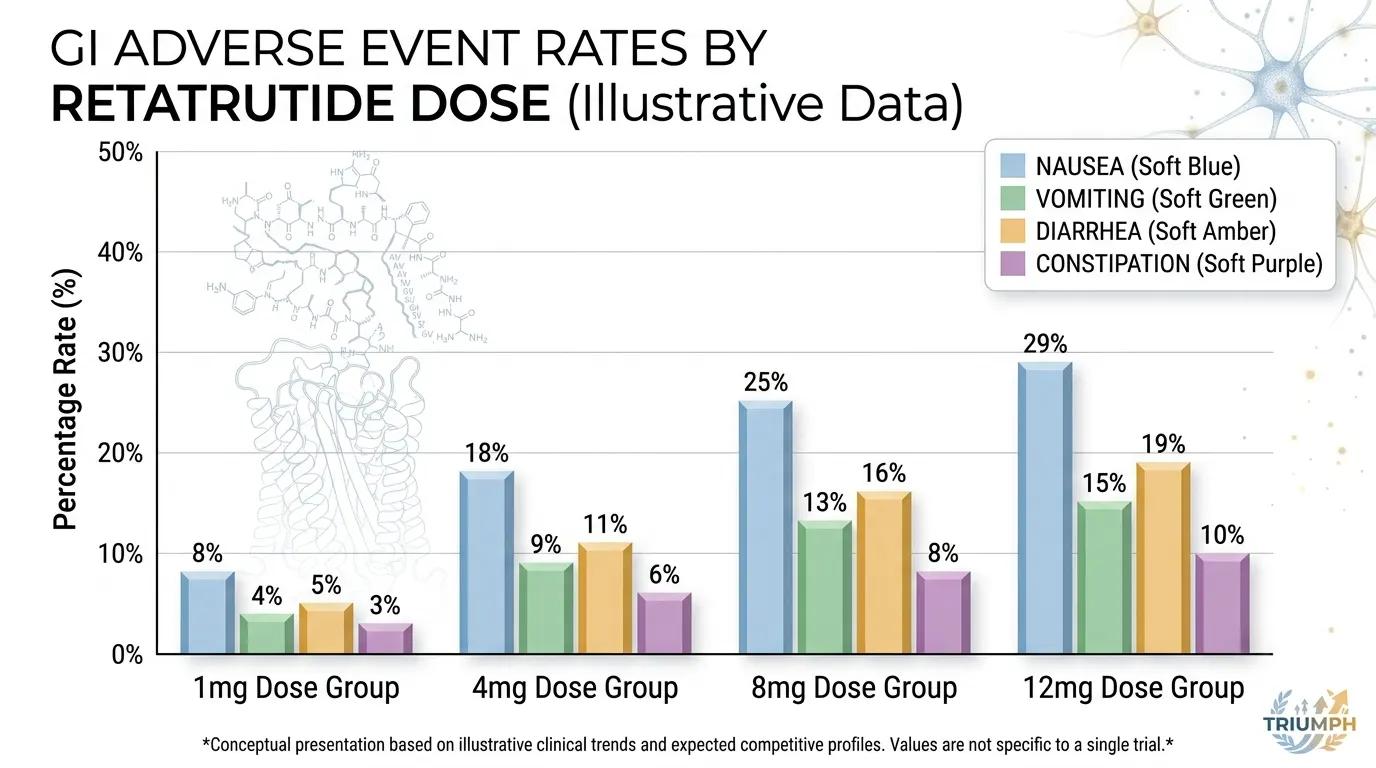
Consistent with the broader GLP-1 receptor agonist class, gastrointestinal (GI) events were the most commonly reported adverse effects in the Phase 2 retatrutide trial. These events were predominantly mild to moderate in severity and occurred most frequently during the dose-escalation phase.
Nausea
Nausea was the single most common adverse event, reported in approximately 16% of participants in the 1 mg group, rising to approximately 35-45% in the highest dose (12 mg) group. The majority of nausea episodes were characterized as mild and transient, peaking during the initial dose escalation weeks and diminishing as participants acclimated to each dose level.
Vomiting & Diarrhea
Vomiting was reported in approximately 8-20% of participants across dose groups, while diarrhea occurred in roughly 15-25%. Both events showed a dose-dependent pattern and tended to be most prominent during the first 24 weeks of treatment when doses were actively being escalated.
Constipation
Constipation was reported in approximately 10-18% of participants. Unlike the other GI events, constipation sometimes persisted beyond the titration period, though it remained mild to moderate in severity for the vast majority of affected participants.
Gastrointestinal Tolerability Strategy
The 24-week gradual dose-escalation protocol employed in the Phase 2 trial was specifically designed to optimize GI tolerability. Starting at 2 mg and escalating at 4-week intervals allowed the body time to adapt to each dose level before the next increase. This approach mirrors the escalation strategies used with approved GLP-1 receptor agonists like semaglutide and tirzepatide.
Cardiovascular Safety Signals
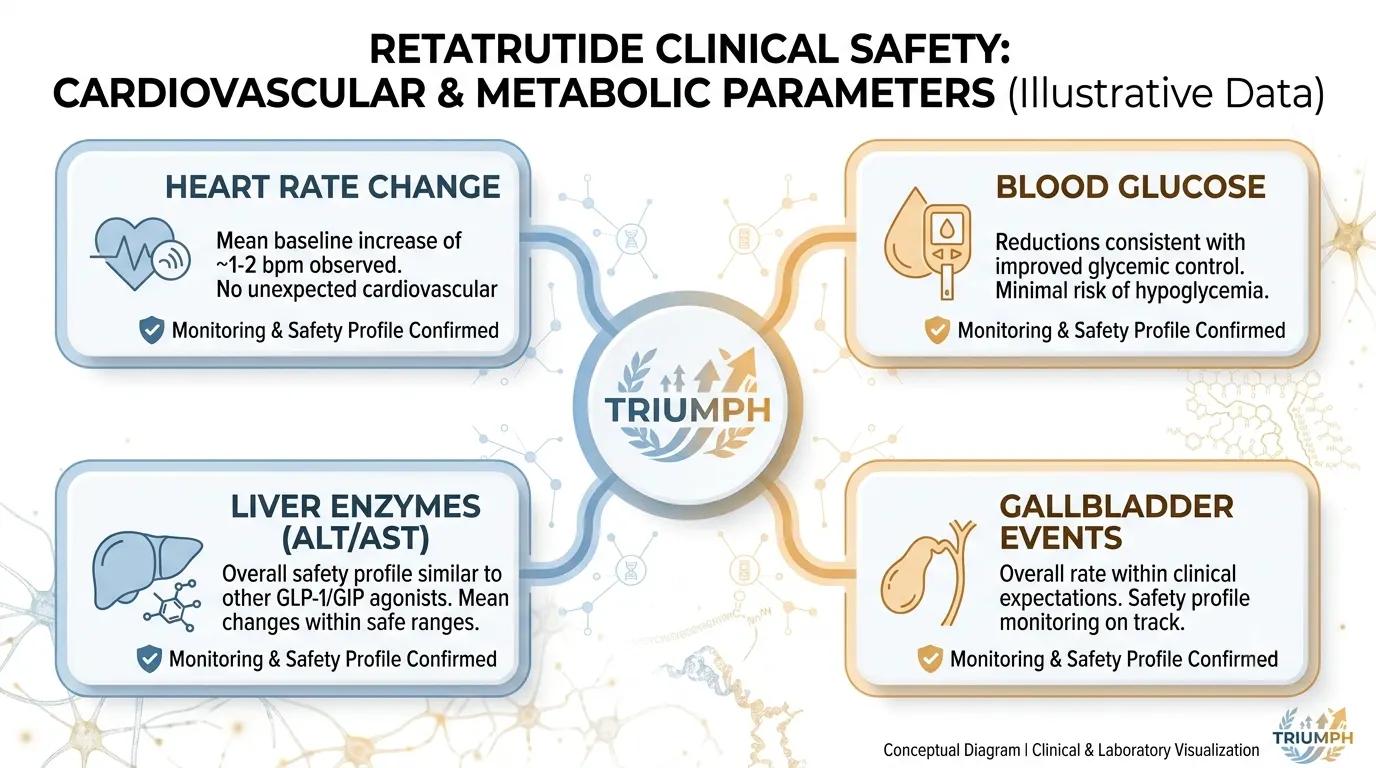
The Phase 2 data did not identify significant cardiovascular safety concerns for retatrutide. Mean heart rate increases of approximately 2-6 beats per minute were observed, consistent with the known pharmacodynamic effects of glucagon receptor agonism. These heart rate changes plateaued over time and were not associated with an increased incidence of arrhythmias or other cardiac adverse events in the 48-week study.
Comprehensive cardiovascular outcomes data are pending from the Phase 3 TRIUMPH program, which includes dedicated cardiovascular outcomes trials. These results will be essential for fully characterizing the long-term cardiovascular safety profile of retatrutide.
Metabolic & Endocrine Considerations
As a glucagon receptor agonist in addition to its GLP-1 and GIP activities, retatrutide's metabolic effects warrant specific attention:
Blood glucose: Despite glucagon's known hyperglycemic effects, retatrutide produced net improvements in glycemic parameters in participants with type 2 diabetes, likely due to the counterbalancing effects of GLP-1 and GIP agonism on insulin secretion.
Liver enzymes: Mild, transient increases in hepatic transaminases (ALT/AST) were observed in some participants, consistent with glucagon receptor engagement. These elevations were generally asymptomatic and self-limiting.
Gallbladder-related events: As with other GLP-1 receptor agonists, an increased incidence of cholelithiasis (gallstones) and cholecystitis was noted. The rate was comparable to that observed with tirzepatide and semaglutide in their respective clinical programs.
Hair-Related Concerns
Hair thinning or transient hair loss has been discussed in community forums and anecdotal reports. In the published Phase 2 trial data, hair-related adverse events were not formally identified as a prominent safety signal. However, it is important to note that telogen effluvium (temporary, diffuse hair shedding) is a well-recognized phenomenon associated with rapid weight loss, regardless of the intervention method. This condition is typically self-limiting and not unique to any specific GLP-1-based agent.
Injection Site Reactions
Mild injection site reactions (erythema, pruritus, mild discomfort) were reported in a small percentage of participants. These reactions were generally transient and did not lead to treatment discontinuation in the vast majority of cases.
Serious Adverse Events & Discontinuation Rates
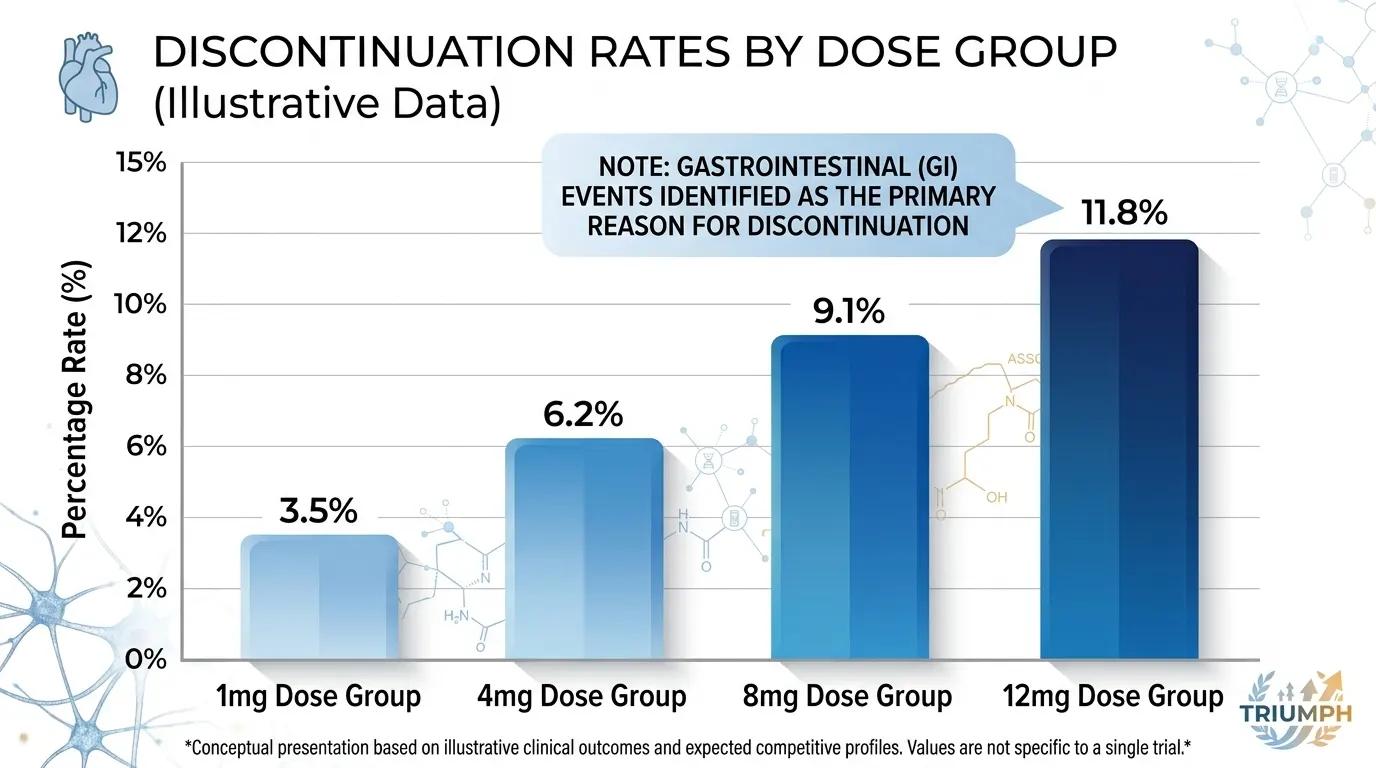
In the Phase 2 trial, serious adverse events were reported in approximately 5-8% of participants across dose groups, with no clear dose-dependent pattern. Treatment discontinuation due to adverse events ranged from approximately 6% in the lower dose groups to 15% in the 12 mg group, with gastrointestinal events being the most common reason for discontinuation.
Research Safety Disclaimer
IMPORTANT: Retatrutide is an investigational compound currently in Phase 3 clinical development. It is not FDA-approved for any indication. Research-grade retatrutide peptide supplied by COSPEP is for laboratory and in vitro research use only. It is NOT for human consumption, diagnostic use, or therapeutic application. All safety data referenced above derive from published clinical trials conducted under controlled conditions by Eli Lilly and Company.
Frequently Asked Questions
What are the most common retatrutide side effects?
Based on Phase 2 clinical trial data, the most common side effects are gastrointestinal: nausea (16-45%), diarrhea (15-25%), vomiting (8-20%), and constipation (10-18%). These are predominantly mild to moderate and tend to diminish over time.
Does retatrutide cause hair loss?
Hair loss was not formally identified as a prominent adverse event in the published Phase 2 trial. Rapid weight loss can cause temporary hair shedding (telogen effluvium), which is a known phenomenon across weight loss interventions and not specific to retatrutide.
Is retatrutide safe for human use?
Retatrutide is an investigational compound currently in Phase 3 clinical trials. It has NOT received FDA approval for any indication. Research-grade retatrutide is for laboratory research use only and is not intended for human consumption.
How are retatrutide side effects managed in clinical trials?
The gradual 24-week dose-escalation protocol (starting at 2 mg, escalating at 4-week intervals) is the primary strategy for optimizing GI tolerability. Most GI side effects diminish as the body adapts to each dose level.
Does retatrutide affect heart rate?
Phase 2 data showed mean heart rate increases of approximately 2-6 bpm, consistent with glucagon receptor agonism. No significant cardiovascular safety concerns were identified in the 48-week study, though long-term cardiovascular data from Phase 3 trials are pending.
Need Bulk Peptide Raw Materials?
COSPEP Biotech is a GMP-compliant China peptide supplier providing worldwide shipping and custom formulations.