Retatrutide vs Semaglutide (Ozempic/Wegovy): Complete Comparison
Table of Contents
- •Receptor Target: One vs. Three
- •Weight Loss Efficacy Comparison
- •Semaglutide 2.4 mg (STEP 1, 68 weeks)
- •Retatrutide 12 mg (Phase 2, 48 weeks)
- •Mechanism Differences in Practice
- •Appetite Suppression (GLP-1 — Shared)
- •Energy Expenditure (Glucagon — Retatrutide Only)
- •Body Composition (Glucagon + GIP — Retatrutide Advantage)
- •Side Effect Profile Comparison
- •Regulatory & Availability Differences
- •Which Should Researchers Study?
Receptor Target: One vs. Three
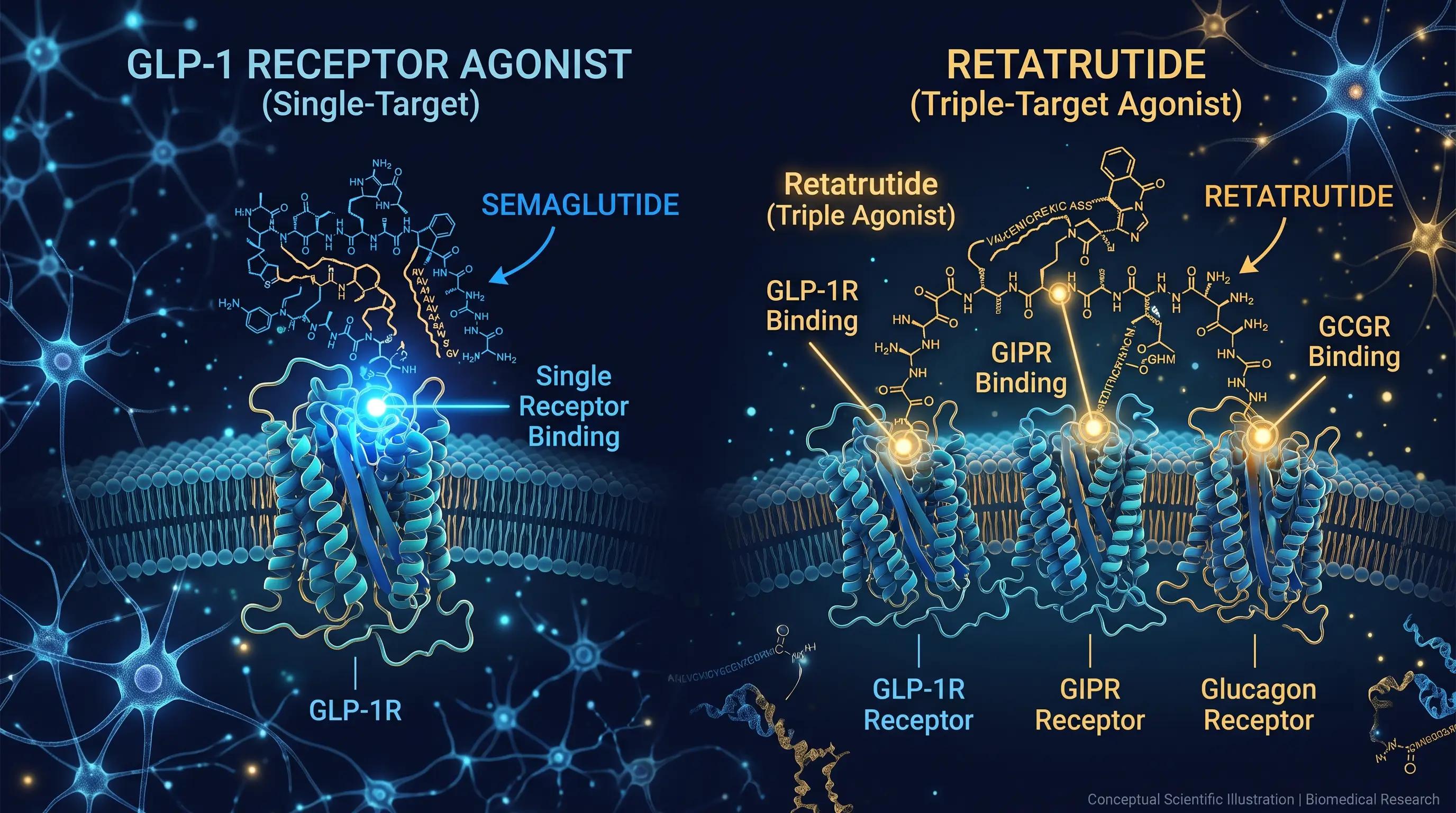
The most fundamental distinction between retatrutide and semaglutide is their receptor target profile:
Semaglutide (Ozempic/Wegovy): GLP-1 receptor agonist only. Activates a single receptor pathway focused on appetite suppression, delayed gastric emptying, and glucose-dependent insulin secretion.
Retatrutide: Triple GLP-1/GIP/glucagon receptor agonist. Activates three receptor pathways simultaneously, adding GIP-mediated insulin sensitization and glucagon-mediated energy expenditure to the familiar GLP-1 effects.
This difference in receptor target number is not merely academic — it reflects a different therapeutic strategy. Semaglutide represents the single-receptor approach: target the most impactful pathway and achieve strong engagement there. Retatrutide represents the multi-receptor approach: coordinate activation across complementary pathways to achieve a more comprehensive metabolic effect.
Weight Loss Efficacy Comparison
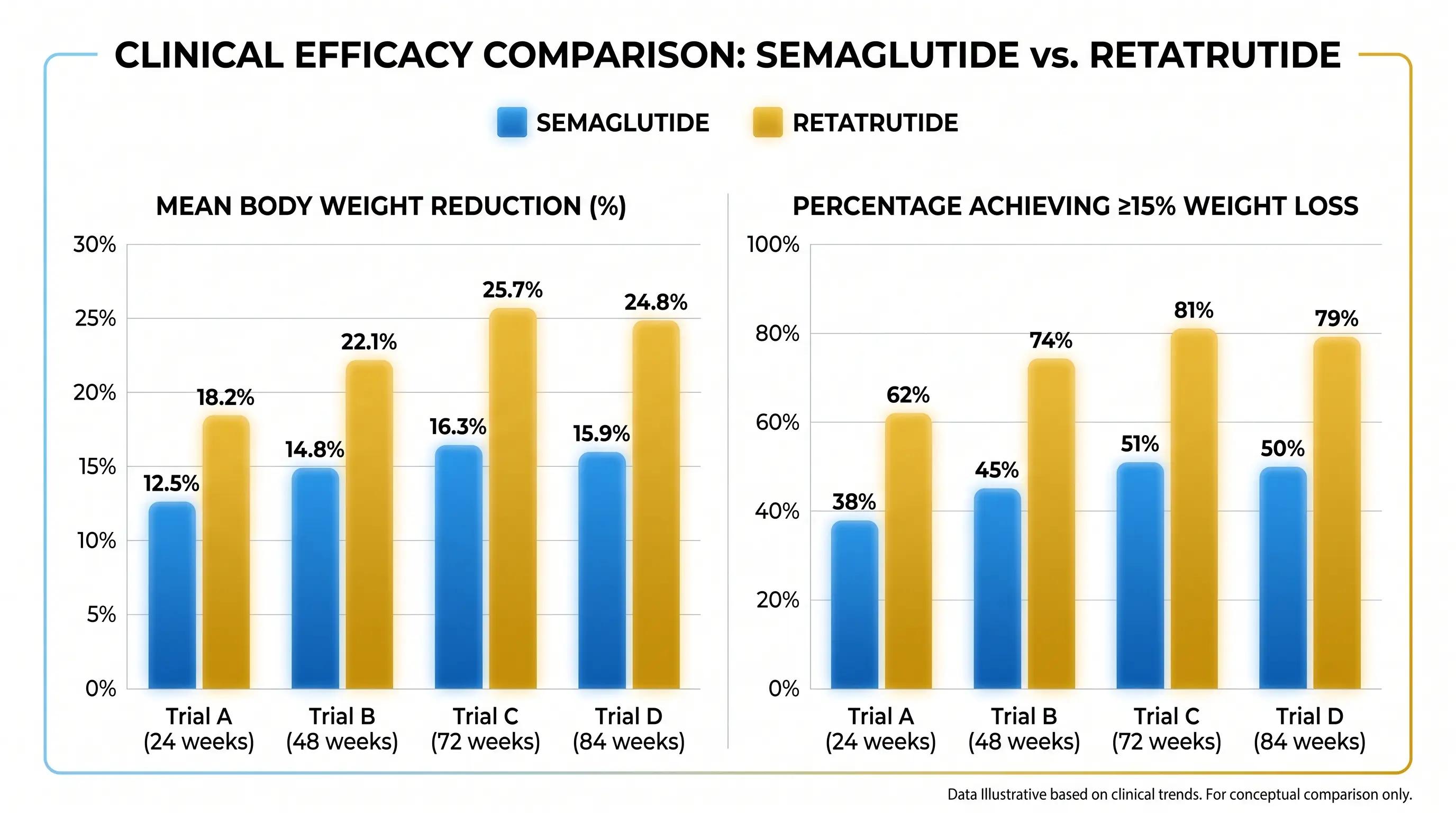
Cross-trial comparison caveat: No head-to-head clinical trial has directly compared retatrutide and semaglutide. The following data come from separate studies with different designs, populations, and durations.
Semaglutide 2.4 mg (STEP 1, 68 weeks)
Mean body weight reduction: -14.9% (placebo-adjusted -12.4%)
Participants achieving >=15% weight loss: ~50%
Weight loss plateau: Approached around weeks 60-68
Retatrutide 12 mg (Phase 2, 48 weeks)
Mean body weight reduction: -24.2% (placebo-adjusted -22.1%)
Participants achieving >=15% weight loss: ~83%
Weight loss plateau: Not clearly reached by week 48
The available data suggest that retatrutide may produce greater mean weight reduction than semaglutide, with more consistent achievement of higher weight loss thresholds. The non-plateauing trajectory at 48 weeks is a notable difference from the semaglutide experience, though longer-term data are needed for confirmation.
Mechanism Differences in Practice
Appetite Suppression (GLP-1 — Shared)
Both compounds produce significant appetite suppression through GLP-1 receptor agonism. This shared mechanism is the primary driver of reduced caloric intake for both agents. Clinical trial data suggest comparable appetite suppression effects, though formal comparative studies are lacking.
Energy Expenditure (Glucagon — Retatrutide Only)
This is retatrutide's differentiating feature with no semaglutide equivalent. Retatrutide's glucagon receptor agonism increases energy expenditure through thermogenesis — effectively raising the body's metabolic rate. Semaglutide does not directly influence energy expenditure; its weight loss effect relies entirely on reduced caloric intake.
This difference may explain why retatrutide-treated participants continued losing weight past 48 weeks without plateauing: the combination of reduced intake (GLP-1) and increased expenditure (glucagon) may create a larger and more persistent energy deficit than intake reduction alone.
Body Composition (Glucagon + GIP — Retatrutide Advantage)
The visceral fat reduction observed with retatrutide (up to 40% on MRI) appears more pronounced than what has been reported for semaglutide. This likely reflects the combined effects of glucagon-mediated lipolysis and GIP-mediated improvements in lipid handling — mechanisms absent from semaglutide's single-receptor profile.
Side Effect Profile Comparison
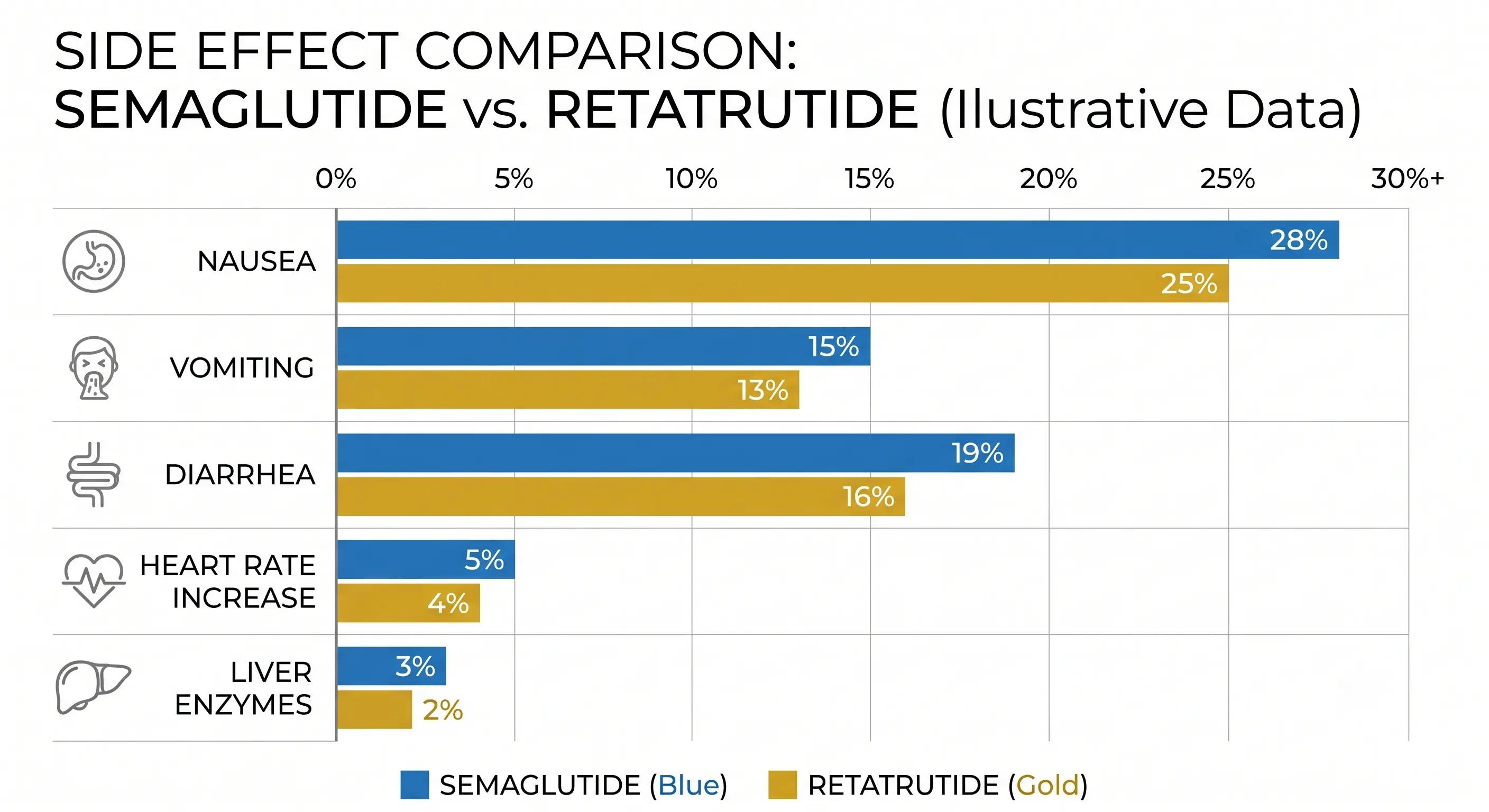
Both compounds share the GLP-1 receptor agonist class effects — primarily gastrointestinal adverse events that are dose-dependent and tend to diminish over time:
Nausea: Semaglutide ~20-44%; Retatrutide ~16-45% (highest doses for both). Comparable rates.
Vomiting: Semaglutide: up to 24%; Retatrutide: up to 20%. Slightly lower with retatrutide, possibly due to the more gradual dose-escalation protocol.
Diarrhea: Semaglutide: up to 30%; Retatrutide: up to 25%. Similar patterns.
Gallbladder: Both associated with increased incidence of cholelithiasis and cholecystitis — a recognized GLP-1 class effect.
Heart rate: Semaglutide: 1-4 bpm increase. Retatrutide: 2-6 bpm increase (glucagon-mediated component).
Liver enzymes: Semaglutide: generally no significant effect. Retatrutide: mild transient transaminase elevations (glucagon-mediated).
Regulatory & Availability Differences
Semaglutide: Fully FDA-approved. Available as Ozempic (type 2 diabetes), Wegovy (obesity), and Rybelsus (oral, type 2 diabetes). Widely available by prescription with established insurance coverage pathways.
Retatrutide: Investigational only. Phase 3 clinical trials ongoing. No FDA approval and no commercial prescription availability. Research-grade peptide available for laboratory investigations.
The regulatory gap is substantial. Semaglutide has been on the market since 2017 (Ozempic) with millions of patient-years of real-world safety data. Retatrutide has a much smaller clinical database and remains years away from potential approval.
Which Should Researchers Study?
The choice between retatrutide and semaglutide for research purposes depends on the experimental question:
Semaglutide: Ideal for studying pure GLP-1 receptor agonism effects, established clinical mechanisms, comparative effectiveness research, and protocols requiring an approved reference compound.
Retatrutide: Ideal for investigating triple-receptor engagement, glucagon-mediated energy expenditure, visceral fat metabolism, and the incremental benefits of multi-receptor targeting over single-receptor approaches.
For high-purity, research-grade retatrutide with comprehensive analytical documentation, visit the COSPEP Retatrutide product page.
Frequently Asked Questions
What is the difference between retatrutide and semaglutide?
Semaglutide targets only the GLP-1 receptor (single agonist). Retatrutide targets GLP-1, GIP, and glucagon receptors (triple agonist). Retatrutide adds energy expenditure and fat oxidation effects through glucagon agonism, which semaglutide does not have.
Is retatrutide better than Ozempic for weight loss?
Available clinical data suggest retatrutide may produce greater weight loss than semaglutide (24.2% vs 14.9% in separate trials), but no direct head-to-head comparison exists. Retatrutide is not FDA-approved, while Ozempic/semaglutide is approved and widely available.
Is retatrutide the same as Ozempic?
No. Ozempic (semaglutide) is a GLP-1-only agonist, FDA-approved since 2017. Retatrutide is a triple GLP-1/GIP/glucagon agonist, still in Phase 3 clinical trials with no FDA approval. They are different compounds with different mechanisms.
Can retatrutide replace semaglutide?
Not currently. Retatrutide is investigational and not approved for any indication. Semaglutide is approved, available, and has extensive long-term safety data. If approved in the future, retatrutide's role relative to semaglutide will depend on comparative effectiveness, safety, and cost data.
How does retatrutide compare to Wegovy?
Wegovy (semaglutide 2.4 mg) produced 14.9% weight loss in the STEP 1 trial at 68 weeks. Retatrutide 12 mg produced 24.2% in Phase 2 at 48 weeks. Retatrutide's triple mechanism adds glucagon-mediated energy expenditure not present in Wegovy's GLP-1-only mechanism.
Need Bulk Peptide Raw Materials?
COSPEP Biotech is a GMP-compliant China peptide supplier providing worldwide shipping and custom formulations.