Retatrutide vs Tirzepatide: Triple Agonist vs Dual Agonist Comparison
Table of Contents
Receptor Target Comparison
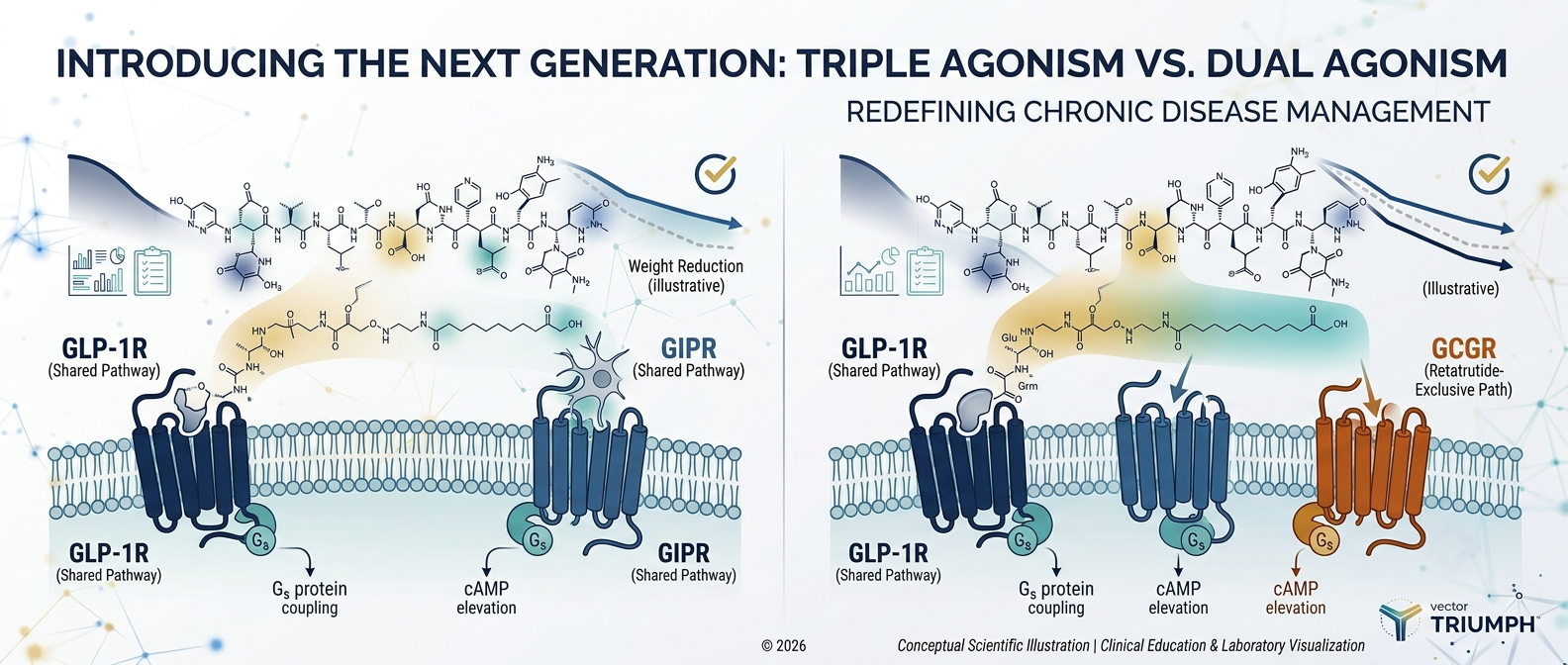
The most fundamental difference between retatrutide and tirzepatide lies in their receptor target profiles. Both are multi-receptor agonists developed by Eli Lilly, but they engage different combinations of metabolic receptors:
Tirzepatide: Dual GLP-1/GIP receptor agonist (two targets)
Retatrutide: Triple GLP-1/GIP/glucagon receptor agonist (three targets)
The addition of glucagon receptor agonism in retatrutide is the critical differentiator. While both compounds share GLP-1 and GIP engagement — which drives appetite suppression, slowed gastric emptying, and enhanced insulin secretion — retatrutide adds a third dimension through glucagon-mediated energy expenditure and lipolysis.
Mechanism-by-Mechanism Breakdown
GLP-1 Receptor Agonism (Shared)
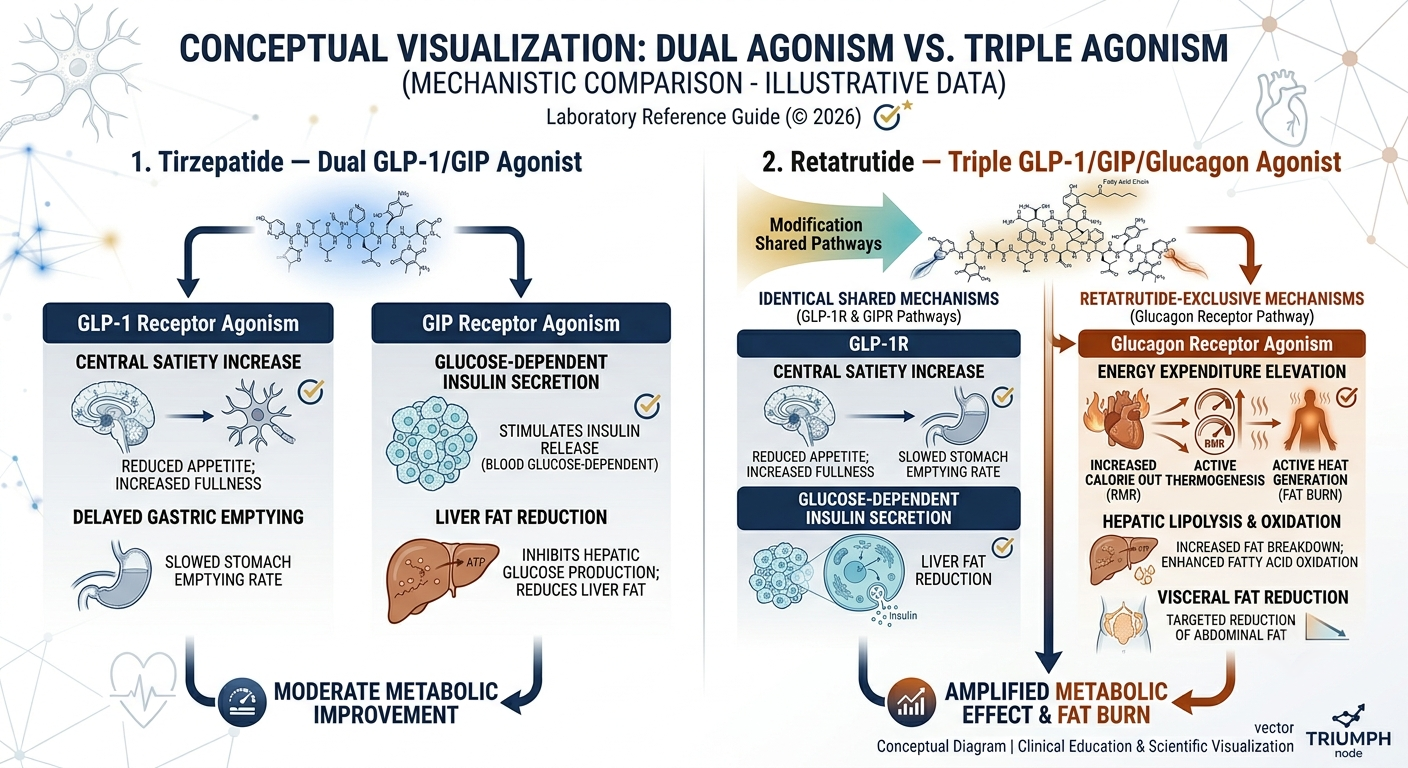
Both compounds activate the GLP-1 receptor, producing appetite suppression via central nervous system pathways, delayed gastric emptying, and glucose-dependent insulin secretion. This shared mechanism underlies the class effects seen across all GLP-1-based agents, including weight reduction and glycemic improvement.
GIP Receptor Agonism (Shared)
Both compounds activate the GIP receptor, enhancing glucose-dependent insulin secretion and potentially improving lipid metabolism and insulin sensitivity. The GIP component is thought to contribute to the efficacy advantage that tirzepatide has demonstrated over GLP-1-only agents like semaglutide.
Glucagon Receptor Agonism (Retatrutide Only)
This is the defining feature of retatrutide and the component absent from tirzepatide. Glucagon receptor activation:
Increases hepatic glucose output (counterbalanced by GLP-1/GIP-mediated insulin secretion)
Elevates energy expenditure through thermogenesis
Promotes lipolysis (fat breakdown) and fatty acid oxidation
May contribute to the pronounced visceral fat reduction observed in retatrutide trials
Weight Loss Efficacy Comparison
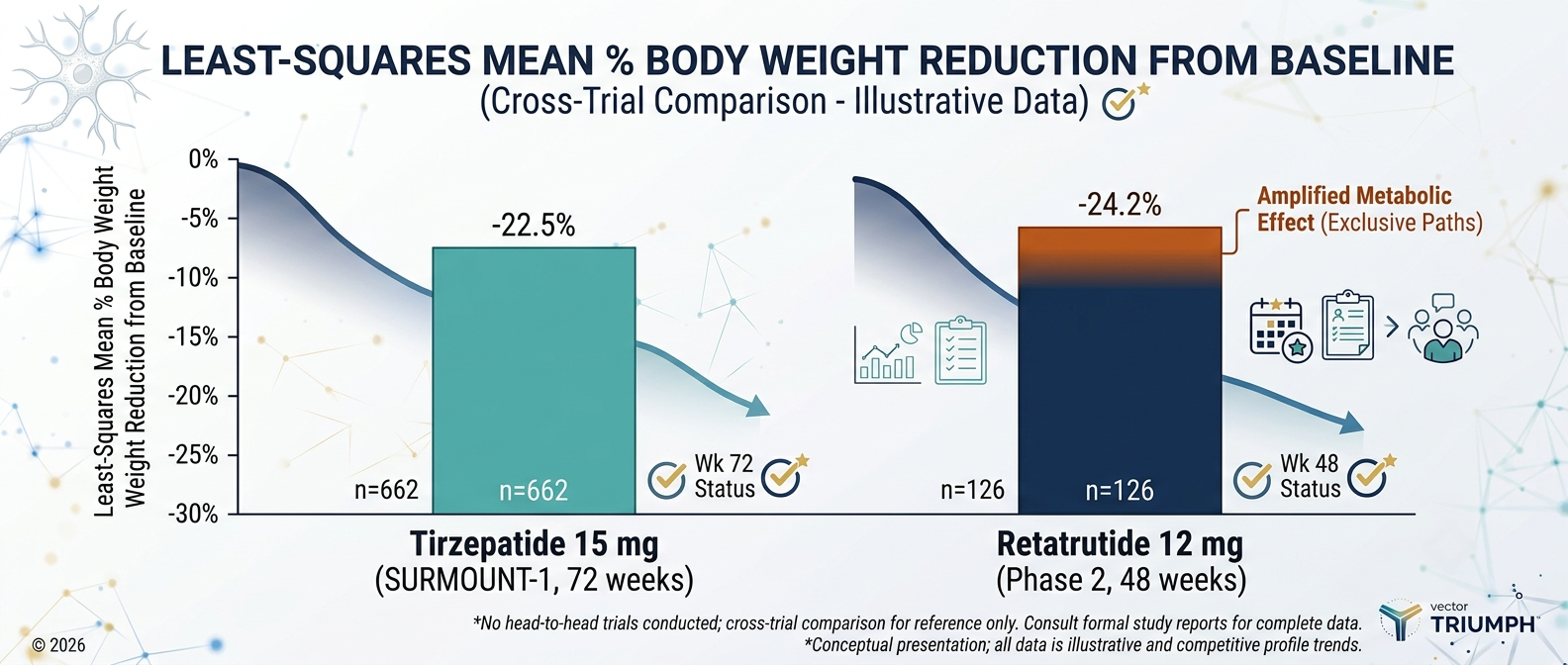
Important caveat: Direct head-to-head trials comparing retatrutide and tirzepatide have not been conducted. The following data are from separate clinical trials with different study populations and protocols. Cross-trial comparisons should be interpreted with caution.
In separate Phase 2/3 clinical programs, the maximum reported weight reduction at the highest evaluated doses was approximately:
Tirzepatide 15 mg (SURMOUNT-1, 72 weeks): ~22.5% mean body weight reduction in participants without diabetes
Retatrutide 12 mg (Phase 2, 48 weeks): ~24.2% mean body weight reduction in participants without diabetes
Notably, retatrutide's weight loss curve had not clearly plateaued at 48 weeks, suggesting additional reduction might occur with extended treatment. The magnitude of visceral fat reduction also appeared more pronounced with retatrutide (up to 40% visceral adipose tissue reduction on MRI) compared to what has been reported for tirzepatide.
Side Effect Profile Comparison
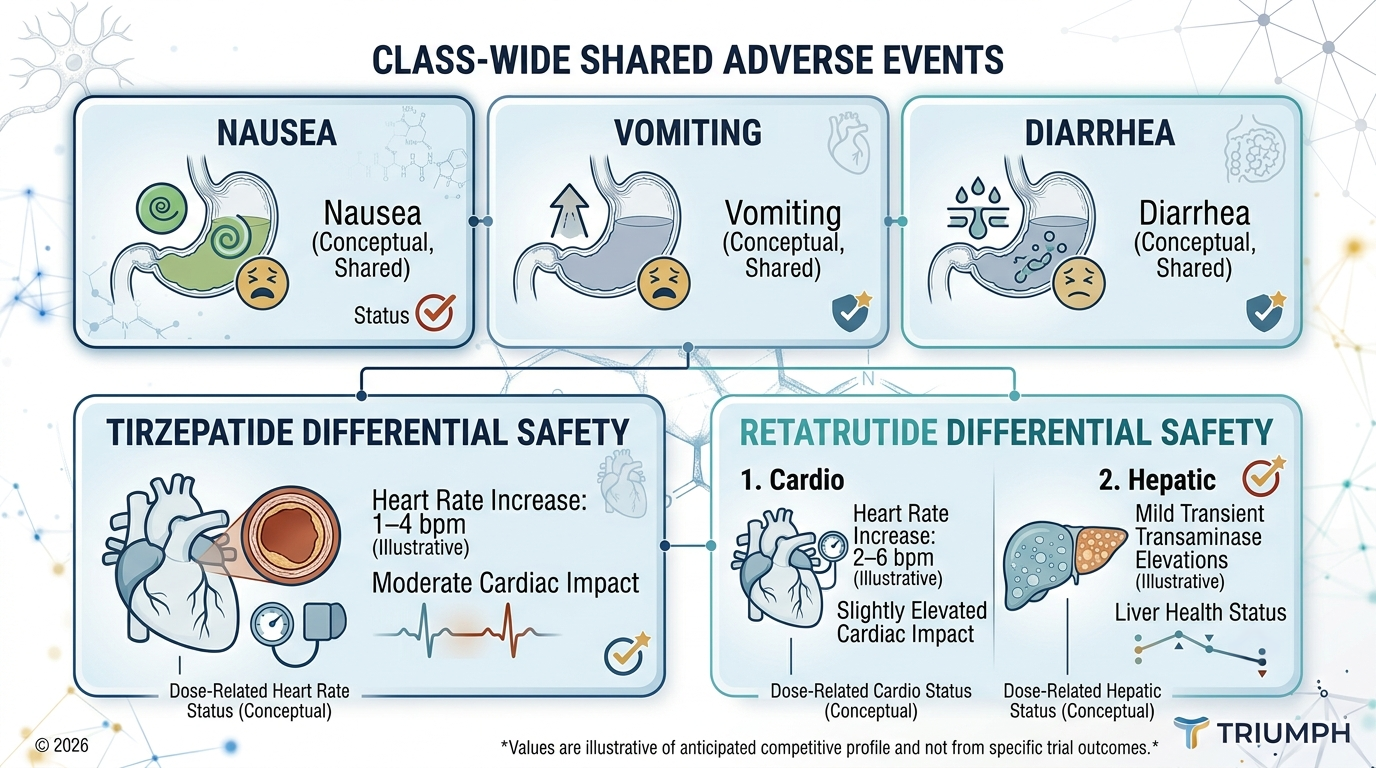
The adverse event profiles of both compounds are broadly similar, dominated by dose-dependent gastrointestinal effects consistent with the GLP-1 receptor agonist class:
Nausea: Comparable rates at similar dose levels (35-45% at highest doses for both compounds)
Vomiting & diarrhea: Similar incidence and severity patterns across both clinical programs
Heart rate: Retatrutide shows slightly more pronounced heart rate increases (2-6 bpm) compared to tirzepatide (1-4 bpm), attributable to glucagon receptor engagement
Liver enzymes: Retatrutide associated with mild, transient transaminase elevations (glucagon-mediated effect) not typically seen with tirzepatide
Regulatory & Market Status
Tirzepatide: FDA-approved as Mounjaro (type 2 diabetes, May 2022) and Zepbound (obesity, November 2023). Commercially available by prescription in multiple markets worldwide.
Retatrutide: Investigational. Phase 3 TRIUMPH program ongoing. Not FDA-approved for any indication. Potential regulatory submission timeline: 2026-2027 (subject to Phase 3 outcomes).
Research Implications
For the research community, the choice between studying retatrutide and tirzepatide depends on the specific scientific question being investigated:
Choose tirzepatide for: Understanding dual GLP-1/GIP mechanisms; studying an approved agent with established clinical use patterns; comparative research against semaglutide.
Choose retatrutide for: Investigating the incremental contribution of glucagon receptor agonism; exploring triple-receptor engagement; studying visceral fat metabolism and energy expenditure mechanisms.
Both peptides are available from COSPEP as research-grade reference materials for laboratory investigations. Visit the COSPEP product catalog for specifications and availability.
Frequently Asked Questions
What is the main difference between retatrutide and tirzepatide?
Tirzepatide is a dual GLP-1/GIP receptor agonist (two targets). Retatrutide adds glucagon receptor agonism to create a triple GLP-1/GIP/glucagon mechanism (three targets). The glucagon component adds energy expenditure and lipolysis effects not present in tirzepatide.
Is retatrutide more effective than tirzepatide for weight loss?
No direct head-to-head comparison trials exist. In separate Phase 2 trials, retatrutide 12 mg showed ~24.2% weight reduction at 48 weeks vs. tirzepatide 15 mg showing ~22.5% at 72 weeks. Cross-trial comparisons should be interpreted cautiously due to different study designs.
Are retatrutide and tirzepatide made by the same company?
Yes, both are developed by Eli Lilly and Company. Tirzepatide is approved as Mounjaro/Zepbound. Retatrutide remains investigational in Phase 3 trials.
Which has fewer side effects: retatrutide or tirzepatide?
Both have similar gastrointestinal side effect profiles, dominated by nausea, vomiting, and diarrhea. Retatrutide shows slightly higher heart rate increases and transient liver enzyme elevations due to its glucagon receptor activity, but no direct comparative safety trial exists.
Is retatrutide approved like tirzepatide?
No. Tirzepatide is FDA-approved as Mounjaro (2022) and Zepbound (2023). Retatrutide is not yet approved; Phase 3 trials are ongoing with potential regulatory submission in 2026-2027.
Need Bulk Peptide Raw Materials?
COSPEP Biotech is a GMP-compliant China peptide supplier providing worldwide shipping and custom formulations.