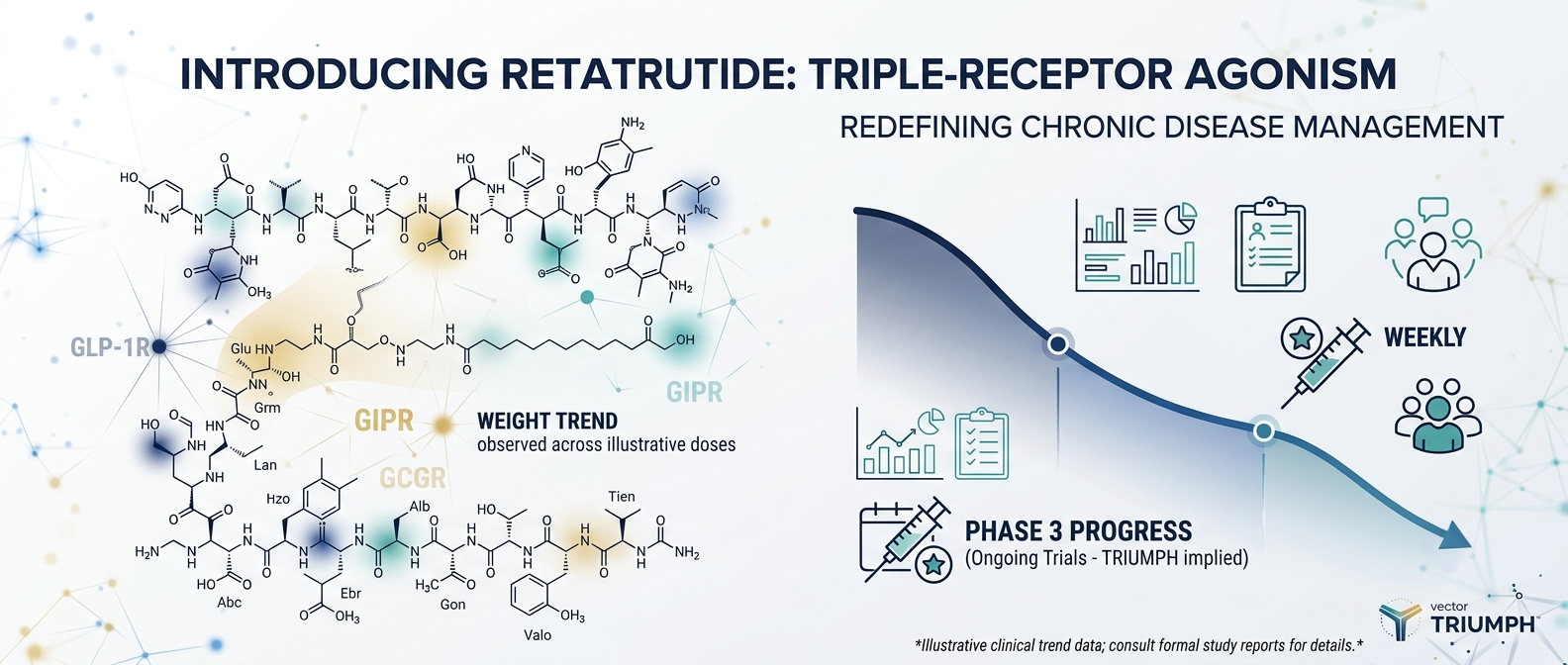
Retatrutide Weight Loss Results: Phase 2 Clinical Trial Data
Table of Contents
Phase 2 Trial: Key Weight Loss Findings
The Phase 2 randomized, double-blind, placebo-controlled trial of retatrutide (Jastreboff et al., NEJM 2023) enrolled 338 adults with obesity or overweight with at least one weight-related condition. Participants were randomized to receive once-weekly subcutaneous retatrutide at escalating doses targeting 1 mg, 4 mg, 8 mg, or 12 mg, or placebo, for 48 weeks.
Primary endpoint result: At 48 weeks, the mean percentage change in body weight was -24.2% in the 12 mg group compared to -2.1% with placebo, for a placebo-adjusted reduction of approximately 22%.
Dose-Response Weight Loss Data
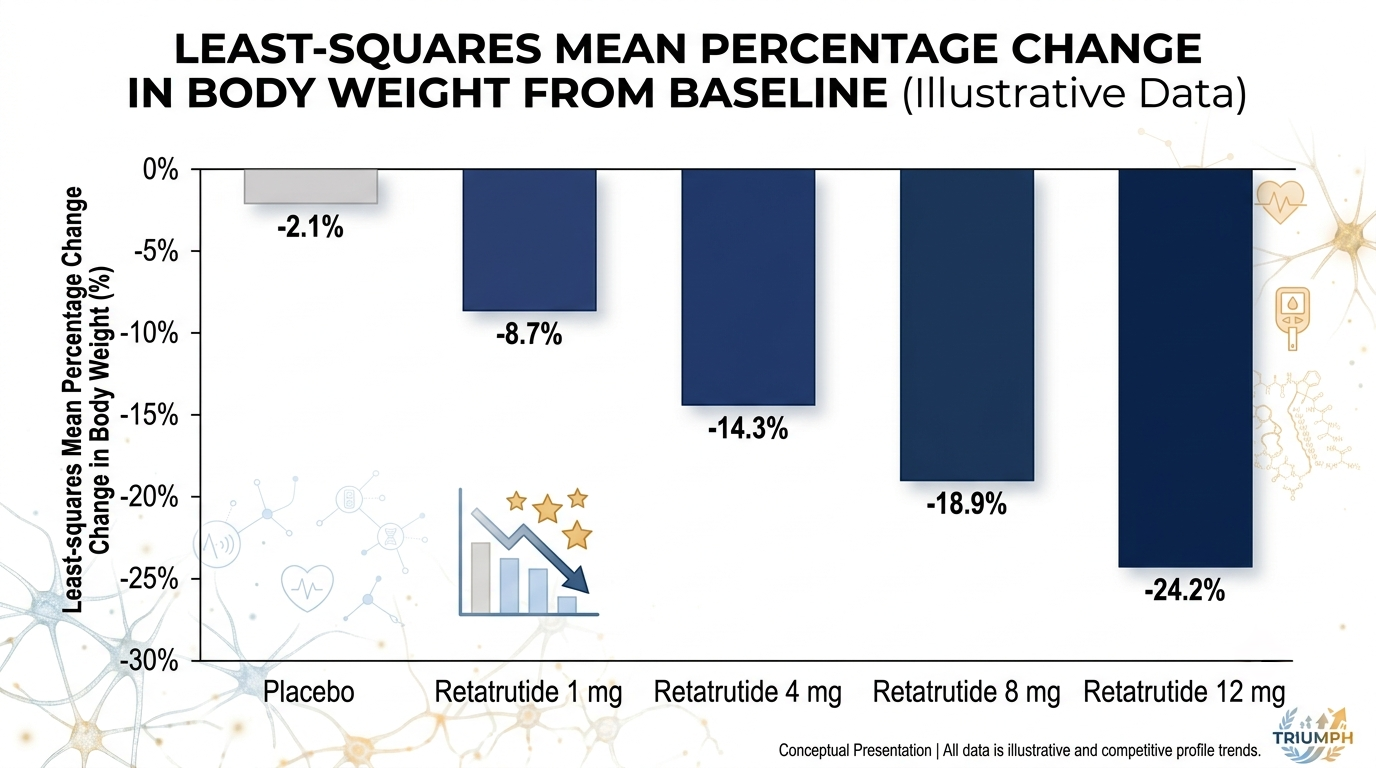
The study demonstrated a clear dose-response relationship for body weight reduction at 48 weeks (least-squares mean change from baseline):
Placebo: -2.1%
Retatrutide 1 mg: -8.7% (placebo-adjusted: -6.6%)
Retatrutide 4 mg: -14.3% (placebo-adjusted: -12.2%)
Retatrutide 8 mg: -18.9% (placebo-adjusted: -16.8%)
Retatrutide 12 mg: -24.2% (placebo-adjusted: -22.1%)
A notably high proportion of participants in the higher dose groups achieved clinically meaningful weight loss thresholds. In the 12 mg group, 100% of participants lost at least 5% of body weight, 93% lost at least 10%, 83% lost at least 15%, and 63% lost at least 20%.
Weight Loss Trajectory & Plateau Analysis
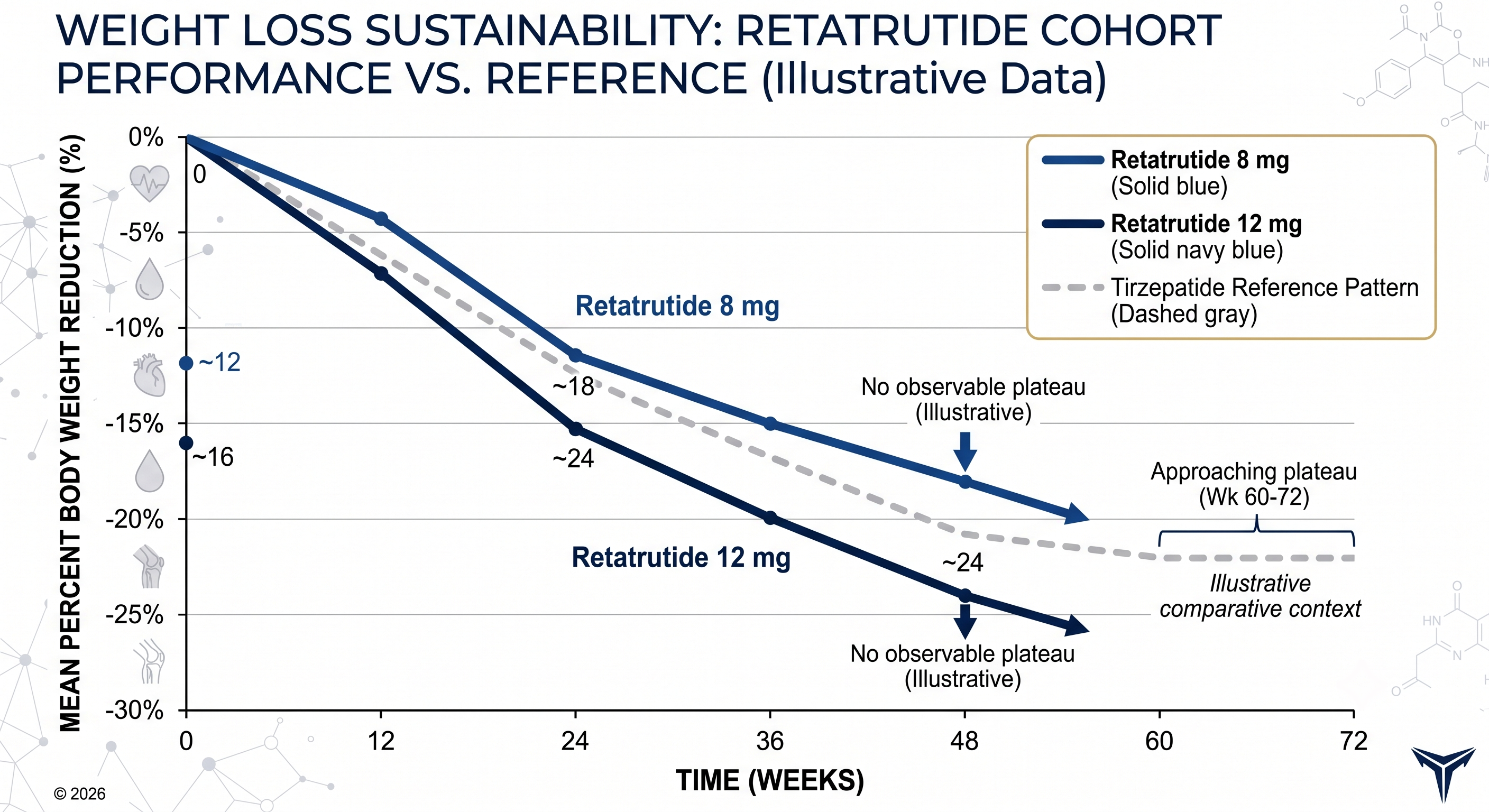
One of the most significant observations from the Phase 2 data was the trajectory of weight loss over time. Unlike many weight loss interventions where a plateau is reached within 6-12 months, the weight loss curves for the 8 mg and 12 mg retatrutide groups had not clearly plateaued by week 48. This finding raises the possibility that longer treatment durations could yield further weight reduction.
For comparison, in the SURMOUNT-1 trial of tirzepatide, weight loss appeared to approach a plateau between weeks 60-72. The extended Phase 3 TRIUMPH program for retatrutide, with longer treatment durations, will provide critical data on whether the non-plateauing pattern continues beyond 48 weeks.
Visceral Fat & Body Composition
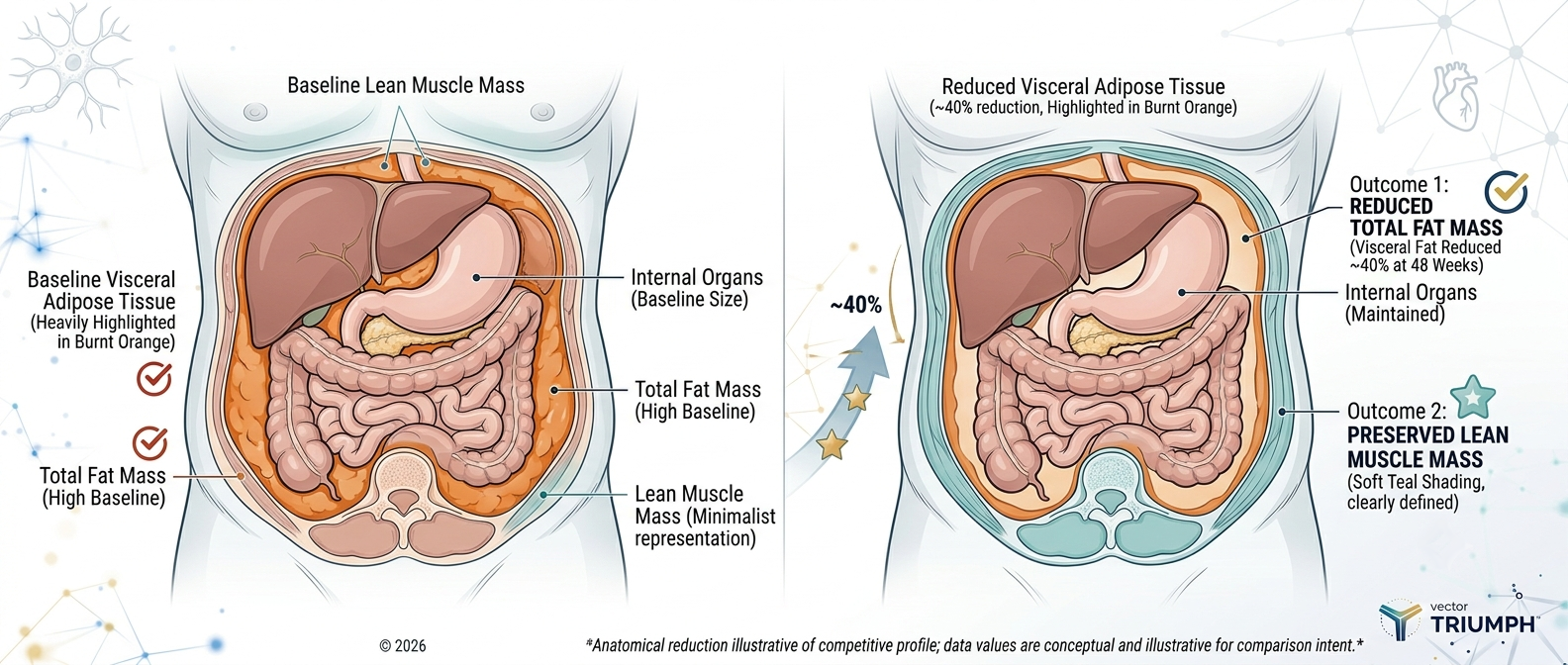
An important secondary endpoint in the Phase 2 trial was the change in body composition, assessed via MRI in a subset of participants:
Visceral adipose tissue (VAT): Decreased by up to approximately 40% in the 12 mg group. Visceral fat — the metabolically active fat surrounding internal organs — is strongly associated with cardiovascular and metabolic disease risk.
Total body fat mass: Reduced substantially, with a greater proportion of total weight loss coming from fat mass rather than lean mass.
Lean mass preservation: While some lean mass reduction occurs with any significant weight loss, the ratio of fat-to-lean loss in retatrutide-treated participants appeared favorable compared to what is typically observed with dietary weight loss alone.
This pattern of body composition change — sometimes described as 'favorable body composition partitioning' — has generated significant scientific interest, as preserving muscle mass during weight loss is important for maintaining metabolic rate and physical function.
Metabolic Parameter Improvements
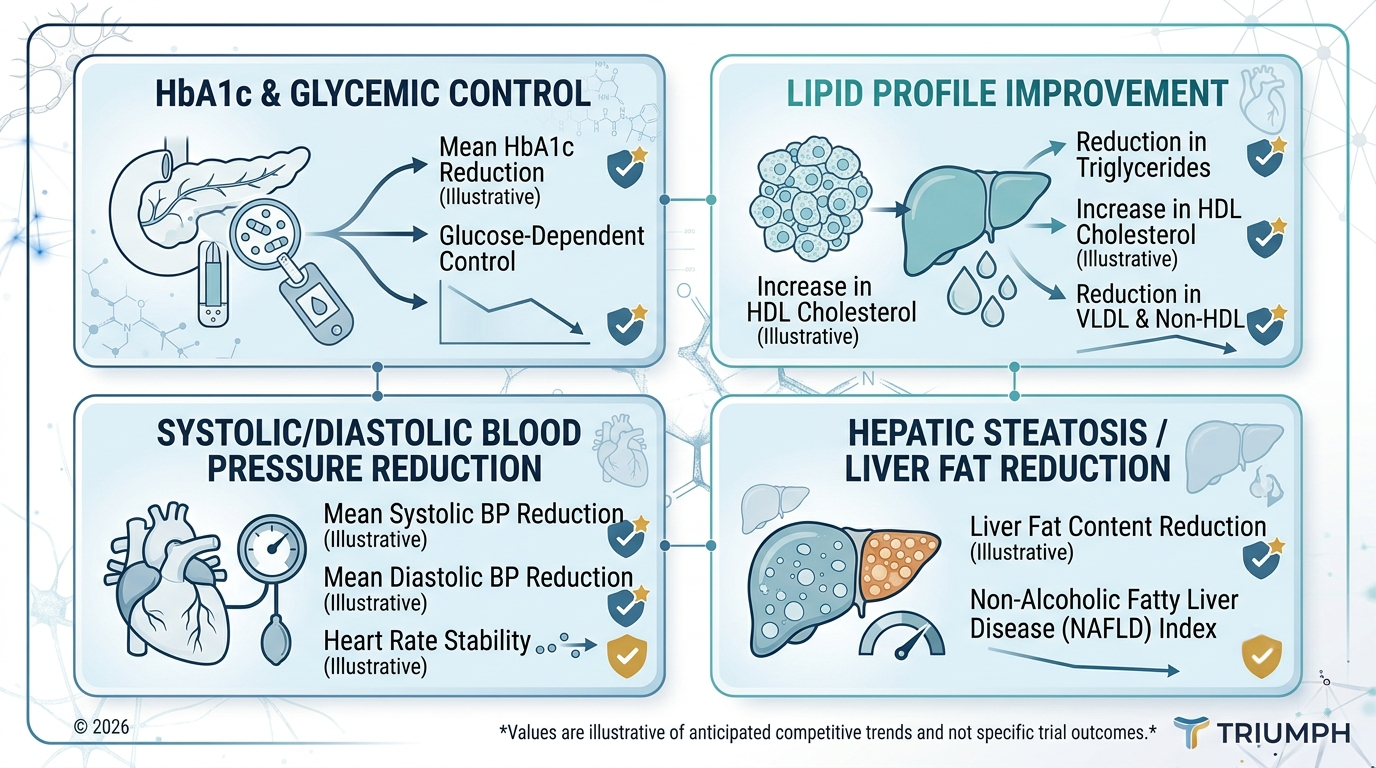
Beyond weight reduction, the Phase 2 trial documented improvements across multiple metabolic parameters:
HbA1c: Participants with prediabetes at baseline showed normalization of glycemic parameters. Those with type 2 diabetes experienced clinically meaningful HbA1c reductions.
Lipid profile: Improvements in triglycerides, HDL cholesterol, and non-HDL cholesterol were observed across dose groups.
Blood pressure: Systolic and diastolic blood pressure decreased, consistent with the cardiovascular benefits associated with weight reduction.
Liver fat: A subgroup analysis showed reductions in liver fat content (hepatic steatosis), relevant to non-alcoholic fatty liver disease (NAFLD) research.
Phase 3 TRIUMPH Program: What to Expect
The ongoing Phase 3 TRIUMPH program is designed to provide definitive efficacy and safety data across a broader population. Key endpoints include weight reduction durability beyond one year, cardiovascular outcomes, and patient-reported quality of life measures. Results from the first TRIUMPH trials are anticipated in 2026-2027.
Important: The clinical trial data presented here are from published research conducted by Eli Lilly. They do not represent claims about research-grade retatrutide supplied by COSPEP, which is for laboratory use only.
Frequently Asked Questions
How much weight loss does retatrutide produce?
In the Phase 2 clinical trial (48 weeks), retatrutide 12 mg produced a mean body weight reduction of 24.2%. The 8 mg group achieved 18.9%, and the 4 mg group 14.3%. Weight loss had not plateaued by week 48 at the higher doses.
What were the retatrutide before and after results in clinical trials?
At 48 weeks in the Phase 2 trial, 100% of participants on 12 mg lost at least 5% body weight, 93% lost at least 10%, 83% lost at least 15%, and 63% lost at least 20%. Visceral fat decreased by up to 40% on MRI.
Does retatrutide cause muscle loss?
Any significant weight loss involves some lean mass reduction. However, Phase 2 data suggest retatrutide favors a higher fat-to-lean loss ratio compared to dietary weight loss alone, potentially due to glucagon-mediated metabolic effects on body composition.
How quickly does retatrutide work for weight loss?
The Phase 2 trial used a gradual dose-escalation protocol over 24 weeks. Weight loss began early in treatment and continued progressively, without plateauing by week 48 at the higher dose levels. Most participants experienced steady, sustained reduction throughout the study period.
Is retatrutide approved for weight loss?
No. Retatrutide is an investigational compound currently in Phase 3 clinical trials (TRIUMPH program). It has not received FDA approval for weight loss or any other indication.
Need Bulk Peptide Raw Materials?
COSPEP Biotech is a GMP-compliant China peptide supplier providing worldwide shipping and custom formulations.