
What Is Retatrutide? Triple Receptor Agonist Explained
Table of Contents
Definition & Drug Class
Retatrutide (LY3437943) is an investigational peptide therapeutic developed by Eli Lilly and Company. It belongs to a novel class of metabolic agents known as triple receptor agonists — molecules engineered to simultaneously activate three distinct hormone receptors involved in metabolic regulation: GLP-1 (glucagon-like peptide-1), GIP (glucose-dependent insulinotropic polypeptide), and glucagon.
This triple-target mechanism represents an evolution beyond earlier generations of incretin-based therapies. First-generation agents like semaglutide (Ozempic, Wegovy) target only the GLP-1 receptor. Second-generation agents like tirzepatide (Mounjaro, Zepbound) add GIP receptor agonism to the GLP-1 target. Retatrutide is the first candidate to add a third receptor — glucagon — to this platform.
Development History & Manufacturer
Retatrutide is being developed by Eli Lilly and Company, the same pharmaceutical company behind tirzepatide (Mounjaro/Zepbound). Lilly's incretin research program has been one of the most active pipelines in metabolic therapeutics, with multiple candidates targeting various combinations of the GLP-1, GIP, and glucagon receptors.
The compound entered Phase 1 clinical testing in 2020, with initial data presented at major endocrinology conferences. Phase 2 results, published in the New England Journal of Medicine in 2023 (Jastreboff et al.), demonstrated substantial weight reduction across multiple dose levels and generated significant scientific and public interest. As of 2026, retatrutide is undergoing evaluation in the Phase 3 TRIUMPH clinical program across multiple indications.
How Retatrutide Differs from Other GLP-1 Agonists
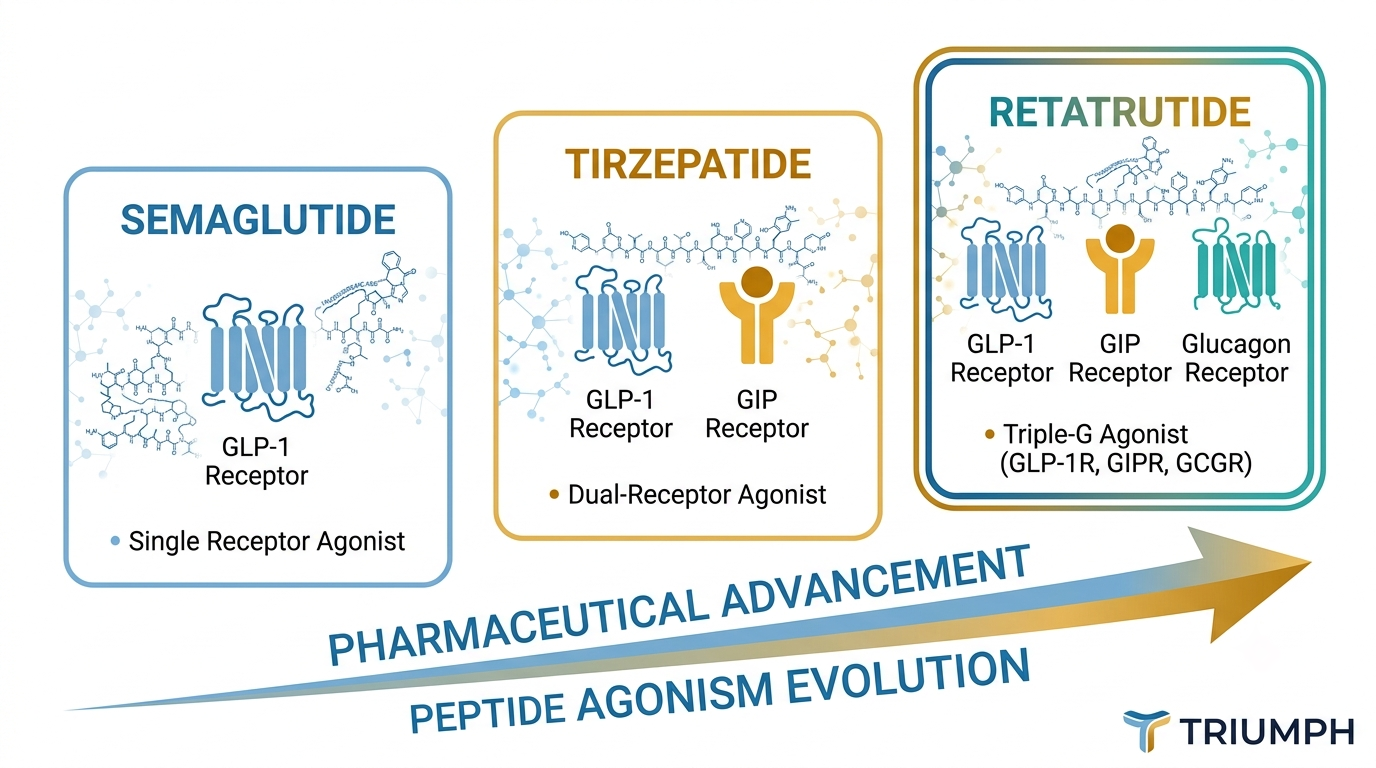
The key distinction between retatrutide and earlier GLP-1 receptor agonists lies in its receptor target profile:
Semaglutide (Ozempic/Wegovy): GLP-1 receptor agonist only. Primary mechanisms: appetite suppression, slowed gastric emptying, glucose-dependent insulin secretion.
Tirzepatide (Mounjaro/Zepbound): Dual GLP-1/GIP receptor agonist. Adds GIP-mediated insulin secretion enhancement and potential lipid metabolism benefits to the GLP-1 profile.
Retatrutide: Triple GLP-1/GIP/glucagon receptor agonist. Adds glucagon-mediated energy expenditure, thermogenesis, and lipolysis to the dual-agonist profile.
The addition of glucagon agonism is the defining feature that distinguishes retatrutide. Glucagon increases hepatic glucose output and, importantly, promotes energy expenditure through thermogenesis — effectively adding a 'calories out' dimension to the 'calories in' effects of appetite suppression and insulin sensitization.
Chemical & Pharmacological Properties
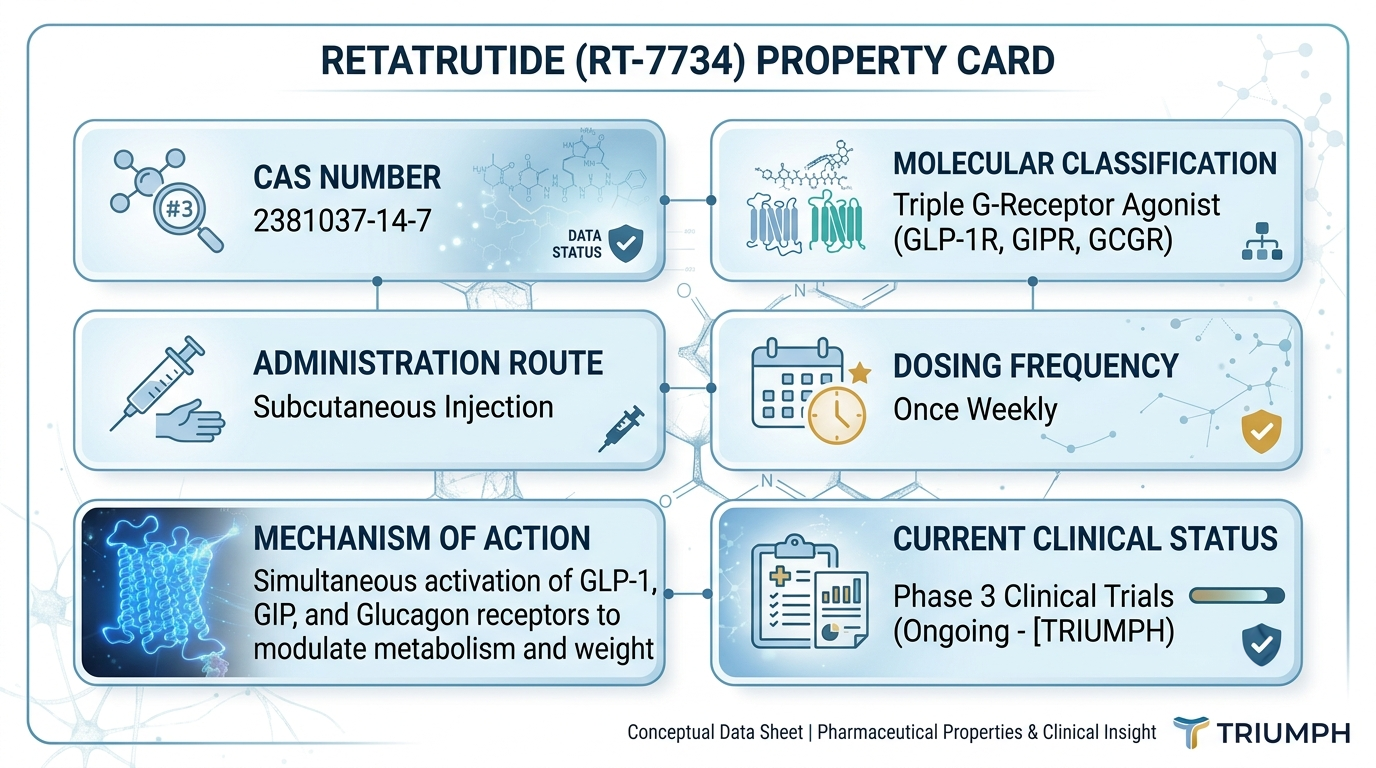
Retatrutide is a synthetic peptide engineered through structure-based drug design. Key chemical properties include:
CAS Number: 2381089-83-2
Molecular classification: Synthetic peptide with fatty acid side chain for extended half-life
Route of administration: Subcutaneous injection
Dosing frequency: Once weekly (as evaluated in clinical trials)
Mechanism: Balanced triple agonism at GLP-1, GIP, and glucagon receptors
Current Clinical Status (2026)
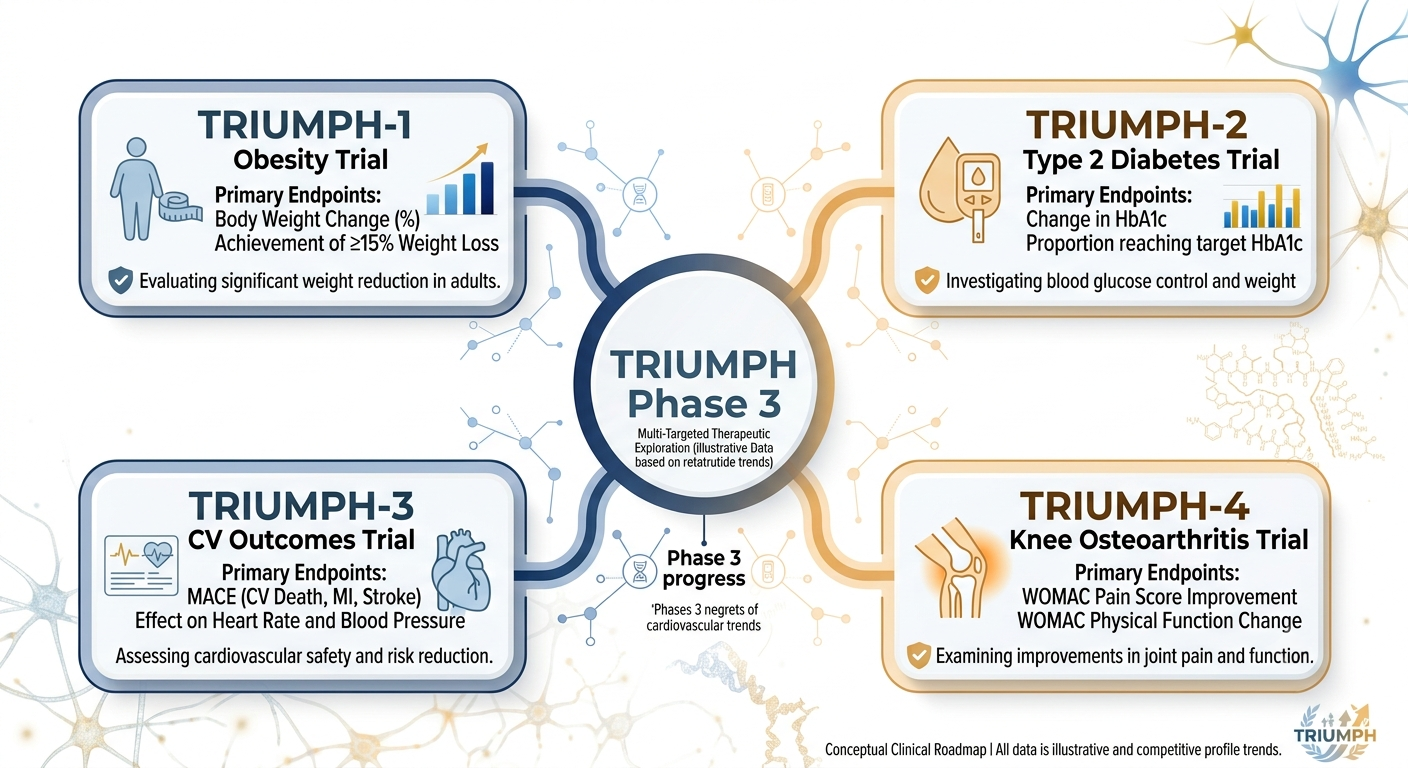
Retatrutide is currently in Phase 3 clinical development under the TRIUMPH program, which encompasses multiple parallel trials:
TRIUMPH-1: Obesity/overweight without diabetes
TRIUMPH-2: Obesity/overweight with type 2 diabetes
TRIUMPH-3: Obesity-related cardiovascular outcomes
TRIUMPH-4: Knee osteoarthritis in obesity
Retatrutide has not received FDA approval for any indication. The timeline for potential regulatory submission will depend on the completion and outcomes of the Phase 3 program. Industry analysts project potential approval in the 2026-2027 timeframe, contingent on favorable Phase 3 results.
Research Availability
For the scientific research community, retatrutide peptide is available as a research-grade lyophilized powder from specialized chemical suppliers. COSPEP supplies retatrutide as a reference material for laboratory and in vitro investigations. This product is intended exclusively for research purposes and is not approved for human therapeutic use.
Researchers interested in retatrutide for laboratory studies can find product specifications, purity data, and ordering information on the COSPEP Retatrutide product page.
Frequently Asked Questions
What is retatrutide?
Retatrutide (LY3437943) is an investigational triple receptor agonist peptide developed by Eli Lilly. It simultaneously activates GLP-1, GIP, and glucagon receptors, making it the first of a new class of metabolic therapeutics currently in Phase 3 clinical trials.
Is retatrutide FDA approved?
No. As of 2026, retatrutide is in Phase 3 clinical development under the TRIUMPH program and has not received FDA approval for any indication.
What is retatrutide used for?
In clinical trials, retatrutide is being investigated for obesity, type 2 diabetes, and obesity-related conditions. Research-grade retatrutide is used in laboratory and in vitro scientific investigations.
Is retatrutide a peptide?
Yes, retatrutide is a synthetic peptide — a chain of amino acids engineered through structure-based drug design with a fatty acid side chain for extended half-life, enabling once-weekly administration.
How is retatrutide different from semaglutide?
Semaglutide targets only the GLP-1 receptor. Retatrutide targets three receptors: GLP-1, GIP, and glucagon. This triple mechanism adds energy expenditure (via glucagon) and enhanced insulin secretion (via GIP) to the appetite-suppressing effects of GLP-1 agonism.
Need Bulk Peptide Raw Materials?
COSPEP Biotech is a GMP-compliant China peptide supplier providing worldwide shipping and custom formulations.